Warehouse automation projects are rarely won or lost on a single robot specification. They are won or lost on accountability. Before comparing shuttle speed, pallet capacity, or rack height, the buyer should establish which supplier model sits behind the quotation: OEM, integrator, or trader. The distinction affects design control, software ownership, project risk, and the quality of support you can actually enforce after commissioning.
Supplier Model Before Equipment Specs
A warehouse automation supplier can present the same 3D rendering, the same pallet-robot film, and even the same component list—but the contractual relationship differs. An OEM designs and builds the core automation equipment. An integrator assembles hardware, software, and site works. A trader buys and resells equipment, often without engineering ownership. All three can call themselves a “solution provider,” which is why the first audit question is not “What can you supply?” but “Which parts do you design, which parts do you buy, and which parts are you legally accountable for?”
Industry evidence consistently shows that automation decision pressure comes from labor availability, order mix volatility, and throughput demands [1]. VDMA market reporting also indicates that intralogistics demand is increasingly tied to integration engineering, software capability, and life-cycle services rather than hardware cost alone [2]. Robot adoption in logistics and warehousing applications continues to grow [5]. Those conditions are exactly why supplier structure matters: the more complex the system, the more expensive it becomes to fix a misaligned responsibility.
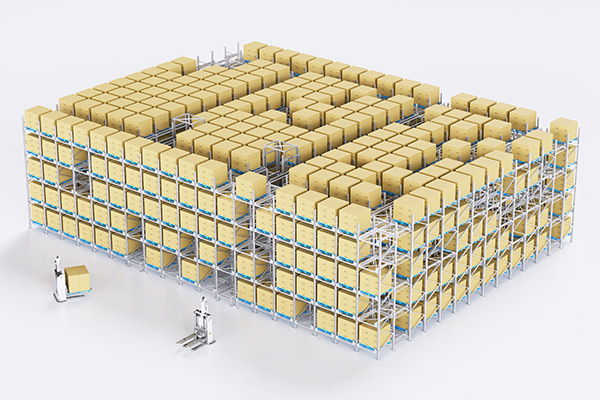
Dense storage automation has moved from crane-dominant designs toward multi-shuttle robot fleets. <Six-Way Shuttle System Leads the Shift from Machines to Robots in Dense Storage Automation> covers the architecture shift buyers should understand before shortlisting suppliers.
OEM, Integrator, Trader: What Each Role Controls
OEM
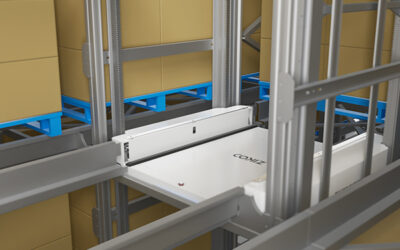
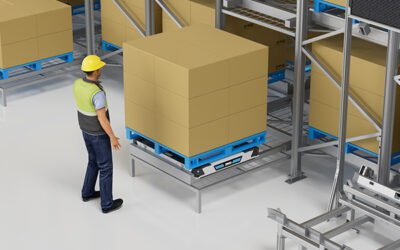
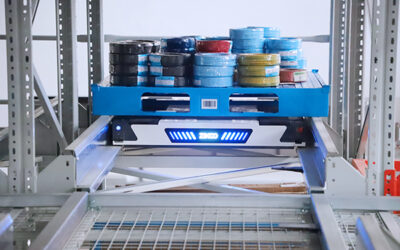
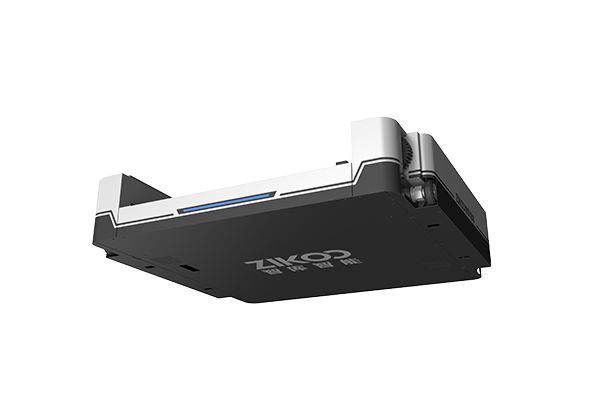
An original equipment manufacturer designs the core product or subsystem and normally owns product engineering, firmware, hardware validation, and configuration control. In a pallet-to-person system, the core may include a four-way pallet shuttle, a vertical lift shuttle, an omnidirectional stacker robot, and the warehouse control software layer. A credible OEM should be able to provide model-level data for each product: rated load, travel speed loaded and unloaded, body height, pallet compatibility, battery chemistry, temperature limits, positioning accuracy, and the test method behind each figure.
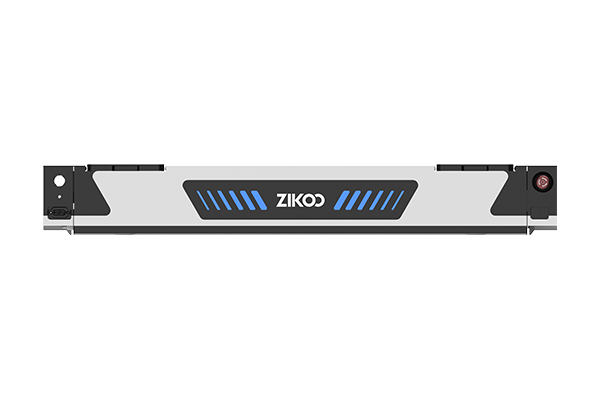
For example, the R-bot Four-way Shuttle range offers rated loads from 1200 kg to 2000 kg depending on model and pallet standard, with a 125 mm body height on standard variants. These are product specifications, not marketing claims, and any serious OEM should be able to produce comparable engineering documents. The same principle applies to vertical transport: a lift shuttle should come with positioning accuracy data and the conditions under which that accuracy is achieved.
Integrator
An integrator buys or uses OEM equipment and handles the site-specific system: layout engineering, simulation, WMS/WCS integration, conveyor and rack interfaces, fire safety, IT/OT networking, installation, commissioning, and after-sales service. The integrator’s main value is turning building constraints, pallet profiles, throughput targets, and software systems into a working warehouse.
The risk with an integrator-led project is not the integrator model itself; it is the interface responsibility. If the integrator combines equipment from multiple manufacturers, ask which standard interfaces and API versions are used, which party owns software issues, and how spare parts and firmware upgrades are managed across the system boundary.
Trader
A trader is primarily a resale channel. The trading company may have project language support and commercial flexibility, but it usually does not own product engineering, software source code, or manufacturing quality control. Engineering support is often subcontracted, and change requests may need to pass through several parties before reaching the actual manufacturer.
That structure can work for simple, non-mission-critical components. It becomes dangerous when the quotation includes layout design, controls integration, or a performance guarantee. If the trader cannot show direct access to the OEM’s engineering team, firmware revision control, test reports, and serial-number traceability, the buyer is carrying an invisible gap in accountability.
Side-by-Side Supplier Accountability
| Evaluation dimension | OEM | Integrator | Trader |
|---|---|---|---|
| Product design authority | Owns core product engineering | May influence layout and interface design | Usually none |
| Software ownership | Firmware, embedded software, WCS modules | System integration, WMS/WCS interfaces | Limited or none |
| Site accountability | Product warranty and engineering support | Full project delivery and commissioning | Contractual/after-sales only |
| Best fit | Repeatable equipment standards and direct technical support | Complex, site-specific systems with multiple trades | Commodity components with genuine manufacturer backup |
| Main risk | May lack local project delivery depth | Interface gaps between suppliers | Hidden OEM, weak engineering control |
Red Flags and Audit Questions
The following signals often reveal a trader behind an OEM façade:
- The legal entity is an export or trading company, but the “factory” is a separate manufacturer with a different brand.
- The quotation lists a well-known component brand, but the supplier cannot present firmware ownership or software revision history.
- The software provider is hidden, renamed, or unavailable for direct clarification.
- The supplier cannot identify the PLC or controller version, source-code escrow arrangement, API version, or safety certification path.
- Reference photos contain different brand logos, rack structures, or control-room software.
- Spare-part lead times, warranty liability, and software upgrade costs are vague.
- No named engineer is assigned to design review, interface clarification, or commissioning.
For a procurement-ready version of this red-flag list, request an engineering clarification. If you are shortlisting suppliers for pallet automation or dense storage, email [email protected] or call (+86)-19941778955 to get a comparison check mapped to your warehouse profile.
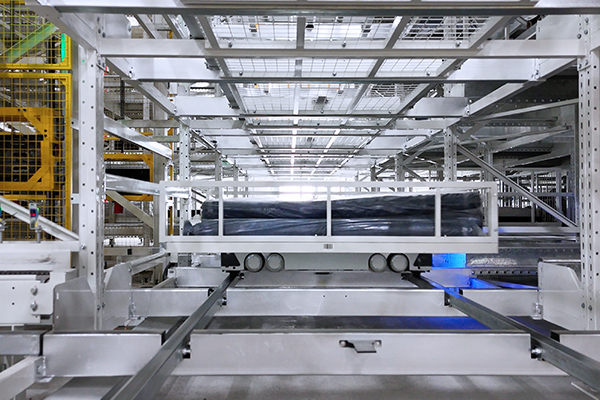
A supplier’s engineering discipline should show up in standardized delivery rather than ad hoc project assembly. <Standardization Empowers Global Delivery: Zikoo Robotics Six-Way Shuttle Expands Overseas> covers how standardized shuttle platforms support cross-border warehouse projects.
Beyond red flags, audit the supplier like you would audit a factory, not a sales deck. Request the general arrangement drawings, functional design specification, safety concept, factory test reports, and quality management system alignment with ISO 9001:2015 [3]. Where the system includes automated vehicles or autonomous handling equipment, request conformity evidence to the Machinery Directive 2006/42/EC for CE-marked equipment [4]. A supplier that cannot connect its own specifications to test reports or standards is less likely to survive the inevitable change requests during integration.
Decision Rules for Warehouse Profiles
For high-SKU, dense pallet storage with complex WMS integration, an OEM or a vertically integrated supplier with turnkey engineering is usually the safer baseline. The critical requirement is that one engineering owner can control product change, software interface, and system performance.
For brownfield retrofits with an existing WMS and building constraints, an integrator-led project is often appropriate—but only when the integrator uses OEM-approved hardware and can show defined interface ownership. Verify that the OEM has approved the application and that warranty terms survive the integrator’s site modifications.
For standard shuttle vehicle replacement or a narrow equipment scope, buying directly from an OEM reduces the communication chain. Spare parts, firmware updates, and product training become clearer.
For simple, low-stakes components, a trader may be acceptable if the original manufacturer provides warranty and support directly. For mission-critical pallet-to-person storage, avoid a model where the only engineering contact is a sales representative.
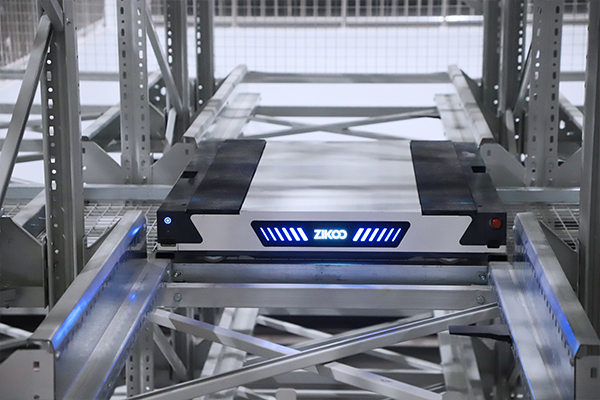
The final system, not the hardware listing alone, determines warehouse value. <Reshaping Warehouse Value: Six-Way Shuttle Leads the Digital Transformation> covers how shuttle-based pallet automation changes storage and operational value.
Get a Supplier Comparison Built for Your Warehouse Profile
Zikoo Smart Technology Co., Ltd works as a warehouse automation robotics engineer and intelligent storage systems specialist. If you are comparing OEM, integrator, and trader quotations, provide your pallet size, SKU range, throughput target, operating temperature, and existing WMS. The team can return a written supplier-comparison framework and evaluate whether the quotation structure matches the accountability you actually need.
Email: [email protected]
Phone: (+86)-19941778955
Frequently Asked Questions
Do OEMs always sell directly to end users?
Not always. Some OEMs sell through integrators or regional partners. What matters is not whether an OEM sells directly, but whether the buyer can reach the OEM’s engineering team for design changes, firmware issues, and warranty claims.
Can a trader also provide installation and after-sales support?
A trader can arrange installation and after-sales support through subcontractors or the original manufacturer. The key question is whether the trader controls warranty liability and whether support will remain available after the commercial relationship changes.
Which model is cheaper: trader, integrator, or OEM?
Initial purchase price may be lower through a trader, but lifecycle cost is different. Engineering changes, software issues, spare parts, and downtime risk can quickly erase short-term savings. The more complex the system, the more important engineering ownership becomes.
How can I verify that a supplier claiming to be an OEM really manufactures the equipment?
Request a factory audit, serial-number traceability, engineering change records, firmware version control, and test reports. A real OEM can produce model-level data and connect it to manufacturing quality management under ISO 9001:2015 [3].
Does it matter whether the supplier controls the software?
Yes. Warehouse automation depends on the interface between WMS, WCS, shuttle dispatch, and equipment firmware. If the software owner is hidden or inaccessible, routine interface changes and priority bug fixes become difficult to manage.
References
[1] MHI, “Annual Industry Report,” MHI, Charlotte, NC, USA. [Online]. Available: https://www.mhi.org/publications/report
[2] VDMA, “Materials Handling and Intralogistics,” VDMA, Frankfurt, Germany. [Online]. Available: https://www.vdma.org/en/materials-handling-and-intralogistics
[3] ISO 9001:2015, Quality management systems — Requirements, ISO, Geneva, Switzerland, 2015. [Online]. Available: https://www.iso.org/standard/62085.html
[4] European Commission, “Directive 2006/42/EC on machinery,” Official Journal of the European Union, Brussels, Belgium, 2006. [Online]. Available: https://eur-lex.europa.eu/legal-content/EN/TXT/?uri=CELEX:32006L0042
[5] IFR, World Robotics 2024 — Industrial Robots, International Federation of Robotics, Frankfurt, Germany, 2024. [Online]. Available: https://ifr.org/worldrobotics/
If you’re interested, check out these related articles:
Stacker Crane vs Four-Way Shuttle: Which Fits Your ASRS Warehouse Best
Six-Way Shuttle: The Smart Warehousing Tool for Cost Reduction and Efficiency 2
Software-Driven Hardware: Six-Way Shuttle Maximizes Warehouse Efficiency
Six-Way Shuttle: Empowering Industries to Embrace Smart Warehousing