Automated order picking for high-volume e-commerce fulfillment works when storage, transport, pick stations, and software are designed as one flow. The shuttle or robot is only one part of that flow. The pick face, order profile, replenishment rhythm, and exception path determine whether the system meets peak demand or simply moves the bottleneck. A useful evaluation starts with the order lines the operation must ship, not with a machine specification. From there, the design can separate pallet storage, tote handling, piece picking, consolidation, and packing, then assign automation only where the workload and service promise justify it.
What Automated Order Picking Must Solve in High-Volume E-Commerce
Automated order picking is the controlled movement of required inventory from storage to a picker or robotic handling point, followed by verification and routing to consolidation. In e-commerce, the workload is rarely a single pallet moving to a single dock. It is a large SKU base, many small quantities, multi-item orders, short carrier cut-offs, and a returns stream that competes for the same labor and space.
The design should begin with workload inputs that change station count, storage density, and software rules. Annual throughput is a weak starting point because e-commerce demand is uneven. The design peak, order mix, and recovery time after a surge matter more than a smooth average day.
| Workload input | Why it changes the design | What to measure |
|---|---|---|
| Order lines per hour | Sets station and transport capacity | Design peak, not annual average |
| Units per line | Changes pick face and replenishment | Distribution by SKU family |
| Order mix | Multi-item orders need consolidation | Lines per order and common pairs |
| SKU range | Drives storage density and slotting | Active SKU count and velocity |
| Cube and weight | Limits tote, robot, and station design | Upper percentile and heavy tail |
| Cut-off and peak ratio | Sets surge and recovery rules | Peak hour versus average day |
The bottleneck often moves rather than disappears. A shuttle system may reduce travel time, but it can create a new constraint at decanting, tote delivery, station presentation, or packing. High-volume fulfillment therefore needs an end-to-end order cycle view. If the design improves storage throughput but leaves the pick station waiting for totes or the packer waiting for complete orders, the overall service level will not improve.
Map the Fulfillment Flow Before Choosing Equipment
A high-volume e-commerce warehouse usually contains receiving, decanting, reserve storage, forward pick storage, replenishment, picking, consolidation, packing, shipping, and returns. Automation can touch any part of that flow, but the interfaces between those steps decide the real capacity. The most important interface is often between pallet storage and the each-pick area.
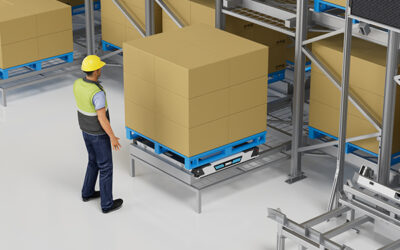
Pallet-to-person systems are efficient when the operation picks cases or full pallets, or when pallets feed a decanting station. For each-pick e-commerce, the pallet is usually broken down into totes, bins, or shelf-ready containers. That decanting step needs labor, space, and a replenishment trigger. If the decanting plan is weak, a fast shuttle will simply deliver pallets to a station that cannot convert them into pickable inventory quickly enough.
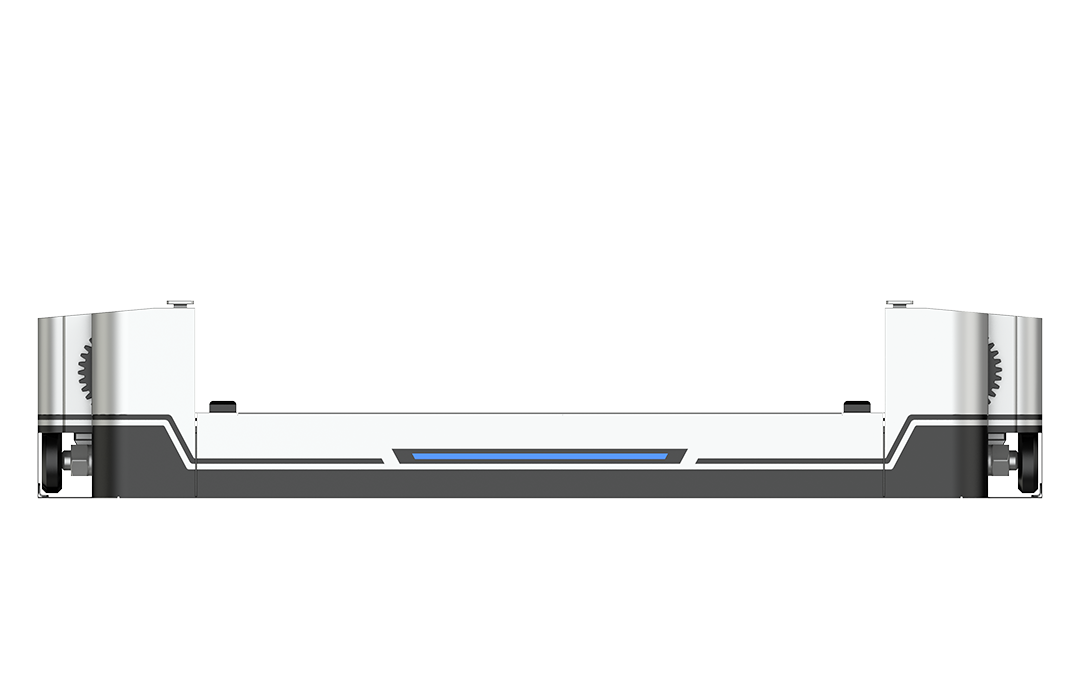
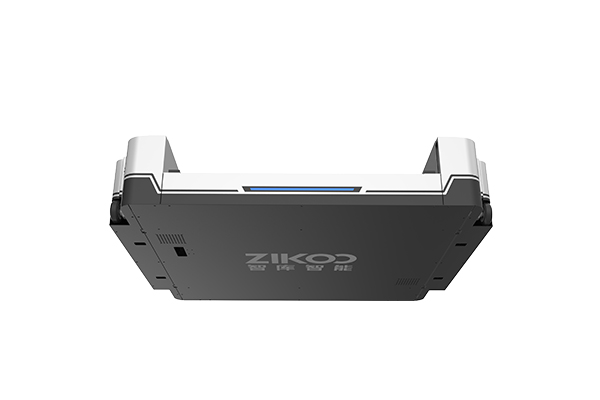
At the storage interface, a four-way shuttle can move pallets in two axes and transfer them to a vertical lift, but the workstation still needs a defined pick face, a safe transfer height, and a clear handshake with the warehouse control system. Zikoo’s R-bot four-way shuttle and H-bot vertical lift illustrate the pallet side of this interface, where positioning accuracy and pallet presentation affect what the station can do next.
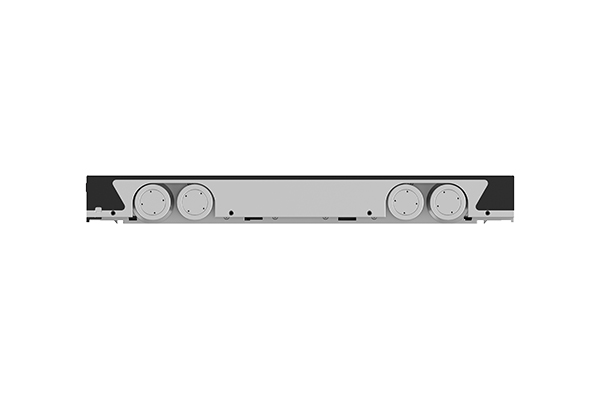
Vertical transfer is the other half of dense storage. A lift or vertical shuttle can move pallets between levels, but it also creates a buffer point. The buffer must be sized for replenishment bursts, not only for average flow. If the lift is treated as a simple elevator and not as part of the picking sequence, pallets can queue while stations starve.
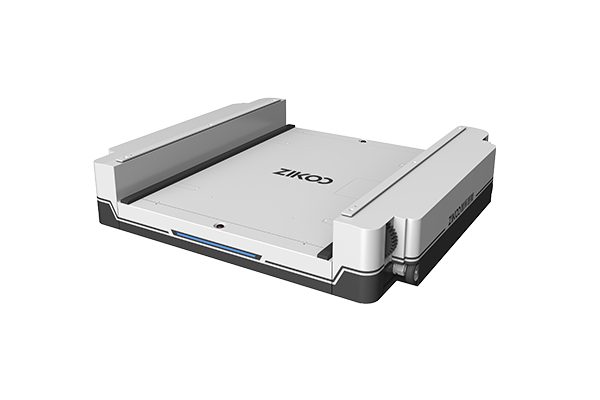
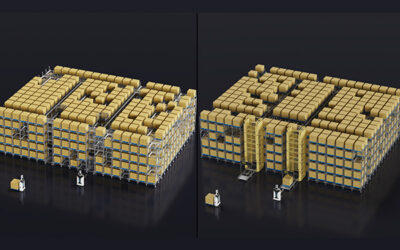
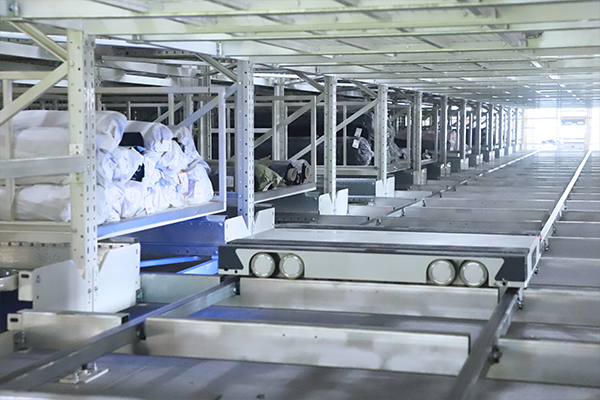
Dense storage also changes replenishment. High-density pallet storage reduces floor space, but it can increase the distance between the reserve location and the forward pick face. The design needs a replenishment rule that triggers before the forward location runs dry, and a way to prioritize replenishment against customer orders. The pharmaceutical high-density storage case shown here illustrates why storage density and traceability need to be designed together. E-commerce has a different order profile, but the same discipline applies: every container must be locatable, replenishable, and auditable.
Compare Goods-to-Person, Zone Picking, and Robotic Piece Picking
There is no single automated picking model for every e-commerce profile. Goods-to-person systems bring inventory to a station, zone picking divides the warehouse into pick areas, and robotic piece picking uses a arm or gripper to pick individual items. Many high-volume operations use a hybrid because the order mix is too varied for one model.
Goods-to-person with shuttles or automated storage is strong when SKU density is high and travel time dominates. The trade-off is that the station must be fed with totes or pallets, and the software must sequence work so that pickers do not wait. Zone picking can handle a broad SKU range with simpler equipment, but it depends on zone balance and conveyor flow. Robotic piece picking can handle repeatable SKUs with controlled presentation, but it is sensitive to packaging variation, transparent items, flexible goods, and exception rates.
| Picking model | Fits when | Main constraint | What to verify |
|---|---|---|---|
| Manual zone and put wall | Stable demand and flexible SKU mix | Labor and congestion | Zone balance and pick density |
| Pallet-to-person shuttle | Pallet and case picks, replenishment | Decanting for each-pick | Pallet interface and station rate |
| Tote-based goods-to-person | Small, multi-item orders | Tote flow and station sequencing | Tote buffer and consolidation |
| Robotic piece picking | Repeatable SKUs and controlled presentation | Grasp and exception rate | SKU coverage and recovery |
| Hybrid | Mixed profiles and peak | Software coordination | End-to-end order cycle |
Dense storage and vertical transfer change the picking face, but they also depend on coordinated pallet handling and software. <Six-Way Shuttle Unlocks the Era of True 3D Intelligent Warehousing> covers how three-dimensional shuttle networks support high-density warehousing.
The comparison should include the cost of the interface, not only the cost of the pick machine. A robotic cell may have a lower labor cost per pick, but if it needs a dedicated presentation conveyor, a larger exception team, and a separate tote pool, the total system cost can rise. A shuttle system may reduce travel, but if the building cannot support the rack height or the floor cannot carry the load, the design may need a different storage model.
Design the Pick Station Around the Order Profile
The pick station is where the automated system meets the human or robotic pick. Its cycle time is shaped by presentation, reach, scan, place, label, and exception handling. High-volume e-commerce stations should minimize non-value movement: the picker should not search for the item, turn to find a tote, or wait for the next order to appear.
Station design starts with the order profile. Single-item orders can use a simple put-to-order flow. Multi-item orders need consolidation, which means the station must show which tote or order container receives each item. If the station handles both, the software should separate the two flows or provide a clear mode change. Mixing them without a rule creates errors and rework.
The pick face should present the item at a consistent height and orientation. For tote-based goods-to-person, the tote should arrive with the required item accessible and the next pick visible. For pallet-to-person, the pallet should be positioned so that the picker can reach the case without overreaching. A vertical lift or buffer can keep the station fed, but the station design still determines reach and cycle time.
Replenishment belongs in the station design. If the forward pick face is replenished from a reserve location, the replenishment task competes with customer orders for the same aisle, lift, or station. The design should define a minimum and maximum level, a trigger point, and a priority rule. The station should also have a clear path for empty totes, packaging, and damaged goods. Otherwise, the station slows down because the waste and returns flow has no place to go.
Use Software to Orchestrate Waves, Slots, and Exceptions
Automated picking is a software problem as much as a hardware problem. The warehouse management system holds inventory and order status. The warehouse execution system releases work, balances stations, and manages the order pool. The warehouse control system commands conveyors, shuttles, and lifts. A robot control system assigns missions and manages traffic. If those layers do not share a consistent view of inventory, capacity, and priority, the equipment will execute the wrong work efficiently.
Wave release should follow station capacity, carrier cut-off, and order density. A wave that is too large creates congestion at the pick face and the packing area. A wave that is too small leaves stations idle. The software should release work in a sequence that keeps stations busy without filling the buffer beyond its limit. It should also respect inventory availability, so that a pick is not released before the item is confirmed in the forward location.
Slotting is the other software lever. High-volume e-commerce changes velocity by season, promotion, and product launch. A slotting rule based only on historical average will drift. The operation should review velocity, affinity, cube, and weight, then re-slot when the pick face becomes unbalanced. The goal is not to fill every location; it is to keep the most active items within reach and to reduce replenishment interruptions.
Order picking depends on software that can translate orders into equipment missions and station work. <Software-Driven Hardware: Six-Way Shuttle Maximizes Warehouse Efficiency> covers how warehouse software coordinates shuttle hardware for efficient execution.
Exception handling should be designed before go-live. Short picks, damaged items, missing totes, address validation failures, and quality holds all need a path. The software should route the exception to a defined location, preserve the order status, and prevent a duplicate pick. If the exception path is manual and undocumented, the automation will appear to fail whenever the order mix includes an unusual item.
Qualify Throughput, Peak Capacity, and Failure Handling
Throughput should be qualified with the order mix, not with a single machine rate. A practical starting point is to calculate required pick stations as design peak order lines per hour divided by sustained lines per station per hour, then adjust for station availability, replenishment, and exceptions. Use the same order mix in the calculation that you expect during peak. A vendor rate measured on a clean, single-item order is not a design rate for multi-item e-commerce.
Peak capacity also needs a recovery rule. If the system runs at its design peak for two hours, how long does it take to clear the queue? If a lift or shuttle goes down, can the remaining equipment keep a defined portion of orders moving? The answer should be tested, not assumed. Redundancy can be physical, such as additional lifts or stations, or procedural, such as a manual fallback area. The important point is that the fallback is planned and measured.
| Acceptance test | What to run | Pass condition |
|---|---|---|
| Representative mix | Seven-day order profile with single and multi-item orders | Sustained station rate, not a short burst |
| Design peak | Two-hour peak with replenishment and breaks | Queues stay inside planned buffer |
| Replenishment | Trigger replenishment during peak | No station starvation |
| Exception path | Short pick, damaged item, missing tote | Recovery within agreed time |
| Software failover | Restart WES, WCS, or RCS | No duplicate picks or lost orders |
| Cut-off run | Late order release against carrier cut-off | On-time pack and ship |
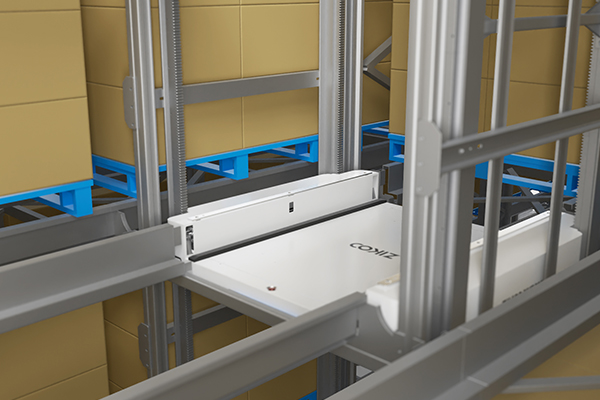
High-bay storage can improve space use, but it also raises the cost of a stoppage. The high-rise automated storage system shown here illustrates the vertical envelope that often feeds picking. The picking rate still depends on station design, replenishment, and software recovery, not on rack height alone.
Stage Deployment Without Freezing the Operation
High-volume e-commerce operations rarely have the luxury of stopping production for a full automation project. A staged deployment can reduce risk if each stage has a clear boundary. Start with a defined SKU family, a defined order type, or a defined zone. Run the new flow in parallel with the existing process long enough to compare pick rate, accuracy, and order cycle time. Then cut over when the measured results meet the agreed condition.
The staging plan should include the physical interface between the new system and the existing warehouse. That means tote flow, pallet flow, charging or battery exchange, fire access, and maintenance access. It also means training. A picker who understands why the station presents an item in a certain way will recover from an exception faster than a picker who has only been shown the screen.
A phased retrofit still needs a storage and handling plan that works during construction. <Six-Way Shuttle Drives Warehouse Upgrades: Building an Intelligent Automatic 3D Warehouse> covers how dense shuttle storage supports warehouse upgrades.
Spare parts and service access belong in the deployment plan. A shuttle, lift, or robot that cannot be reached for maintenance can become a single point of failure. The design should define mean time to repair targets, spare part locations, and remote support rules. It should also define what the operation will do when the network is unavailable. If the answer is that the warehouse stops, the risk needs to be accepted explicitly.
Plan the Next Picking Capacity Step
Send the design peak order profile, SKU range, pallet and tote dimensions, carrier cut-off times, current pick rates, and exception rules to info@zikoo-int.com or call (+86)-19941778955. Zikoo Smart Technology Co., Ltd can review how pallet storage, shuttle transport, pick stations, and PTP software would need to fit together for your building and service promise. The useful next step is a bounded concept review against your measured peak, not a generic equipment list.
FAQ
How many pick stations does a high-volume e-commerce operation need?
Calculate design peak order lines per hour, divide by the sustained lines per station per hour for the same order mix, then adjust for station availability, replenishment, and exceptions. Use measured station performance from a representative mix. A theoretical rate from a clean single-item run will understate the station count needed for multi-item orders.
Is a shuttle ASRS enough to automate order picking?
No. A shuttle ASRS automates storage and transport. It does not by itself create a pick-ready item flow. Each-pick e-commerce usually needs decanting, tote or bin presentation, pick stations, consolidation, and software that sequences work. A pallet-to-person design can feed case or pallet picking, but each-pick needs a defined interface between pallet storage and the pick face.
What order profile data should be collected before design?
Collect order lines per hour, units per line, lines per order, SKU velocity, cube and weight distribution, cut-off times, peak-to-average ratio, returns volume, and exception types. Include the common item pairs because they affect consolidation and station layout. The data should cover a representative period, not only the best week of the year.
Where does automated picking usually fail to meet peak?
The common failure points are the interfaces: decanting, replenishment, tote delivery, station congestion, software exception handling, and packing. The pick machine may meet its rated cycle time while the overall order cycle misses the cut-off. Test the complete flow with a representative order mix and include the recovery time after a stoppage.
If you’re interested, check out these related articles:
PTP Intelligent Warehousing Platform: Building a Flexible and Smart Logistics Ecosystem
Multi-Scenario Smart Adaptation: Zikoo’s Six-Way Shuttle Powers the Digital Transformation of Warehousing
Revolutionizing Cold Chain Logistics: Zikoo Robotics Six-Way Shuttle Powers High-Density, High-Efficiency Warehousing
Six-Way Shuttle Empowers 3PL Providers to Build Next-Generation Smart Logistics Hubs