Integrating automated storage with production workflows succeeds or fails at the handoff rather than inside the rack. A dense pallet system can hold thousands of pallets and still starve a line when the buffer depth, the sequence rule, or the software handshake between production scheduling and warehouse execution is settled after the rack layout is already fixed. The aisle is the easy part to specify: load, height, pallet count and nominal throughput are all visible in a quotation. The harder questions are how production demand reaches the storage system, how much decoupling inventory sits between the two, and what happens when a shuttle, a transfer station or an interface stops responding. Those questions drive cost and uptime more than the storage technology choice does.
What Integration Requires Beyond the Storage Aisle
Integration is a boundary problem with three layers, and each one fails differently.
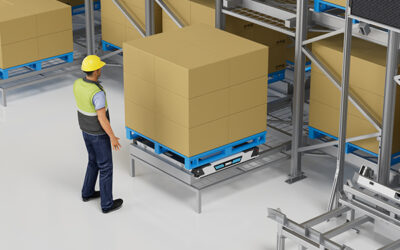
The physical boundary is the transport path between the last storage position and the point of use at the line. It might be a conveyor, an automated transfer car, or a robot that leaves the rack and drives to the station. Each has a different footprint, a different failure behavior, and a different cost per pallet moved.
The informational boundary is the path a production order takes to become a storage mission: a schedule in the ERP or MES, a requirement in the WMS, a sequence decision in the WES, a command in the WCS. When this path is undocumented, the storage system can perform exactly as specified and the line still waits.
The temporal boundary is the mismatch between how production consumes material and how storage retrieves it. A line consumes at a takt measured in minutes or seconds. A dense storage system delivers in mission cycles that include vehicle travel, lift travel and handoff. Steady averages hide the mismatch; changeovers and shift starts expose it.
Most project teams specify the storage system first and design the handoff last. That order suits procurement and complicates commissioning. A four-way shuttle block with a slim body may fit an existing rack layout without modification and still fall short if the line-side buffer cannot absorb the retrieval interval at changeover.
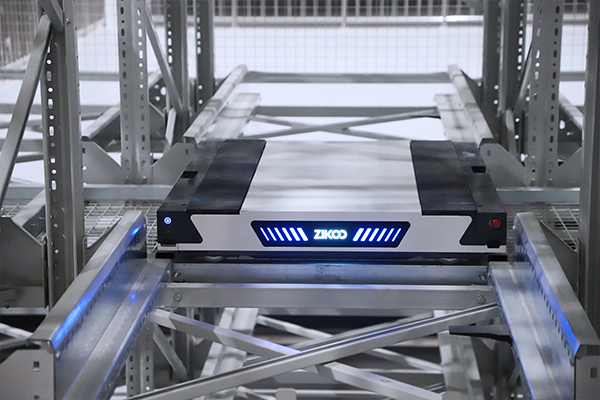
Storage technology decisions only pay off once the surrounding control and transport design supports them. <Six-Way Shuttle: Pioneering the Future of Smart Warehousing> covers how six-way shuttle architecture fits into smart warehouse design.
The practical consequence is simple to state and easy to skip: treat the buffer, the software interface and the transport path as design objects with their own acceptance criteria, not as details to be resolved by the storage supplier’s standard scope.
Translating Production Demand into Storage Requirements
Storage design starts from a demand profile, not from a pallet count. The profile has to be built from production data before the rack layout is fixed, because the numbers that determine vehicle count are peak rates and changeover behavior, not annual volume.
| Demand signal | What to measure | Where it changes the design |
|---|---|---|
| Line takt and peak rate | Pallets per hour in the busiest hour of a shift, including changeover | Retrieval capacity, vehicle count, transfer point count |
| Shift pattern and cut-off times | Deliveries required per shift, and the latest acceptable arrival at the station | Wave scheduling, charging windows, pre-staging rules |
| Pallet profile mix | Footprint, load height, weight and stackability for every pallet family in use | Shuttle model, rack dimensions, load handling device |
| Changeover frequency | SKU switchovers per shift and the order they must arrive in | Sequencing rules, line-side buffer depth |
| Arrival variability | Spread of supplier delivery times over a representative month | Decoupling buffer size, inbound hold capacity |
| Reverse flow | Rework, returns and empty pallet volume per shift | Exception destinations, return lane design |
Average throughput is the least useful number in that set. If a line consumes 400 pallets across a shift but 90 of them in the first 40 minutes, the storage system must satisfy the 90-pallet cluster inside the window production allows, and the annual total says nothing about whether it can. Model the cluster, add the retrieval interval and handoff time, then check whether the buffer covers the gap.
Arrival variability belongs in the same analysis. Supplier deliveries rarely land evenly, and a decoupling buffer sized to the mean arrival rate will be empty on the days it matters. Measure the spread over a month rather than the average.
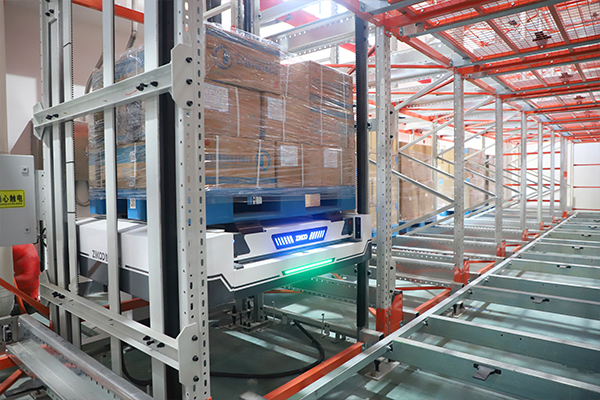
A second translation step is worth writing down explicitly: convert each demand figure into the unit the storage supplier uses. “The line needs 45 pallets in the first hour after changeover” is a requirement an integrator can test. “The line needs reliable supply” is not.
Where the Handoff Breaks Between Line and Aisle
Four failure patterns account for most integration problems, and none of them appears as a storage fault on the maintenance report.
The first is a buffer that is too shallow. The storage system meets its specification, the line stops at changeover, and the two facts are reported by different departments. The fix is a decoupling buffer sized to the retrieval interval plus a defined recovery margin, placed physically between the aisle and the point of use.
The second is a buffer that is too deep. This one hides errors instead of creating them. A station holding two shifts of inventory cannot reveal a mis-sequenced delivery until the mistake is expensive to correct, and working capital sits at the line rather than in the flow. Deep buffers usually indicate that the interface design is still unresolved.
The third is a sequence mismatch. Storage systems commonly default to first-in-first-out within a lane, while production needs the pallet the schedule calls for, which may be the third pallet in that lane. If the retrieval logic cannot reach a specific pallet without moving the ones in front, the real retrieval time at changeover exceeds the mission time quoted in the specification.
The fourth is exception handling. A rejected pallet, a damaged load, or a pallet that arrives at the wrong destination needs somewhere to go that is neither the line nor the rack position it came from. Design that destination before go-live; improvising one afterwards usually consumes aisle space.
| Symptom | First check | Design lever |
|---|---|---|
| Line stops at changeover while storage reports full rate | Buffer depth against the retrieval interval at changeover | Increase the decoupling buffer or split retrieval into waves |
| Pallet arrives late although the mission completed on time | Transport path and queue at the handoff station | Add a transfer point or relocate the handoff |
| System delivers the wrong pallet for the schedule | Sequence rule and pallet addressing inside the lane | Move to pallet-specific addressing with an explicit sequencing rule |
| A rejected load blocks the aisle | Exception destination defined in the design | Dedicated hold location outside the storage block |
There is a cost dimension to each fix. A deeper buffer consumes floor area near the line, which is often the most expensive space in the building. A second transfer point adds equipment and maintenance. Pallet-specific addressing reduces storage density in the affected lanes. Choosing between them is a trade-off between capital, floor space and line availability, and the right answer depends on which of those three is scarcest in a specific plant.
The Software Chain That Connects Production Orders to Pallet Moves
The software path normally runs through four layers, and the boundary between them is where integration projects lose time.
ERP or MES holds the production schedule and material requirement. WMS holds inventory, locations and order logic. WES sequences work and allocates resources. WCS translates work into equipment commands. Where mobile robots are involved, an RCS layer handles traffic and route assignment. When one supplier provides an integrated stack rather than four separately sourced products, some of these interfaces disappear, but the contract with the plant’s own MES remains and still needs definition.
Hardware behavior follows the control layers above it, which is why integration work belongs in the software specification as much as the mechanical one. <Software-Driven Hardware: Six-Way Shuttle Maximizes Warehouse Efficiency> covers the relationship between software control and shuttle hardware efficiency.
Three interface rules prevent most of the trouble:
- Write the message contract down, including which system owns each field and what happens when a field is missing.
- Require acknowledgement for every production-facing message, and define retry and dead-letter behavior before go-live. A schedule message that is silently dropped produces a line stoppage that looks like a storage fault for the first two hours of diagnosis.
- Keep a manual fallback that plant operators can run without vendor support, and rehearse it during commissioning rather than during an incident.
The most common structural mistake is a direct connection from MES to WCS. It appears to save a layer, and it moves sequencing logic into the plant schedule, where changeovers are frequent and testing is difficult. Order-level intent belongs in WMS and WES. Equipment-level commands belong in WCS.
Data the integration must carry includes pallet ID, material code, quantity, batch or lot, destination station, priority and the time window the line needs it. Where batch traceability matters for the product, the storage transaction record becomes part of the quality record rather than a logistics event, and that changes the retention and audit requirements for the whole system.
Matching Storage Architecture to Your Production Pattern
Architecture selection is not a question about which technology is most advanced. It is a question about which constraint binds first: building height, floor space, line-side delivery pattern, or labor availability.
| Architecture | Fits when | Do not choose when | Line-side consequence |
|---|---|---|---|
| Four-way shuttle dense block | Stable high-volume SKUs, full-pallet moves, new-build height available | The schedule needs short-notice access to many scattered pallets, or specific pallets deep in lanes are requested constantly | Requires a conveyor or transfer to reach the line |
| Six-way shuttle, four-way plus vertical lift | A multi-level dense block where vertical transfer is the throughput limit | Height allows single-level travel and the extra lift only adds a queue | Vertical hub decouples levels; place it close to the line side |
| Omnidirectional stacker robot in narrow aisle | Existing building, aisles near 2.1 m, direct delivery without a fixed conveyor | Very high pallet rates across a large footprint, where vehicle traffic becomes the constraint | Robot leaves the aisle and drives to the station |
| Semi-automatic pallet shuttle | Limited capital, predictable low change frequency, manned shifts | Unmanned shifts and full transaction traceability are required | Timing depends on operator availability |
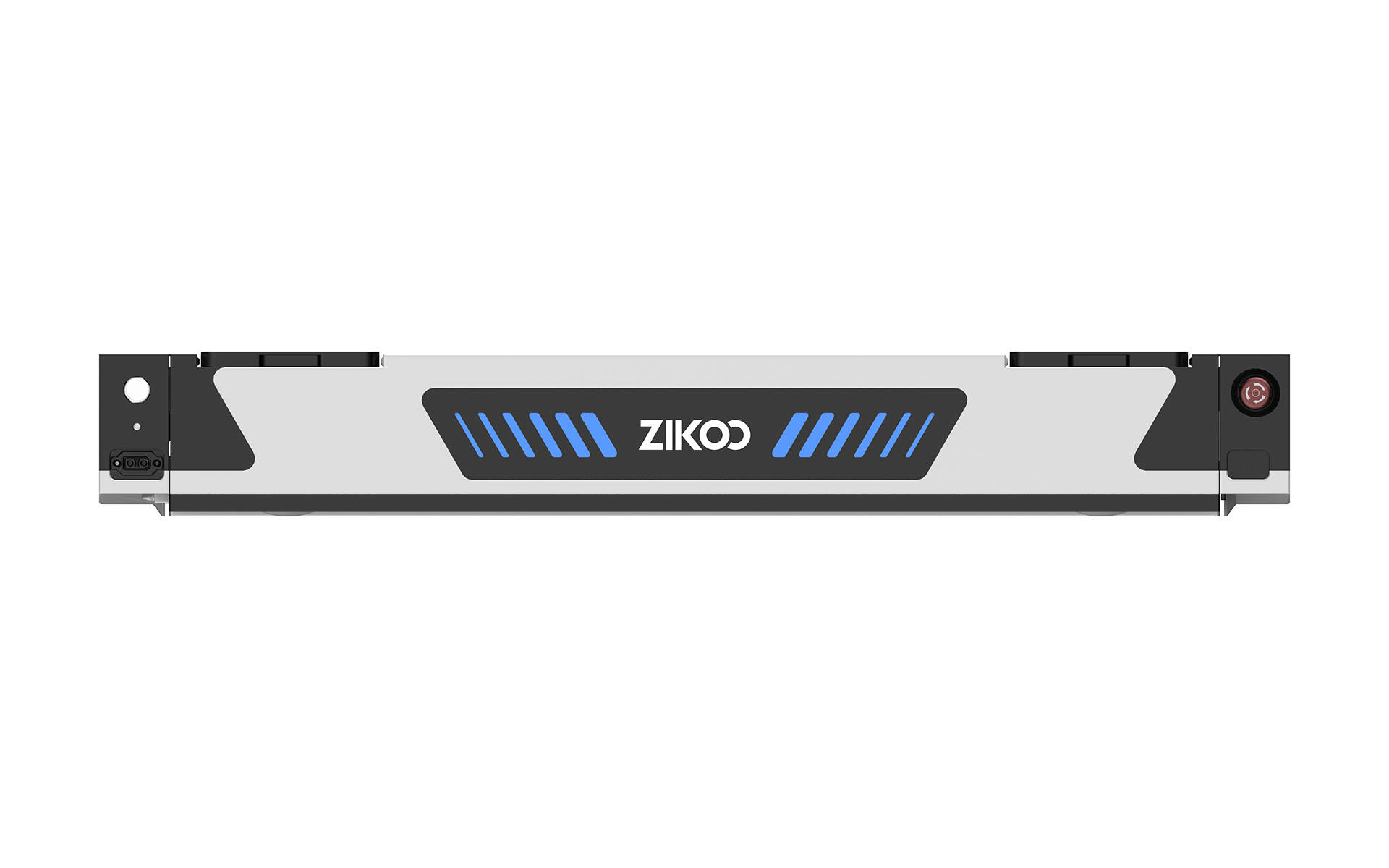
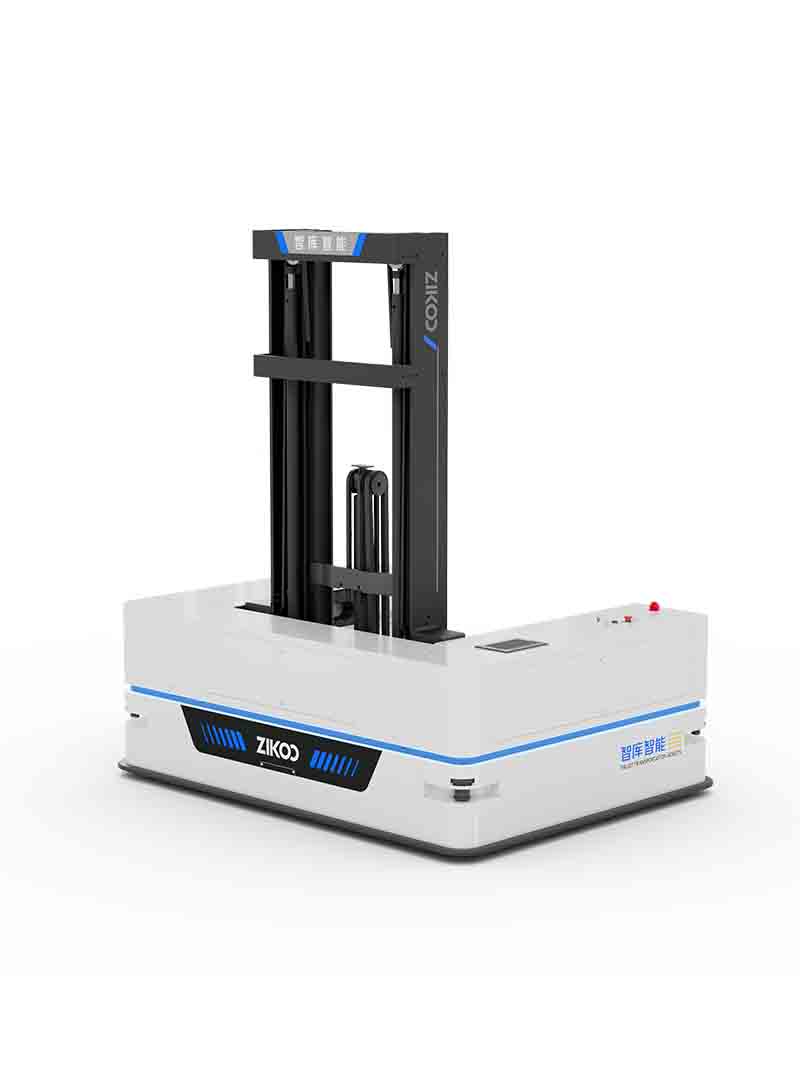
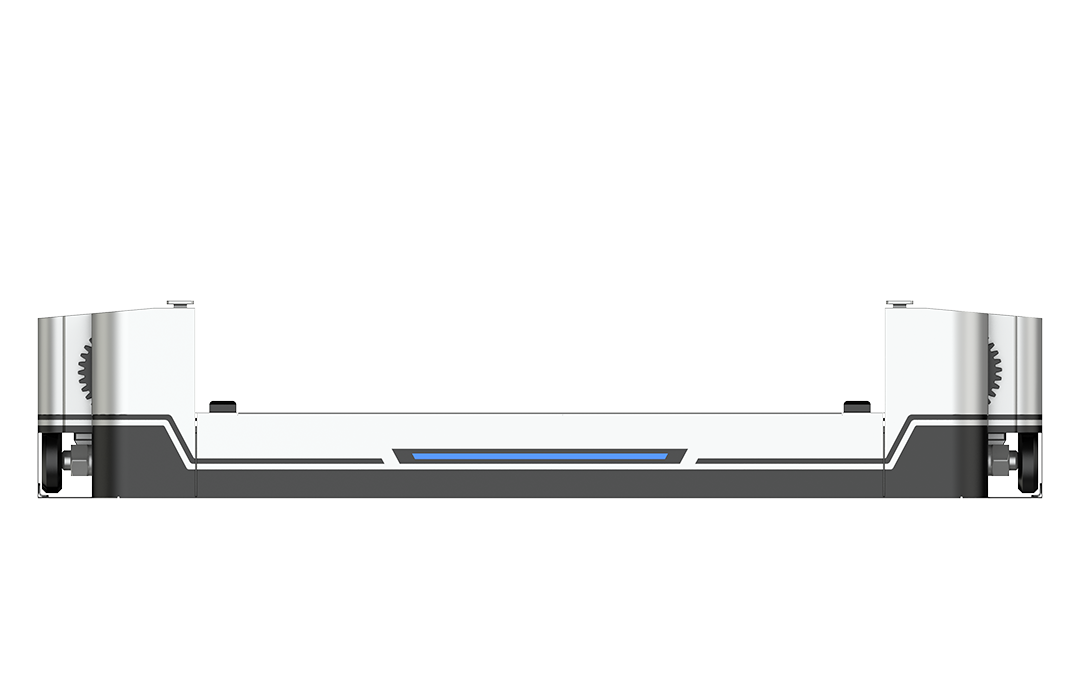
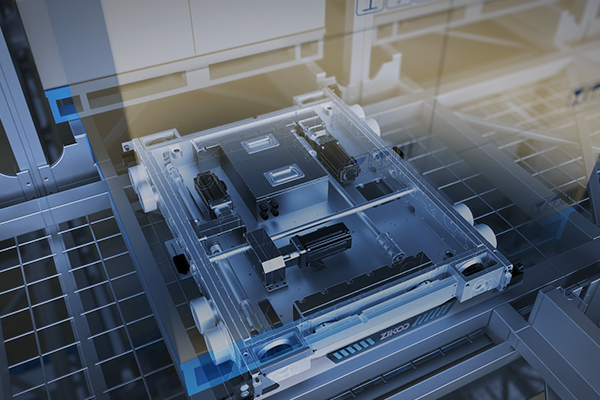
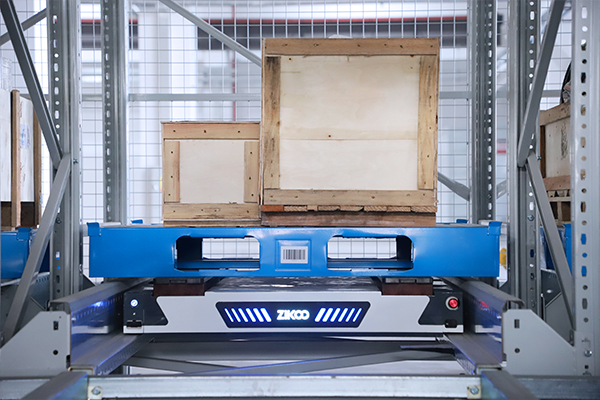
The current Zikoo range illustrates how those constraints separate in practice. The R-bot four-way shuttle serves dense blocks with a 125 mm body and rated loads from 1.2 t to 2 t depending on model. The H-bot vertical bidirectional shuttle adds the vertical axis at ±1 mm positioning accuracy and works with the R-bot to form a six-way network across three dimensions. The U-bot omnidirectional stacker robot works in aisles from about 2.1 m with lift heights to 8 m, which suits existing buildings where a dense block will not fit and the line still needs pallets delivered directly.
Comparing two dense-storage families on load handling, building requirements and retrieval behavior is usually more useful than comparing headline throughput. <Stacker Crane vs Four-Way Shuttle: Which Fits Your ASRS Warehouse Best> covers how the two ASRS architectures compare for a given warehouse.
A workable selection sequence is to fix the pallet profile and peak demand first, then test each candidate architecture against building height, aisle width and line-side delivery distance. The architecture that survives all three constraints is shortlisted on cost, not the other way round.
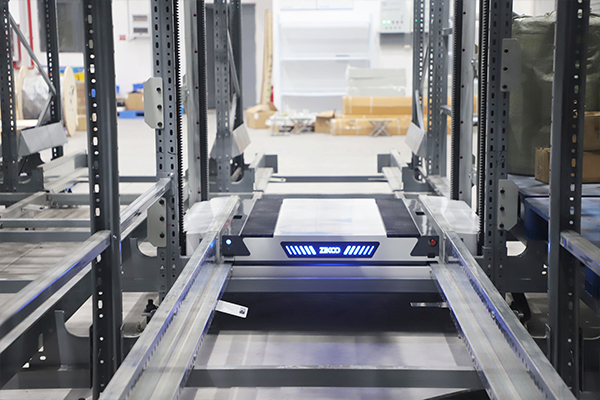
Multi-SKU production adds one more condition. When a line runs small batches with frequent changeovers, retrieval flexibility matters more than density, and a layout optimized purely for cubic meters will disappoint in daily operation.
Commissioning Checks Before You Cut Over
Commissioning is where integration assumptions meet real pallets. Six checks cover most of the risk:
- Dry run the production pallet mix, including the heaviest and the least stable load the line actually handles, not the sample pallet used in the project specification.
- Run a peak-hour load test driven by takt data. Test the changeover cluster rather than the average hour, and measure pallets per hour at the line station rather than missions completed at the aisle.
- Inject interface failures. Stop the MES feed, drop a message, and observe whether the system holds, retries, or silently loses the order.
- Rehearse the exception path with a rejected pallet, a damaged load and a mis-directed pallet, then confirm where each one ends up.
- Drill the fallback with operators running a manual shift using only documented procedures.
- Measure recovery time. Record how long the system takes to return to full rate after a single vehicle fault is cleared.
Acceptance criteria worth writing into the contract include measured pallets per hour at the line during peak, the distribution of mission completion times rather than one best case, recovery time after a single fault, and the success rate of the exception path. These are testable. A quoted maximum throughput is not a substitute for them.
Brownfield projects deserve one extra step: a phased cutover that keeps part of the manual operation live until the automated path has carried real production for several weeks. That staging protects output during the period when interface defects are most likely to appear, and it gives operators time to trust the new sequence rules before the old aisle is removed.
Aligning Line Takt with the Storage Specification
A useful next step is to put the production numbers and the storage specification on the same page before either is fixed. Send the line takt for a normal shift and for the busiest hour, the pallet profile of every family in use including weight and stability, the shift pattern and delivery cut-off times, the buffer depth the line can accommodate physically, the interface details of your MES and WMS, and any existing rack drawings for a brownfield case. With those inputs, Zikoo can compare a four-way shuttle block, a six-way shuttle network and a narrow-aisle stacker robot layout against your actual demand pattern rather than a nominal one. Contact us at [email protected] or (+86)-19941778955 to discuss the configuration.
FAQ
Can automated storage keep pace with a line that changes model every shift?
It can, if retrieval logic addresses individual pallets and the line-side buffer covers one changeover interval. Dense blocks with first-in-first-out lane rules struggle here, because the needed pallet may sit behind two others. The practical fix is either different lane rules for fast-moving families or a pre-staging area where the next changeover’s pallets wait ready.
What happens to production when the storage system goes down?
That depends on how much decoupling inventory exists and whether a manual fallback is documented. A single vehicle fault in a multi-vehicle system is usually recoverable without stopping the line, provided the buffer holds more than the recovery time. Plan the fallback path and rehearse it, then measure recovery time during commissioning so the buffer depth is based on evidence rather than optimism.
Do we need MES integration or is the WMS enough?
It depends on who owns scheduling intent. If the production schedule changes intraday and the line must follow it, the MES needs to pass order-level requirements to the WMS or WES. If the schedule is stable and converted into warehouse orders in advance, WMS-level integration can be sufficient. Either way, avoid connecting MES directly to equipment control, because sequencing logic belongs above the equipment layer.
How much line-side buffer should we plan?
Size the buffer to the retrieval interval at changeover plus a recovery margin, then check it against available floor space. A buffer covering 20 to 30 minutes of consumption is common where the storage system retrieves quickly; longer intervals or shared transfer equipment push it higher. Whatever the number, verify it during the peak-hour test rather than in the design document alone.
If you’re interested, check out these related articles:
Standardization Empowers Global Delivery: Zikoo Robotics Six-Way Shuttle Expands Overseas
Six-Way Shuttle Powers Dense Storage: Breaking Space Limitations
Smart Storage Revolution: Comprehensive Overview of Four-Way Shuttle Systems for Automatic 3D Warehouses
Smart Warehousing Starts Here: Cost-Effective Four-Way Shuttle Systems