Deep-lane automated pallet storage turns a warehouse aisle into a long tunnel of pallet positions. The engineering decision that matters most is lane length. It determines how many pallets share one travel path, how far a shuttle travels to reach the deepest position, and whether the system behaves more like a dense buffer or a responsive picking store. A four-way shuttle can enter a lane, place a pallet at depth, and leave through a cross aisle to serve another lane. But the physical lane dimension is still fixed by pallet footprint, clearance, robot geometry, rack tolerance, and the throughput the operation must hold. This article explains how to calculate lane length as an engineering variable rather than choosing an arbitrary number of pallets deep.
How Lane Length Shapes Density and Cycle Time
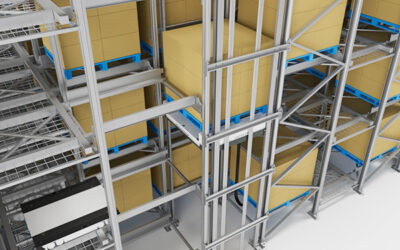
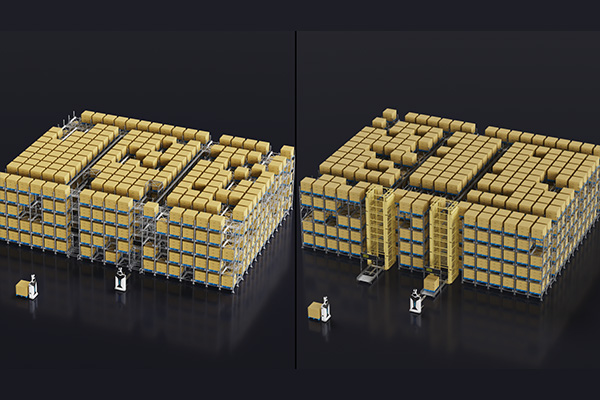
Lane length is the internal rack depth in the direction of pallet travel. In a shuttle system, each position consumes one pallet depth plus a placement clearance. A longer lane packs more pallets behind a single front opening, so it reduces the number of transfer aisles and lifts per pallet position. That is why deep-lane storage can improve cube utilization in a building where floor space is limited.
The trade-off appears in cycle time. A shuttle serving a 20 m lane travels farther than one serving an 8 m lane. Travel distance affects the average retrieval time and the number of shuttles required to maintain a target pallet rate. In a multi-lane block, several shuttles can operate in parallel across different lanes, with the control system assigning robots to zones and cross aisles.
Lane length therefore cannot be evaluated as density alone. It is a relationship between building footprint, rack depth, shuttle fleet size, and the required inbound and outbound pallet rate.
From Pallet Footprint to Lane Length
The first input is the pallet side that runs parallel to the lane. A pallet stored with its 1,200 mm side along the lane creates a different lane pitch than the same pallet stored with its 800 mm side along the lane. The R-bot four-way shuttle can handle several footprints: the standard model supports a 1,200 mm side with a 800-1,000 mm second side, the American model supports 1,016 × 1,219 mm, and the Japanese model supports 1,100 × 1,100 mm. The selected orientation changes the lane length directly.
The basic planning formula is:
L = n × (D + c) + e_f + e_r
Where:
Lis the clear lane length between front and rear reference points.nis the number of pallet positions in the lane.Dis the pallet depth along the travel direction.cis the clearance between pallet positions.e_fande_rare front and rear allowances for stops, sensors, rack deflection, and lift staging.
As an illustrative calculation, assume 10 positions, a 1,200 mm pallet depth, a 100 mm placement gap, and 100 mm of front plus rear allowance. The lane length becomes 10 × 1,300 mm + 200 mm, or 13,200 mm. The clearance and end allowances must come from the rack supplier and the control-system requirements for the selected shuttle model. They are not universal values.
| Lane profile | Depth band | Main density effect | Main throughput effect | Required check |
|---|---|---|---|---|
| Shallow | 2-4 positions | Lower density per front opening | Faster retrieval and easier sequencing | Front lift and aisle capacity |
| Mid-depth | 5-8 positions | Balanced density | Moderate shuttle travel | Battery use and shuttle count |
| Deep | 9-15 positions | High density | Deeper travel and longer cycle per position | Rack tolerance, fire access, and recovery |
Deep-lane design is not only a rack calculation. It is also a motion and control calculation.
Shuttle Kinematics and the Practical Depth Limit
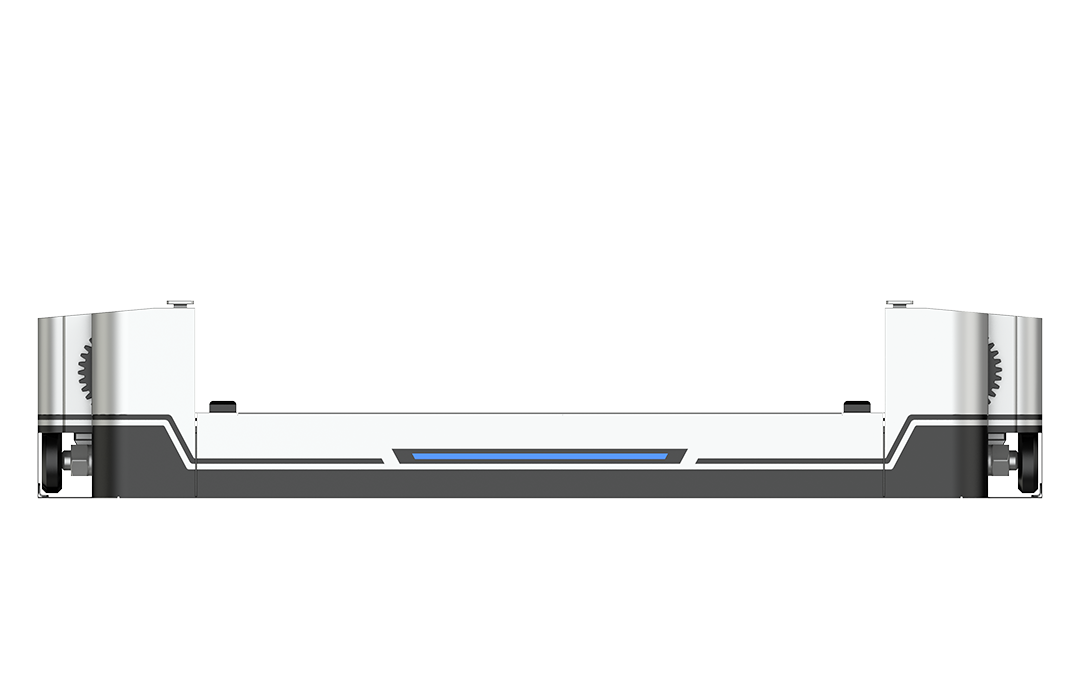
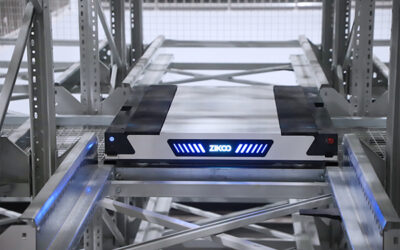
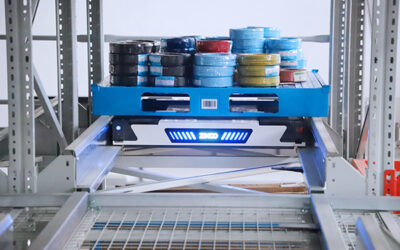
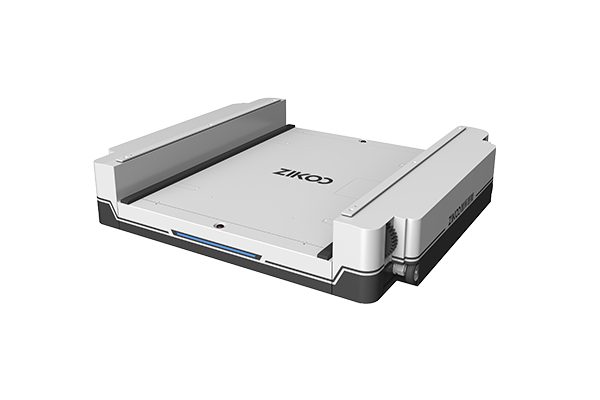
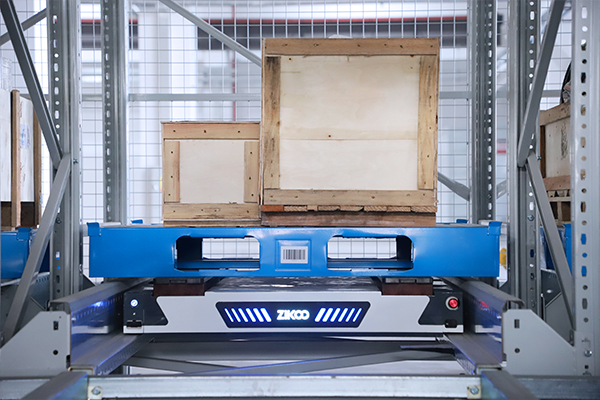
A four-way shuttle travels on rails inside the lane and lifts a pallet from beneath. The R-bot standard, American, Japanese, and heavy-duty types travel at 1.6 m/s when empty and 1.2 m/s when loaded. The heavy-duty large pallet type operates at 1.35 m/s empty and 1.0 m/s loaded. Body height is 125 mm for most models and 150 mm for the heavy-duty large pallet type. These speeds matter because every meter of lane length becomes travel time in both directions: loaded travel into the lane and empty travel back out. In a 20 m lane, loaded travel at 1.2 m/s is about 16.7 seconds and empty return at 1.6 m/s is about 12.5 seconds, before lift and positioning time. Deeper lanes add directly to this base motion.
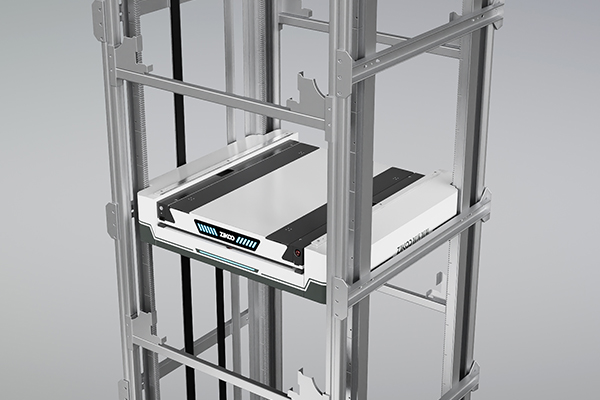
A four-way shuttle is the basic horizontal lane vehicle. When vertical lifts are added at the lane front, the combined system becomes a six-way network, but the lane-length calculation still belongs to the horizontal shuttle path.
The practical depth limit is usually set by operating performance rather than a universal physical limit. A deeper lane can raise throughput per square meter of floor but lower throughput per shuttle unless the fleet is expanded. Battery capacity also interacts with lane depth. The R-bot operates for about 8 hours on a full charge for most models, and the cold-chain variant supports 6-8 hours at -25 °C. More travel per pallet move means charging windows and spare-battery policy must be planned with the lane geometry.
A multi-level system adds a vertical transfer constraint. When an H-bot lift serves the lane front, the front allowance must include space for pallet handover, sensor zones, and lift door or positioning tolerance.
Throughput vs Depth: Every Position Does Not Add the Same Value
A deep lane may increase storage density, but not every added position contributes equal throughput. The shuttle can pass beneath pallets to reach a selected position, so a four-way shuttle is more selective than a drive-in rack. However, deeper positions still require more travel, and a lane that mixes many SKUs can create longer retrieval sequences if the control system must move the shuttle across the full depth repeatedly.
The more useful question is whether the lane depth supports the SKU assignment and order profile. When a lane holds only one SKU and the inventory moves in large batches, deeper lanes are easier to justify. When the operation retrieves one pallet at a time across many SKUs, a deep lane may require more shuttle travel and more precise execution to hold the required pallet rate.
Lane depth changes both rack cost and operating cost, so the economic answer is not simply the deepest lane that fits. <Smart Warehousing Starts Here: Cost-Effective Four-Way Shuttle Systems> covers how four-way shuttle configurations balance density and lifecycle cost.
The right lane depth comes from a simple comparison: calculate the number of shuttle moves per hour needed, multiply by the average round-trip distance in the lane, and compare that travel load with the shuttle fleet and charge schedule. If the lane is deep but inbound pallets arrive faster than one shuttle can place them, the lane length has not reduced the system cost; it has only moved the bottleneck.
Rack, Safety, and Building Constraints
Lane length is also a structural input. A long rack lane increases the distance between front and rear uprights, which affects rack deflection, floor flatness tolerance, and the alignment of running rails. The deeper the lane, the more important it is to verify that the shuttle can maintain smooth travel without hitting a rail joint or rack member.
Fire protection and service access add another limit. Deep lanes are harder for sprinklers or fire crews to reach, and a stalled shuttle at the rear of a very long lane can be difficult to recover. The rack layout must retain enough front aisle width for maintenance, enough cross-aisle spacing for robot transfer, and safe access for personnel who must inspect or clear a lane.
At the lane front, the vertical lift interface also consumes space. The H-bot vertical shuttle positions pallets with a positioning accuracy of ±1 mm, but the physical handover zone still needs the depth, clearance, and sensor spacing required by the selected rack and lift combination.
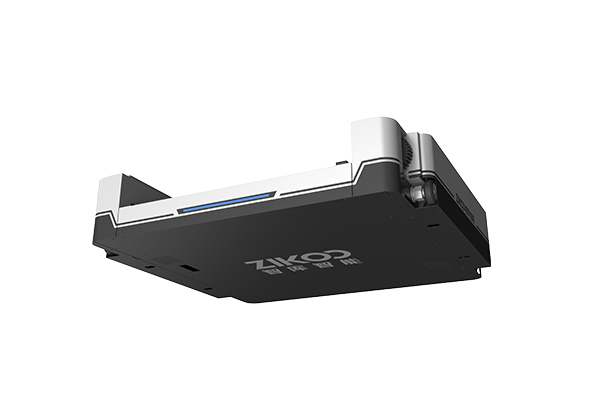
Lane depth is not only a rack calculation; it also changes the storage machine choice and the building interface. <Stacker Crane vs Four-Way Shuttle: Which Fits Your ASRS Warehouse Best> covers the architecture trade-off between deep-lane shuttling and aisle-based stacker cranes.
A lane that works on paper can fail in the building if the column grid interrupts the lane, the floor varies beyond the rail tolerance, or the fire authority limits the maximum depth of uninterrupted storage.
Engineering Steps to Lock the Lane Length
Use a controlled sequence instead of selecting a depth from a standard list.
- Lock the pallet orientation and the exact pallet drawings. The lane length starts from the pallet side parallel to travel.
- Set the position pitch with the pallet depth, placement gap, rack upright size, and shuttle lift clearance.
- Add front and rear allowances for the lift handover, stop positions, sensors, and rack deflection.
- Check the throughput assumption. Calculate inbound and outbound pallets per hour, average pallet travel distance, and shuttle fleet load.
- Check the building constraints. Column spacing, flatness, fire protection, and maintenance access all constrain the maximum lane length.
- Simulate the worst shift, not the average shift. A lane that performs well in steady state may fail when many full pallets arrive together.
A final lane length should be released only after the rack supplier and shuttle supplier use the same coordinate reference and the same tolerance assumptions. The lane detail drawing should show clear dimensions, pallet pitch, rail level, stop positions, and the recovery path for a disabled shuttle.
Plan the Lane Length Before You Lock the Rack Layout
Deep-lane automated pallet storage works best when the lane length is derived from the pallet footprint, shuttle duty cycle, and building constraints together. If you are evaluating a new rack block, share the pallet size, lane depth target, required pallets per hour, SKU count, and building clearance. Those inputs allow a layout check based on the shuttle travel load and lift interface rather than storage count alone. Contact Zikoo Smart Technology Co., Ltd at info@zikoo-int.com or (+86)-19941778955 for an engineering review of the lane geometry and shuttle fleet. Feasibility still depends on your site measurements and the final rack and safety review.
FAQ
How deep can a four-way shuttle lane be?
There is no single universal limit. The workable depth depends on pallet size, clearance, shuttle speed, battery policy, rack tolerance, and fire protection. A 5-position lane and a 15-position lane can both be valid, but the correct value must be calculated for the specific building and duty cycle.
Does a deeper lane always improve storage density?
It usually improves storage density per front aisle, but it may not improve system throughput. A deeper lane increases shuttle travel and can require more shuttles or more charging capacity to maintain the same pallet rate. Evaluate density and cycle time together.
How does lane length affect retrieval time?
Each added position adds shuttle travel into the lane and back out. The exact effect depends on loaded and empty travel speeds, lift time, and how the control system sequences missions.
What information is needed to engineer a lane length?
You need the pallet footprint and orientation, the number of positions per lane, the placement and end clearances, the rack tolerance, the shuttle model, the required pallets per hour, the SKU assignment plan, and the building constraints including columns, floor flatness, and fire-protection limits.
If you’re interested, check out these related articles:
Six-Way Shuttle: The Smart Warehousing Tool for Cost Reduction and Efficiency 2
PTP Intelligent Warehousing Platform: Building a Flexible and Smart Logistics Ecosystem
Revolutionizing Cold Chain Logistics: Zikoo Robotics Six-Way Shuttle Powers High-Density, High-Efficiency Warehousing
Six-Way Shuttle Unlocks the Era of True 3D Intelligent Warehousing
Multi-Scenario Smart Adaptation: Zikoo’s Six-Way Shuttle Powers the Digital Transformation of Warehousing