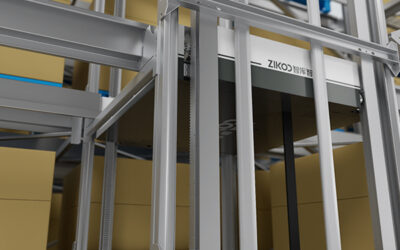
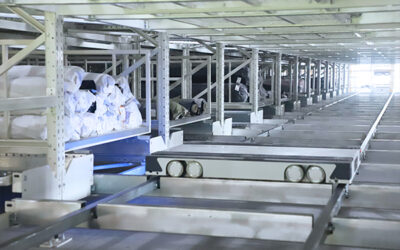
A manual warehouse stops every time a shift ends. Workers need rest, forklifts need recharging, and order flow drops to zero. 24/7 automated warehouse operations bypass that constraint, but not simply because robots don’t get tired. The real enabler is a tightly engineered stack of battery management, thermal control, redundancy, and software intelligence that keeps every piece of equipment running safely without a human presence in the aisles. Getting to round-the-clock reliability means designing the entire system—not just the robots—to survive power blips, component wear, and unexpected faults while maintaining throughput. This article examines the engineering and operational layers that make lights-out pallet storage possible, drawing on firsthand experience with pallet-to-person robotics and smart warehouse software deployments across multiple industries.
What Changes When a Warehouse Goes Lights‑Out
The most obvious shift from manual to 24/7 automation is the absence of operators inside the storage area. That alone eliminates shift‑change handovers, fatigue‑related errors, and the productivity dips that happen around meal breaks. But removing people from the aisles also removes the person who would normally spot a leaking hydraulic hose, hear a bearing starting to fail, or override a stuck pallet. In a completely unattended warehouse, every one of those detection tasks must be handled by sensors, control logic, and pre‑programmed responses. The engineering problem becomes one of fault tolerance: the system has to keep running safely even when individual components degrade. This is the departure point for most of the hardware decisions that follow.
Battery Management: The Heartbeat of Continuous Shuttle Operation
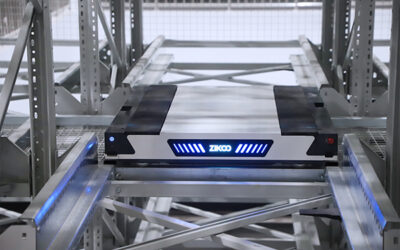
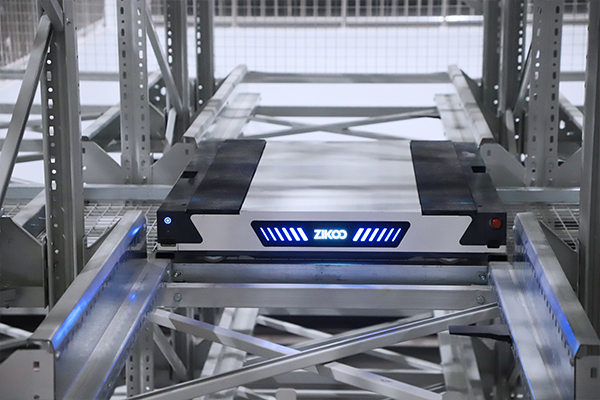
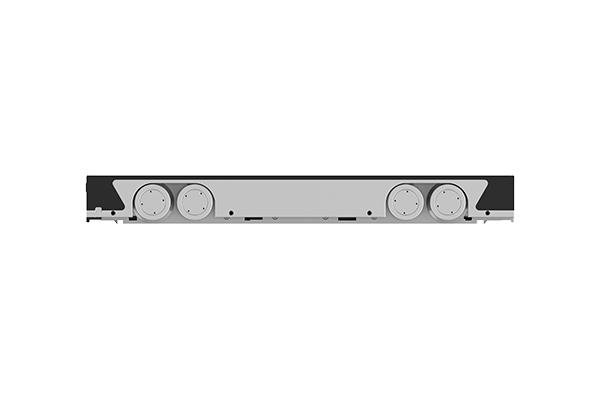
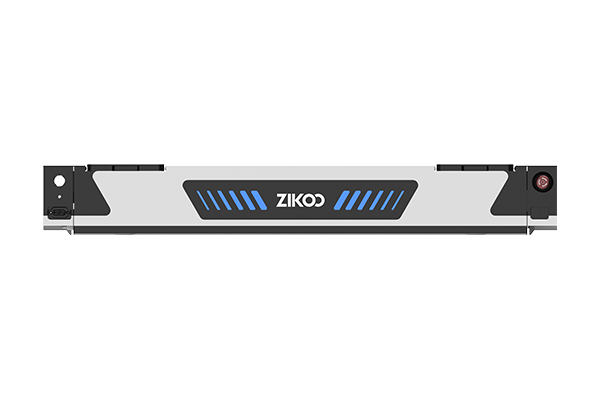
A four‑way shuttle that runs out of power mid‑aisle stops the entire lane. In a 24/7 automated warehouse, that cannot happen. Standard lead‑acid batteries are not viable for round‑the‑clock duty because their deep‑cycle life is short and slow charging creates gaps in availability. The R‑bot four‑way shuttle we deploy runs on a 51.2V/40Ah lithium pack that delivers a full eight hours of continuous loaded movement at 1.2 m/s. That eight‑hour window is matched to a charge‑on‑demand strategy rather than fixed‑interval charging: the shuttle returns to the charge station during natural idle gaps in the order queue, not when a timer expires.
This scheduling tactic is a software‑driven decision. The fleet manager monitors each shuttle’s state of charge and the pending order volume, then prioritizes shuttle assignments to keep the lowest‑charge unit near the charging bay. The underlying math is not complicated, but it requires the WCS to have millisecond‑level state visibility across every robot. We learned this on a cold‑chain project where the low‑temperature lithium variant (operating to –25°C) required 20% more buffer capacity in the charge management algorithm because cold batteries recover voltage more slowly. Without that adjustment, a shuttle might report sufficient charge at rest but sag under load after two moves.
Battery life in cold storage is a more aggressive cost multiplier than many planners expect. <Six-Way Shuttle Unlocks the Era of True 3D Intelligent Warehousing> covers a six‑way shuttle installation where the charging infrastructure accounted for nearly 12% of total project cost because low‑temperature charging ports and insulated cable runs were needed to sustain three‑shift operation without battery swap delays.
From Thermal Control to Predictive Maintenance: Building for 24/7 Reliability
Continuous operation raises ambient temperatures inside the rack structure. Even in a temperate warehouse, a group of shuttles running loaded cycles generates enough heat to shift the mean temperature inside a dense block by several degrees above the building setpoint. The control system must account for that by pulling ventilation duty into the motor power budget. In high‑humidity environments, condensation on exposed electronics is another failure vector. Our standard PCBA receives a conformal coating when the shuttle is specified for a cold or wet application, but the spec has to be flagged at the proposal stage—it is not retrofittable after the hardware ships.
Predictive maintenance is often pitched as an AI feature, but in practice it starts with something simpler: tracking motor current draw over time. A four‑way shuttle’s wheel drive and lifting actuators follow repeatable motion profiles. When the baseline current for a loaded lift diverges by more than 12–15% from the fleet average, it usually signals a mechanical issue (worn rollers, rail debris, misalignment) long before a vibration sensor triggers an alarm. We build this into the PTP software as a trend‑line alert, not an emergency stop. That lets the maintenance team plan a 20‑minute intervention during the lowest throughput hour instead of losing a shuttle at peak.
Redundancy and Failover: No Single Failure Should Stop the Aisle
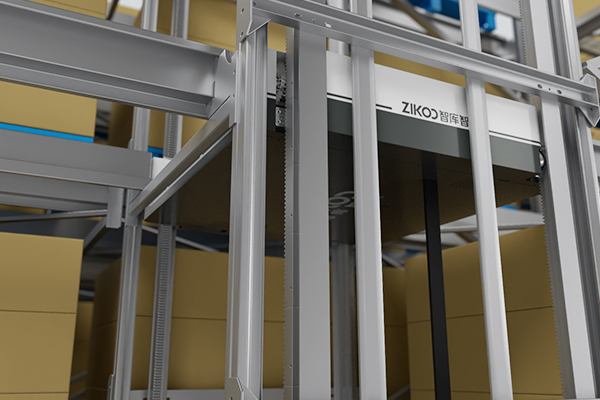
A single four‑way shuttle is a point of failure if it is the only machine serving an aisle. In a 24/7 automated warehouse, the aisle configuration allows any shuttle to cross into the same lane from a perpendicular direction, so a failed unit does not block access—another shuttle simply approaches from the opposite end. That is a fundamental difference between shuttle‑based systems and stacker crane AS/RS, where a crane failure takes the entire aisle offline.
The next layer of redundancy is in the vertical lift. The H‑bot bidirectional shuttle moves pallets between levels. We size the elevator ratio to handle throughput with N+1 capacity, so if one elevator is in a scheduled service window, the remaining units absorb the flow without breaching the required pallet‑per‑hour target. This is not a theoretical capability; it is a straightforward capacity calculation that forms part of every system design. The harder part is the software hand‑off: when an elevator goes offline, the fleet manager must recalculate optimal routes across the remaining vertical capacity in under one second to avoid creating a cascading queue. We deployed this logic on a project with eighteen elevators; the failover loop ran within 400 milliseconds after testing, which is well inside the acceptable window for pallet dispatch.
Smart Software: Orchestrating Material Flow Without a Control Room
Continuous operation hinges on software that can run for days without a human looking at a screen. The PTP platform layers WMS functions (inventory allocation, order batching) on top of a WES layer that decides task priority, and a WCS/RCS layer that sends movement commands to individual robots. At the WES level, the key decision loop for 24/7 operation is order‑release timing: the system must feed enough work into the robotic layer to keep the shuttles busy, but not so much that the pick stations become over‑saturated and the queue grows unbounded. This is a flow‑control problem, not a warehouse problem, and it borrows concepts from packet‑switching networks. The takeaway is that lights‑out warehousing is as much an IT challenge as an automation one.
Safety and Compliance for Unattended Warehouses
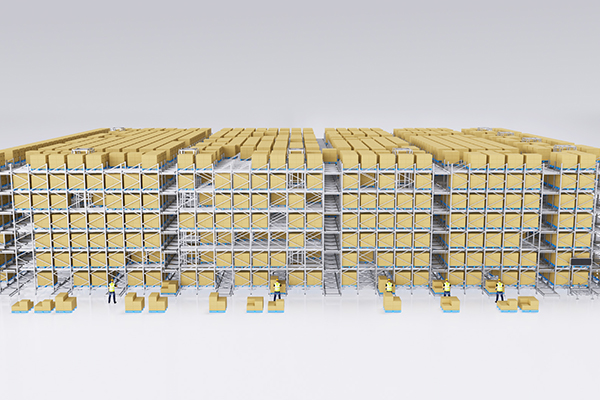
When an aisle is truly unmanned, safety must be enforced by hardware interlocks, not by procedures. The shuttle systems we deliver use a combination of laser scanners, safety‑rated PLCs, and light curtains at entry points. Any breach of the safety field triggers an immediate safe stop of all motion within the affected zone. This is standard machinery‑safety practice, but the twist in a 24/7 facility is that the restart sequence after a safety stop must be automated enough that the system can return to production without a human physically walking to a reset button at 3:00 AM. We accomplish that with safety zone segmentation: a breach in one zone does not require the whole floor to be re‑validated. The system performs a camera‑based presence check of the breached zone, and if no obstruction persists, it resumes operation on a timer.
Fire protection is the other half of unattended safety. The rack structure typically requires in‑rack sprinklers, and the software must integrate with the fire alarm panel to halt material movement and activate smoke venting. This is a code requirement in most jurisdictions, but the specific handshake between the warehouse control system and the fire system is a detail that gets overlooked in early planning. I have seen projects delayed by months because the panel interface protocol was not scoped at the automation level and had to be retro‑fitted after the rack was already built.
The boundary between the automation system and building safety infrastructure is where most integration surprises live. <Software-Driven Hardware: [Six-Way Shuttle](https://www.zikooint.com/solution/r-bot-h-bot-six-way-shuttle-dense-storage-system) Maximizes Warehouse Efficiency> describes how Zikoo’s software‑driven approach handles interlock logic and fire‑panel hand‑offs in multi‑floor installations, which is helpful context for anyone navigating these compliance requirements.
Questions Engineers and Operations Directors Ask About 24/7 Automation
Can automated warehouses really run 24/7 without any human on site?
Yes, but the technology required goes beyond the robots themselves. A truly unattended night shift demands automated charge management, safety zone logic that can self‑reset, and a software stack that can survive a network blip without crashing. Many installations still have a skeleton crew of one or two technicians on call, but the goal of fully unmanned operation is achievable with the right design.
What happens if the network or power goes out?
The shuttle systems rely on a safety‑rated stop in the event of a network loss, and the local machine controllers hold the last valid state. Uninterruptible power supplies (UPS) on the servers keep the WMS and database alive long enough for a graceful shutdown. Extended power failures will stop production, but the rack structure and goods are not at risk. When power returns, the system can automatically re‑inventory the positions of any shuttles that lost registration, but this sequence can take 15–20 minutes depending on the number of aisles.
How often do the shuttles really need maintenance?
Lithium‑powered shuttles like the R‑bot typically run eight‑hour cycles without a charge, but preventive maintenance on the drive wheels, guide rollers, and lifting mechanisms should be scheduled at 2,000‑hour intervals. In practice, most sites stagger maintenance across the fleet so that no more than one shuttle per aisle is out of service at any given time. The battery packs are designed to last 2,000–3,000 full cycles, which translates to roughly three years in a 24/7 operation before capacity drops below 80%.
Is a completely unattended warehouse safe?
Yes, provided the safety system is designed for self‑monitoring and automated restart. The laser scanners and light curtains create physical safety zones that stop motion instantly on intrusion. The automated restart logic—after a camera‑verified zone clearance—is the part that differs from a manned facility and needs to be validated by both the integrator and the local safety authority before going fully lights‑out.
Can an existing manual warehouse be upgraded for 24/7 automation?
Many brownfield sites can be converted, but the feasibility depends on floor flatness, column spacing, and ceiling height. Four‑way shuttle systems are more forgiving than stacker cranes because they operate on rails embedded in standard racking; an existing rack structure can often be re‑used if it meets the required load ratings. The main infrastructure hurdle is delivering sufficient power to the charge stations and ensuring the floor meets a minimum flatness tolerance of ±5 mm over 10 meters. If your existing facility meets those conditions, upgrading to 24/7 operation is a matter of system design, not a building rebuild. If you are unsure whether your facility qualifies, share a floor plan and existing rack specifications with [email protected], and we can confirm the compatibility and outline a phased cutover plan that keeps your current operation running during the upgrade.
If you’re interested, check out these related articles:
Stacker Crane vs Four-Way Shuttle: Which Fits Your ASRS Warehouse Best
Software-Driven Hardware: Six-Way Shuttle Maximizes Warehouse Efficiency
Reshaping Warehouse Value: Six-Way Shuttle Leads the Digital Transformation
Six-Way Shuttle Unlocks the Era of True 3D Intelligent Warehousing
Six-Way Shuttle: The Dual-Engine Solution for High-D