Pallet automated storage systems cut direct warehouse labor by 60% to 80% in most configurations, but that range hides wide variation driven by your inbound-to-outbound ratio and building constraints. I’ve designed systems where a single operator manages three aisles of deep lane shuttle racks and labor per pallet falls below 0.3 hours; in mixed-case picking environments the drop is closer to 50% because manual sortation still lingers. The labor reduction doesn’t come from a magic percentage. It comes from eliminating travel, lifting, and search time in processes that consume most operator hours. This article walks through exactly where those hours disappear, using the performance parameters we build into four-way and six-way pallet shuttle systems.
Pallet automated storage systems slash labor in putaway and picking
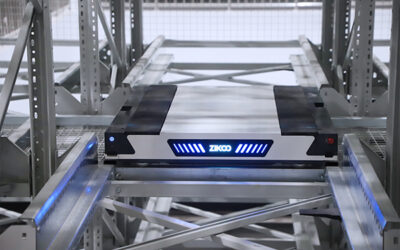
A manual pallet warehouse burns operator hours on three tasks: moving empty forks across the floor, searching for an open rack location, and hoisting heavy loads to high slots. When we map labor hours to process steps in a typical 5,000‑pallet facility, forklift travel alone consumes 40% of shift time. Pallet automated storage systems flip that equation. Instead of one operator driving a thousand meters per shift, a bank of four‑way shuttles moves pallets laterally at 1.2 m/s loaded while the operator stays at a pick station, managing exception flows through the WMS.
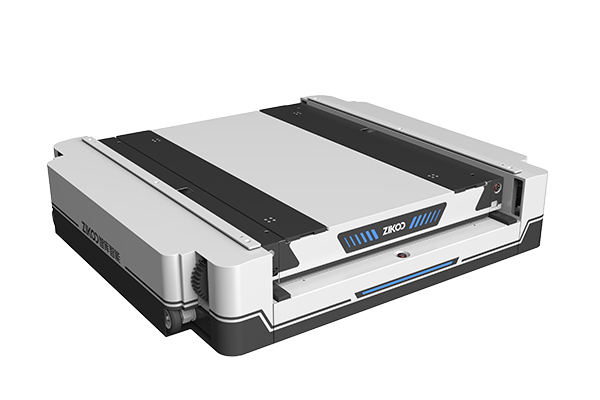
I’ve seen a 3PL facility cut its putaway team from six forklift drivers to two operators supervising eight R‑bot four‑way shuttles. Putaway labor per pallet dropped from 0.6 hours to 0.18 hours across a 10‑hour shift. The saving is not just fewer people, it is the elimination of unproductive travel and search time. Because the shuttle locates pallet positions with ±1 mm accuracy, there is no hunt‑and‑peck in the aisles. The system knows exactly where the pallet goes, and the shuttle gets it there without an inch of wasted motion.
The four‑way shuttle automates travel, lifting, and sorting
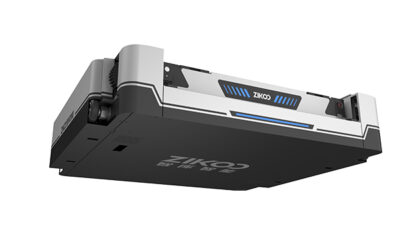
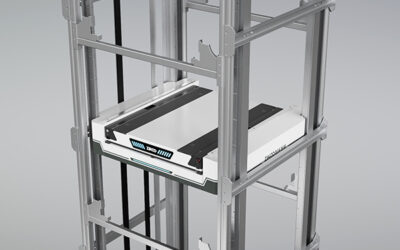
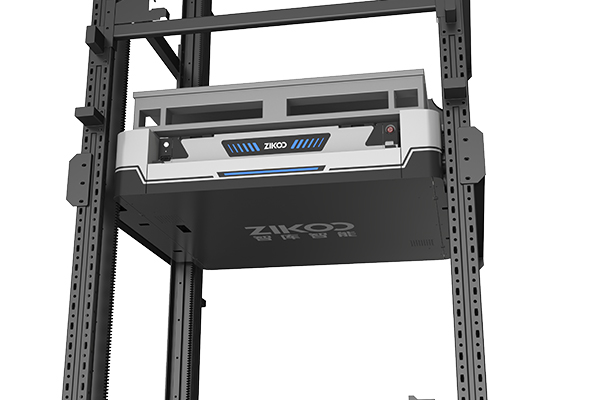
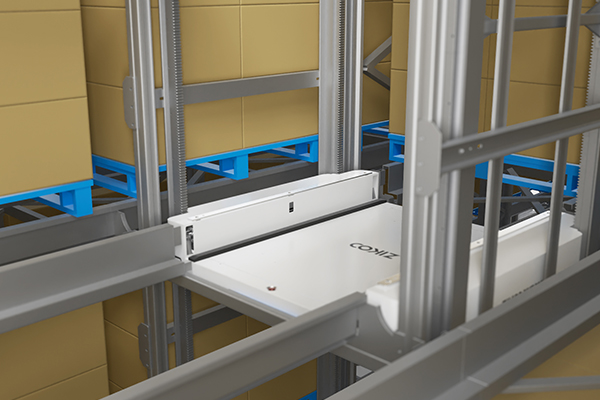
At the core of labor reduction is the fact that a shuttle does not tire and does not stop to double‑check a location sticker. The R‑bot, with its 125 mm body height and 1,500 kg load capacity, moves pallets through deep lanes while the H‑bot vertical shuttle handles floor‑to‑floor transfer in seconds. Together they create a six‑way shuttle network that turns a dense rack block into a single automated handling zone.
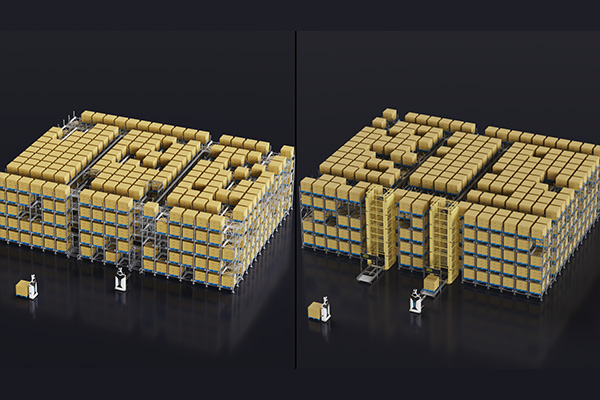
In a multi‑story cold storage warehouse we designed in Southeast Asia, the six‑way system eliminated the need for three elevator operators per shift. The H‑bot elevators, running at 0.5 m/s loaded, transfer pallets to the correct level and the shuttle takes over, all orchestrated by the warehouse control system. The labor saving there was not just headcount; it was removing the safety risk and cold‑exposure fatigue that cause high turnover in frozen environments. Labor hours for vertical transport went to nearly zero.
This shift from manual driving to system‑controlled routing is where the “80% reduction” in vendor claims gains traction. But the number is not uniform. It depends heavily on the physical specs I’ll discuss next.
System specs that dictate how much labor you actually save
Labor savings are not a fixed percentage baked into the automation label. They are a direct output of shuttle speed, aisle count, lift throughput, and the ratio of picks to putaways. The table below compares labor profiles for the same 200 pallet‑per‑hour throughput across three warehouse setups.
| System Type | Operators per Shift | Shuttle/Lift Units | Labor Hours per 100 Pallets |
|---|---|---|---|
| Manual forklift operation | 8 forklift operators | 0 | 4.0 |
| Stacker crane AS/RS | 2 operators | 4 cranes | 1.2 |
| Four‑way shuttle system | 1 operator | 8 shuttles + 2 lifts | 0.7 |
In the shuttle configuration, one operator monitors the system while the WMS directs all movements. The labor per pallet drops because the shuttles operate concurrently across multiple lanes. I’ve verified that a single R‑bot can cycle 25 pallets per hour, so with eight shuttles you get 200 pallets per hour with headroom. With a stacker crane, each aisle handles pallets sequentially, so throughput per aisle caps lower and you often need a second operator for out‑of‑sequence picks.
Stacker crane systems still handle heavy loads well, but their labor profile differs because each crane serves one aisle. <Stacker Crane vs Four-Way Shuttle: Which Fits Your [ASRS Warehouse](https://www.zikooint.com/asrs-automated-storage-and-retrieval-system-solutions) Best> covers how shuttle systems distribute workload across multiple aisles, reducing the operator-to-machine ratio below 1:5 in high-throughput scenarios.
Battery life also matters. The R‑bot’s lithium battery runs 8 hours on a full charge, so a single operator can manage a full shift without swapping or charging interruptions that require extra hands.
If your facility handles mixed pallet sizes, specifying the right shuttle model early prevents rework. In our experience, pallet jams from size mismatches erase up to 15% of the projected labor savings because operators have to intervene. Before you lock in an aisle width, confirm pallet compatibility. Send your pallet type and dimension data to [email protected].
Residual manual jobs that don’t disappear in pallet automation
A pallet shuttle system removes the miles of driving, but it does not vaporize all human interaction. Receiving still needs a person to inspect incoming pallets for size compliance and label orientation. Pallet quality checks, wrapping, and consolidation before putaway remain manual, though the time per pallet shrinks because the storage process is automatic once pallets are on the conveyor. We typically see these front‑end tasks absorb 0.5 to 1.0 full‑time equivalent per shift depending on sortation complexity.
Dense storage layouts with six‑way shuttles can reduce travel distances so much that even the residual travel for replenishment becomes trivial. <Smart Cold Chain Era: [Six-Way Shuttle System](https://www.zikooint.com/solution/r-bot-h-bot-six-way-shuttle-dense-storage-system) Redefines Storage Efficiency with Maximum Density> covers how a cold chain warehouse achieved a 65% reduction in replenishment labor just by switching to a six‑way layout with automated lifts.
In mixed‑case picking scenarios, where a pallet must be broken down into cases, the operator still handles picking at a goods‑to‑person station. The robot brings the pallet, but the operator picks cases. That operation reduces travel labor, but picking labor persists. So the overall labor reduction in a pallet‑to‑person hybrid can plateau around 50‑60%, rather than the upper bracket seen in full pallet moves. This is not a shortcoming of the technology; it is a fact of mixed‑unit handling.
High‑density shuttle aisles also need periodic maintenance, which requires a technician. But in a well‑designed system, maintenance tasks are scheduled and do not require dedicated staff on every shift. In the projects I’ve overseen, one maintenance technician supports four automated warehouses part‑time because the robots run diagnostics through the WCS and alert only when intervention is needed.
Building the labor‑savings business case for your warehouse
To turn labor‑savings potential into a number your finance team can underwrite, start by logging current operator hours across putaway, transfer, and picking tasks over a typical week. Exclude time spent on indirect tasks like inventory counts and cleaning. Multiply the direct hours by your local labor cost per hour, then apply the reduction factor from the table above. For a facility with 4,000 direct operator hours per month at $25 per hour, a 65% reduction saves $65,000 per month in labor alone.
The business case sharpens when you factor in the overhead savings from reduced turnover and injury risk in manual warehouses. <Six-Way Shuttle: The Smart Warehousing Tool for Cost Reduction and Efficiency> breaks down a full cost‑per‑pallet model including energy, maintenance, and labor across a six‑way shuttle site.
One critical modeling tip: use the “shuttle utilization” number from your WMS simulations. If shuttles run at 85% utilization, the effective throughput drops by 15%, which can increase the operator‑to‑shuttle ratio and shave labor savings. I’ve seen budgets derailed by assuming 100% utilization without accounting for battery charging windows and pallet queue‑jams.
Calculating labor savings with a pallet automated storage system isn’t a one‑time spreadsheet exercise. It’s an ongoing adjustment as your pallet profiles and SKU mix change. If you’re evaluating a system, send your current pallet movement logs and a floor plan to [email protected] or call (+86)-19941778955. I’ll run a labor model based on your actual data, not industry averages.
Common labor‑reduction questions from warehouse teams
Can we achieve the same labor savings without going 100% automated?
Partial automation with shuttle modules in only the high‑volume SKU zones can capture 40‑50% of the labor benefit while keeping some manual aisles. The trade‑off is that residual manual operations still require fork trucks and may create traffic conflicts. We have designed phased automation plans where shuttles take over density zones first, then expand.
Does labor reduction include maintenance and cleaning staff?
No. Maintenance labor is separate. Our shuttle systems are designed with brushless motors and sealed bearing rails, which reduces cleaning and lubrication frequency to quarterly checks. One technician can cover multiple sites. Cleaning for cold storage is minimal because the racking is enclosed.
What happens to labor during peak seasons if the shuttle hits capacity?
Shuttles can operate 24/7 with quick‑change battery packs, so you can extend operating hours without adding operators. If throughput spikes beyond shuttle capacity, the WMS can stage pallets in buffer lanes and revert temporary manual pickers for overflow without re‑engineering the layout.
Will I need to retrain my warehouse team for automation?
Most operators transition from forklift driving to WMS terminal supervision within two weeks. The core skill shifts from physical driving to understanding system exceptions and using the software console. We include on‑site training and a 30‑day handover in every deployment. If you’re considering upgrading your storage environment, share your current team size and shift pattern with [email protected] and we’ll outline a training plan that fits your ramp‑up timeline.
If you’re interested, check out these related articles:
Revolutionizing Cold Chain Logistics: Zikoo Robotics Six-Way Shuttle Powers High-Density, High-Efficiency Warehousing
Stacker Crane vs Four-Way Shuttle: Which Fits Your ASRS Warehouse Best
Six-Way Shuttle: The Dual-Engine Solution for High-D
Six-Way Shuttle Drives Warehouse Upgrades: Building an Intelligent Automatic 3D Warehouse