Modern warehouses are under pressure to move faster and make fewer mistakes—and I’ve felt that firsthand walking miles in a day just to chase a single SKU across aisles. As order volumes rise and product assortments diversify, manual picking strains to keep up. Robotic picking systems change that dynamic by automating item identification, retrieval, and transport, tying into WMS/WES/WCS for real-time coordination. The result is higher throughput, lower operating costs, improved safety and accuracy, and the flexibility to scale—today with AGVs/AMRs, robotic arms, AI/ML, and vision systems, and tomorrow with more dexterous, collaborative fleets. In this overview, I’ll unpack the need, the core technologies, how these systems run on the floor, where Zikoo’s R-bot, H-bot, and U-bot fit in, the measurable benefits, and what’s next.
Understanding the Need for Robotic Picking in Modern Warehouses
Traditional manual picking methods present significant challenges for today’s warehouses. Labor shortages, high operational costs, and the physical demands on human workers create bottlenecks. Manual picking is prone to errors, which leads to mis-shipments and customer dissatisfaction. Additionally, scaling manual operations to meet peak demand proves difficult and expensive. These factors collectively highlight the urgent need for more efficient and reliable solutions in logistics and supply chains.
The demand for automation in logistics and supply chains continues to grow. E-commerce expansion, coupled with consumer expectations for rapid delivery, necessitates faster and more accurate order fulfillment. Companies seek ways to optimize space utilization and reduce their operational footprint. Automation addresses these needs by providing consistent performance, increased speed, and enhanced data visibility.
Robotic picking systems are automated solutions that identify, retrieve, and transport items within a warehouse. They leverage advanced technologies to perform tasks traditionally handled by human operators. These systems play a crucial role in improving warehouse efficiency by streamlining workflows and reducing manual intervention. Their integration transforms warehouses into highly productive and responsive fulfillment centers.
Unveiling the Core Technologies Behind Robotic Picking Systems
Robotic picking systems rely on several advanced technologies to operate effectively. These technologies enable robots to navigate, identify items, and execute precise picking actions. Understanding these components clarifies how these systems achieve their revolutionary impact.
Automated Guided Vehicles (AGVs) and Autonomous Mobile Robots (AMRs) are fundamental to robotic picking. AGVs follow predefined paths, transporting goods between fixed points. AMRs, conversely, navigate dynamically, using sensors and mapping to determine their own routes. Both types of robots reduce manual transport and improve material flow. AMRs offer greater flexibility, adapting to changing warehouse layouts and operational demands.
Robotic arms and manipulators perform the actual picking tasks. These arms come equipped with various end effectors, such as grippers or suction cups, designed to handle diverse item types. Their mechanics allow for multi-axis movement, enabling precise reach and placement. Advanced control algorithms ensure smooth and efficient manipulation of products.
Artificial intelligence (AI) and machine learning (ML) are critical for intelligent decision-making in robotic picking. AI algorithms optimize picking routes, manage inventory, and predict maintenance needs. Machine learning enables robots to adapt to new products or changing environmental conditions. This continuous learning enhances system performance and reliability over time.
Vision systems and sensors provide robots with the ability to “see” and interact with their environment. 3D cameras and lidar sensors map the warehouse space and detect obstacles. High-resolution cameras identify specific items, reading barcodes or recognizing product characteristics. These sensors ensure precise item identification and handling, minimizing errors.
Exploring How Robotic Picking Systems Operate in Warehouses
Robotic picking systems integrate various components into a cohesive workflow, ensuring seamless order fulfillment. From receiving an order to preparing it for dispatch, each step is meticulously orchestrated for maximum efficiency.
The typical workflow of a robotic picking system begins with order reception.
1. The warehouse management system (WMS) receives an order and generates picking tasks.
2. The system assigns these tasks to available robots, optimizing their routes for efficiency.
3. Robots travel to designated storage locations to retrieve the required items.
4. Vision systems confirm item identification and ensure accurate picking.
5. Robotic arms carefully pick items and place them into designated totes or containers.
6. Robots transport the picked items to a packing station or another processing area.
7. The system consolidates orders and prepares them for final dispatch.
The integration of robotic picking with warehouse management software (WMS) is crucial for effective operation. The WMS acts as the central brain, coordinating robot movements and inventory data. It communicates with warehouse execution systems (WES) and warehouse control systems (WCS) to manage tasks and equipment. This seamless data exchange ensures real-time visibility and optimized resource allocation. Additionally, robot control systems (RCS) manage individual robot operations and fleet coordination.
We utilize pallet-to-person (PTP) robotic solutions to bring entire pallets or storage units to a picking station. This eliminates the need for human workers to travel long distances within the warehouse. PTP systems significantly reduce travel time and improve ergonomic conditions for employees. This approach enhances picking efficiency, especially for high-volume SKUs.
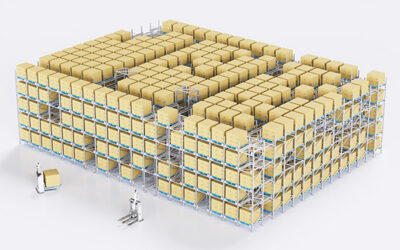
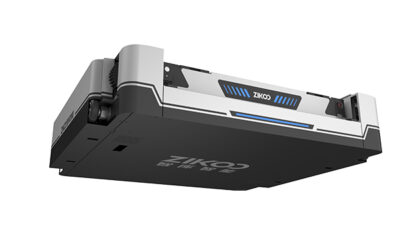
Zikoo’s R-bot Four-Way Pallet Shuttle enhance dense storage and retrieval with their flexible four-way movement. These robots operate in narrow aisles and dense storage areas, maximizing space utilization. They can handle various pallet sizes and weights, making them adaptable to diverse inventory. Their multi-shuttle collaborative operation further boosts throughput.
| Model | Weight (kg) | Rated Load (kg) | Body Dimensions (L×W×H mm) | Pallet Sizes Supported (mm) | Empty Speed (m/s) | Loaded Speed (m/s) | Continuous Operation (hours) |
|---|---|---|---|---|---|---|---|
| Standard (R1200B) | 270 | 1200 | 1000 × 972 × 125 | 1200 × 800–1000 | 1.6 | 1.2 | 8 |
| American (R1200A) | 265 | 1200 | 1192 × 840 × 125 | 1016 × 1219 | 1.6 | 1.2 | 8 |
| Japanese (R1500J) | 270 | 1500 | 1192 × 900 × 125 | 1100 × 1100 | 1.6 | 1.2 | 8 |
| Heavy-duty (R1500B) | 275 | 1500 | 1192 × 972 × 125 | 1200 | 1.6 | 1.2 | 8 |
| Heavy-duty Large Pallet (R2000B) | 400 | 2000 | 1250 × 1300 × 150 | 1400 | 1.35 | 1.0 | 7 |
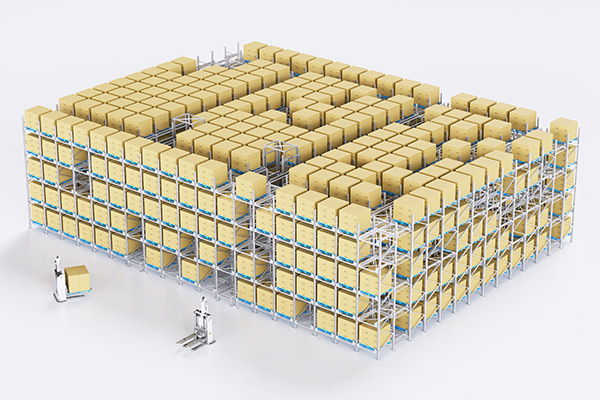
Zikoo’s H-bot Vertical Two-Way Shuttle provide essential vertical transportation capabilities. These shuttles move pallets between different levels of a storage system. They integrate with horizontal transport robots like the R-bot to create a comprehensive six-way shuttle system. This combination maximizes vertical space utilization and streamlines multi-level operations.
Zikoo’s U-bot Omnidirectional Stacker Robot excel in narrow aisle environments. Their omnidirectional movement allows them to navigate tight spaces with exceptional maneuverability. These robots can lift items to significant heights, optimizing vertical storage capacity. They are particularly effective in facilities with limited floor space.
If you are interested in optimizing your warehouse operations with advanced shuttle systems, you may find How Zikoo Accelerates Warehouse Evolution with Advanced Shuttle Systems insightful.
Analyzing the Benefits of Implementing Robotic Picking Systems
The implementation of robotic picking systems yields numerous benefits that significantly impact warehouse operations. These advantages extend beyond mere automation, touching upon accuracy, cost, safety, and adaptability.
Robotic picking systems substantially improve picking accuracy and order fulfillment rates. Robots perform repetitive tasks with consistent precision, drastically reducing human errors. This leads to fewer mis-shipments, lower return rates, and higher customer satisfaction. The increased accuracy also streamlines inventory management and reduces waste.
Implementing these systems can lead to significant reductions in operational costs and a strong return on investment (ROI). Labor costs decrease due to reduced reliance on manual picking staff. Energy consumption is often optimized through efficient robot movements and smart scheduling. The long-term durability and lower maintenance needs of robots contribute to overall cost savings.
Robotic picking enhances safety and ergonomic benefits for warehouse personnel. Robots handle heavy lifting and repetitive movements, minimizing the risk of injuries to human workers. This creates a safer working environment and reduces worker compensation claims. Employees can then focus on more complex, value-added tasks.
Robotic systems offer remarkable scalability and adaptability to changing demands. Warehouses can easily add or reconfigure robots to handle fluctuations in order volume or product mix. This flexibility allows businesses to respond quickly to market changes without extensive infrastructure overhauls. The modular nature of many robotic solutions facilitates future expansion.
For a deeper understanding of how these systems can drive warehouse upgrades, consider reading From Efficiency to Intelligence: How Four-Way Shuttles Drive Warehouse Upgrades.
Navigating the Future of Robotic Picking in Warehouse Automation
The future of robotic picking in warehouse automation promises continued innovation and broader adoption. Advancements in technology will further enhance robot capabilities and expand their applications.
We anticipate significant advancements in robotic capabilities and AI integration. Robots will become more dexterous, capable of handling a wider variety of irregularly shaped or fragile items. AI will enable even more sophisticated decision-making, allowing robots to learn from experience and optimize their performance autonomously. Swarm robotics, where multiple robots collaborate seamlessly, will become more prevalent.
The expansion of robotic picking into new industries and applications is inevitable. Beyond traditional e-commerce and logistics, we expect to see robots in sectors like healthcare, food processing, and manufacturing. Their ability to operate in diverse environments, including cold storage or hazardous conditions, makes them valuable across various industries. For example, Zikoo’s R-bot Four-Way Pallet Shuttle is suitable for cold chain food storage.
We must also consider the ethical and societal implications of widespread automation. The impact on human employment requires careful consideration and proactive strategies for workforce retraining. Ensuring equitable access to these technologies and addressing potential biases in AI algorithms will be crucial. We believe that responsible development and deployment will maximize the benefits of automation for society.
To learn more about the future of automated warehousing, explore The Future of Automated Warehousing: From ASRS Warehouse to Fully Intelligent Storage.
Optimize Your Warehouse Operations with Zikoo Smart Technology
Ready to transform your warehouse with cutting-edge robotic picking systems? Zikoo Smart Technology Co., Ltd. offers innovative solutions designed to maximize efficiency, reduce costs, and enhance safety. Our expert team is prepared to help you design and implement a tailored robotic picking system that meets your specific operational needs.
Contact us today to discuss your automation requirements and discover how our R-bot, H-bot, and U-bot solutions, powered by PTP Smart Warehouse Software, can revolutionize your logistics.
Email: [email protected]
Phone: (+86)-19941778955
About the Author
John Smith, Senior Engineer at Zikoo Smart Technology Co., Ltd., helps warehouses and fulfillment centers maximize efficiency, reduce costs, and scale operations through ASRS, 4-Way Shuttle systems, and intelligent robotic picking solutions. His expertise lies in designing and implementing advanced automation technologies that drive operational excellence and prepare businesses for the future of logistics.
FAQs
1. What is the primary difference between AGVs and AMRs in robotic picking systems?
AGVs (Automated Guided Vehicles) follow fixed, predefined paths, often guided by wires or magnetic strips. AMRs (Autonomous Mobile Robots) navigate dynamically using sensors and AI, allowing them to adapt to changing environments and obstacles. AMRs offer greater flexibility and intelligence in complex warehouse settings.
2. How do robotic picking systems handle different product sizes and weights?
Robotic picking systems utilize various end effectors, such as suction cups, multi-finger grippers, or specialized tools, designed to handle a wide range of product sizes, shapes, and weights. Advanced vision systems and force sensors enable robots to adjust their grip and handling techniques for delicate or heavy items, ensuring secure and damage-free picking.
3. What are the typical implementation timelines and costs for robotic picking systems?
Implementation timelines and costs vary significantly based on warehouse size, system complexity, and the level of integration required. A basic system might take a few months, while a large-scale, fully integrated solution could take over a year. Initial investment can be substantial, but long-term savings in labor, accuracy, and efficiency often lead to a strong ROI within a few years.
4. Can robotic picking systems integrate with existing warehouse infrastructure?
Yes, most modern robotic picking systems are designed for flexible integration with existing warehouse infrastructure. They can connect with current racking, conveyors, and IT systems like WMS and ERP. This modularity allows for phased implementation, minimizing disruption and enabling businesses to gradually scale their automation efforts.
5. What kind of maintenance do robotic picking systems require?
Robotic picking systems require routine maintenance, including software updates, sensor calibration, and mechanical checks of moving parts. Predictive maintenance, often powered by AI, can anticipate potential issues before they cause downtime. Regular cleaning and battery management are also essential to ensure optimal performance and longevity.