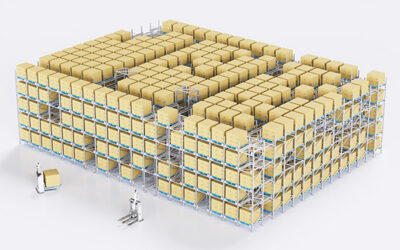
A warehouse operation’s largest controllable expenses sit in three places: labor, space, and error correction. I’ve walked through facilities where pallets sat in aisles because racking had no room, while a team of eight replenished full-time on a single shift. If any one of those three line items doesn’t change after automation, the investment was wasted. Most articles on warehouse automation costs stop at generic ROI charts, but I want to detail the specific mechanisms that make a pallet shuttle system actually cut operating spend—drawn from years of engineering these systems across power, cold chain, and third-party logistics projects.
Breaking Down Warehouse Costs Where Automation Hits Hardest
Manual warehouse costs are dominated by recurring labor, space inefficiency, and the errors those two spawn. A typical high-bay manual facility will run 60–70% of its operating budget through labor alone, and floor space is rarely used above 55% because aisles must accommodate forklift turning radii and operator access. Forklift damage to racking, incorrect pallet placement, and inventory miscounts add another layer of avoidable cost.
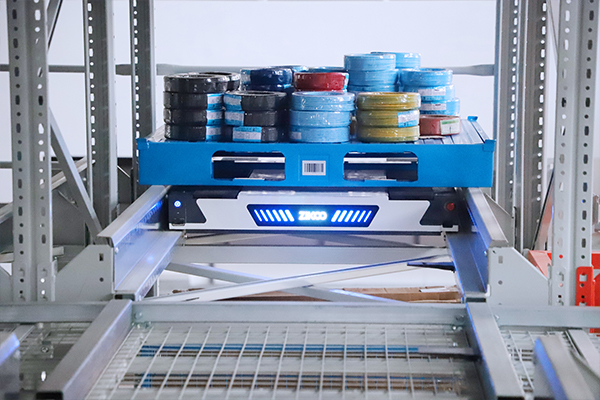
Automated storage and retrieval, particularly dense pallet shuttle configurations, changes the cost structure at the root. Labor shifts from “move and count” to “supervise and maintain,” space utilization jumps above 85%, and every pallet movement is recorded by the warehouse control system, virtually eliminating placement errors. The savings aren’t theoretical—they’re engineered into the system architecture.
Why Labor Reduction Happens Predictably
A pallet shuttle system removes the need for operators inside aisles entirely. Instead of a forklift driver traveling to a location, the shuttle travels to the operator—hence the “pallet-to-person” label. In an installation I designed for a cold chain warehouse, a team of twelve forklift operators reduced to four system operators within six weeks of commissioning, while throughput held steady. The remaining labor focused on value-added tasks at the workstations rather than travel and retrieval.
That change alone shifts labor from a variable cost that scales with volume to a fixed cost that scales with shift scheduling, which is far easier to forecast and control.
Space Costs Are Not Just Rent
Every additional square meter of warehouse footprint carries construction, climate control, lighting, and fire suppression costs. A four-way shuttle like our R-bot operates in aisles as narrow as the pallet plus clearance—typically 1.5 m to 1.8 m—because there is no human inside the rack. Traditional reach-truck operations need 3.5 m or more. Compressing aisle width across a 5,000-pallet facility routinely frees 30–40% of floor area, which either lowers real estate needs or defers expansion by years.
That floor space isn’t merely “better used”—it’s directly converted to additional storage positions without a new building, which is a capital avoidance benefit that shows up in the first year and compounds.
How Pallet Shuttle Systems Drive Cost Reduction
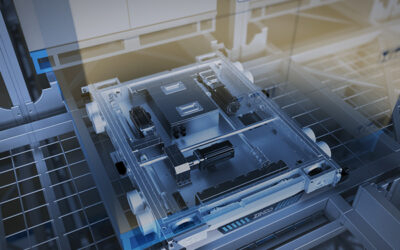
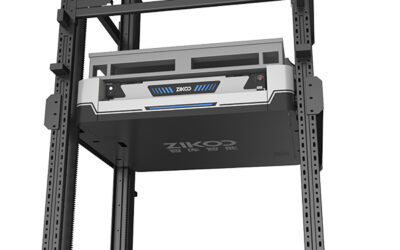
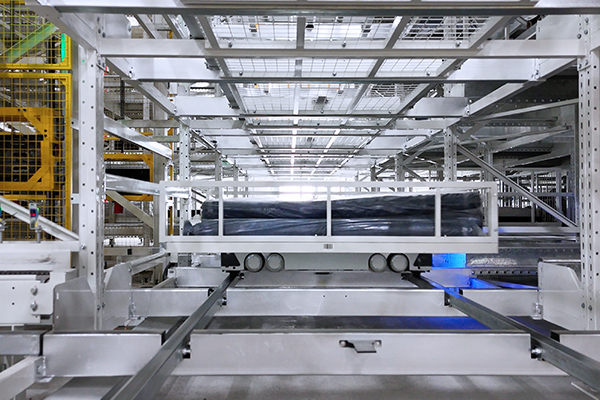
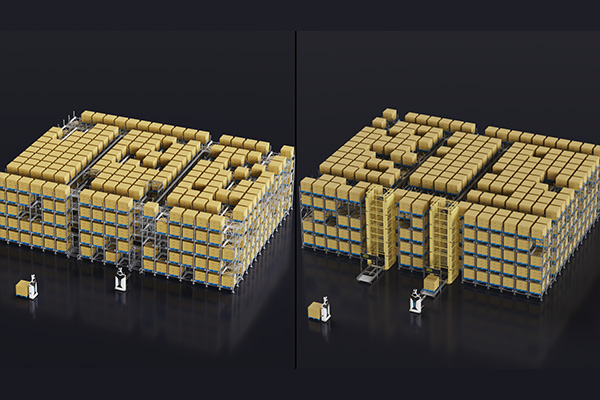
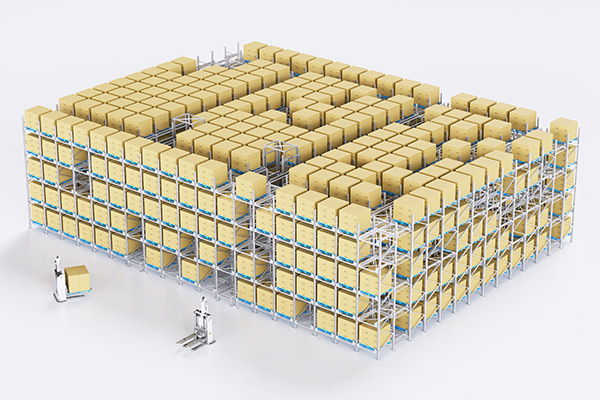
Pallet-to-person robotics like the R-bot four-way shuttle and H-bot vertical elevator create a dense, multi-level storage cube where pallets move horizontally and vertically without a single human inside the storage area. The system’s cost-reduction impact sits on three mechanical truths: travel path elimination, multi-shuttle coordination, and energy-efficient movement.
Direct Labor Savings Through Pallet-to-Person Flow
A standard pallet shuttle system places workstations outside the rack structure. The shuttle retrieves and delivers a pallet directly to a human operator, cutting the “travel” part of every transaction. In a facility moving 80 pallets per hour, a forklift-based operation might register 12–14 km of vehicle travel per shift—all unproductive motion. A shuttle system eliminates that entirely, because shuttles travel only within the rack, and operators remain stationary at the pick/deposit point.
We also see a compounding benefit: when retrieval is fast and deterministic, downstream operations like picking and dispatch can be sequenced more tightly, reducing idle time at docks and staging areas.
Storage Density Translates to Capital Avoidance
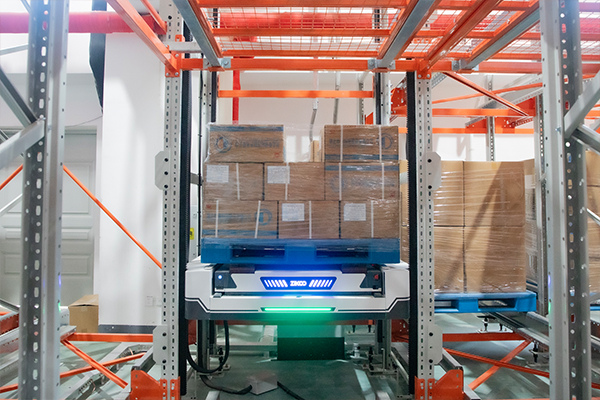
The R-bot’s slim body (125 mm) and omni-directional wheels allow it to enter a rack lane, position under a pallet, and lift it without side clearance. This enables a rack depth of 10–12 pallets in a single lane while still allowing individual pallet access. Compared to single-pallet-depth selective racking, that’s a 3× to 5× density increase for the same building footprint.
When we plan a system for a facility that otherwise would need an expansion, the cost comparison isn’t just “automation vs. manual”—it’s “automation vs. building a new wing.” In several projects, the automation investment was lower than the construction cost of expanding a manual warehouse, and the per-pallet-per-month storage cost dropped below the regional warehouse lease rate. That’s a head-to-head capital win, not just an efficiency metric.
Throughput Without Adding Third Shifts
A multi-shuttle system can handle peak demand without scheduling overtime. Because shuttles operate on lithium batteries with 6–8 hours of continuous runtime and recharge during idle gaps, they’re available for 24/7 operation with no fatigue or error-rate drift at the 10th hour. Our dry-ambient R-bot installations consistently run two shifts of full-speed operation with a single top-off charge between shifts, so a facility that previously ran a skeleton night crew can process orders around the clock at the same throughput rate.
For e-commerce and 3PL operators with seasonal spikes, this means they can absorb 2× to 3× peaks without hiring, training, and releasing temporary labor—a substantial operational cost flexibility.
The Hidden Costs of Automation and How to Control Them
Engineers who only talk about the upside do their audience a disservice. Automation projects have real hidden costs: software integration, power infrastructure, battery replacement cycles, and the single biggest one—ineffective system design that leaves throughput bottlenecks in place.
Software Integration Is Not a One-Time Cost
A pallet shuttle system is useless without WMS/WCS integration, and that integration can consume 15–25% of the project budget if the interfaces are not pre-built. I’ve seen projects stalled for months because the automation supplier’s WCS couldn’t talk to the client’s legacy WMS without custom middleware. The PTP Smart Warehouse Software platform we use includes WMS, WES, WCS, and RCS in a unified architecture, which eliminates the need for separate middleware—a specific cost avoidance that should be valued in any comparison.
Maintenance Budgets Are Predictable but Not Zero
Shuttle systems are electro-mechanical machines. Wheels, sensors, and batteries degrade. For an R-bot fleet of 15 shuttles, we budget roughly 3–5% of the initial hardware cost annually for proactive maintenance, which includes scheduled battery replacement at year 3–4 and occasional sensor recalibration. That’s lower than forklift fleet maintenance with multiple units and operators, but it’s not zero. A warehouse operator who budgets zero maintenance after commissioning will be surprised in year 3.
The control mechanism is a system-level remote monitoring function. The RCS (Robot Control System) tracks shuttle health metrics—battery cycles, motor temperatures, wheel odometry—and flags anomalies before they become failures. This prevents unscheduled downtime, which in a live warehouse costs far more than the repair itself.
Design Errors: The Most Expensive Hidden Cost
A four-way shuttle system that isn’t matched to pallet dimensions, SKU velocity, or order profile will underperform and kill the ROI. I once audited a system where the shuttle model couldn’t handle the client’s largest pallet size, so that 20% of inventory stayed in a manual annex. The entire labor-saving logic broke because staff still needed to retrieve those pallets manually. Choosing the correct shuttle variant—our R-bot comes in five load capacities and pallet size configurations, from 1,200 kg to 2,000 kg ratings—is a design-phase decision that makes or breaks the cost model.
Therefore, a proper upfront operational data analysis—what pallets, how many, how fast, in what sequence—is not an optional step. It’s the most cost-effective phase of the entire project.
| Cost Factor | Manual Warehouse (Typical) | Pallet Shuttle Automation | Savings Mechanism |
|---|---|---|---|
| Labor per 100 pallet moves | 3–5 operators (full shift) | 1 operator (supervisory) | Travel elimination, pallet-to-person |
| Space utilization | 45–55% of footprint | 85–95% of footprint | Narrow aisles, deep storage lanes |
| Error rate (misplaced pallets) | 1–3% of transactions | <0.1% of transactions | WCS-verified location |
| Throughput scalability | Proportional to added labor | Up to 2× with existing fleet | Multi-shuttle collaboration |
Calculating ROI Realistic Savings from Automated Storage
A realistic ROI model for a pallet shuttle system doesn’t start with the hardware price. It starts with the client’s current cost-per-pallet-handled, inclusive of labor, space, damage, and opportunity cost of expansion.
The Math Behind the Investment
For a mid-volume warehouse handling 500 pallets per day, a manual operation with forklifts might cost $2.80–$3.50 per pallet-move all-in. A properly designed shuttle system can bring that below $1.80 per pallet-move within the first full year after ramp-up, primarily from labor compression and space savings. At 250 operating days, that’s a direct saving of roughly $125,000–$210,000 annually on handling alone.
When the space savings avoid or defer a building expansion, the first-year benefit can exceed $500,000 in capital avoidance, which typically reduces the payback period from 4–5 years down to 2–3.
Payback Period Benchmarks from Installed Systems
In our implementations, dry-ambient four-way shuttle systems with moderate ambient temperature requirements consistently achieve payback within 2–3.5 years. Cold chain installations, where labor costs are higher and space is at an even greater premium, often hit payback in under 2 years because the energy savings from a smaller refrigerated volume compound with labor reduction. The exact period depends on local labor rates, energy costs, and whether the existing building can be reconfigured or must be newly constructed—but a 3-year window is a conservative planning number.
If a supplier promises payback in 12 months without detailed operational data, be suspicious. That’s a sales number, not an engineering number. Real systems take time to ramp up, integrate, and stabilize. A 2–3 year payback on a 10–15 year asset is excellent for industrial equipment.
When Warehouse Automation Doesn’t Cut Costs More Than It Saves
Automation reduces costs when labor and space are the dominant line items. It does not reduce costs when throughput is low, pallets are non-standard, or the facility lease is short. I have turned down projects because the numbers didn’t add up, and an engineer who doesn’t acknowledge those scenarios isn’t giving honest advice.
Low-Turnover, Low-Density Warehouses
If a warehouse stores 2,000 pallets and turns them over once a month with three staff, automation hardware will likely be more expensive than another decade of manual operation. The labor savings are too small to amortize the capital. In those cases, a simpler selective racking upgrade with improved WMS functionality yields far better returns.
Short Lease Remaining or Temporary Facilities
A pallet shuttle system is a fixed installation integrated with the building’s power and network. If the facility has less than four years remaining on lease, or the business expects to relocate, the removal and reinstallation cost—typically 20–30% of the original system price—may push the ROI beyond the remaining occupancy. Exceptions exist if the equipment can be transferred to a sister facility, but that requires identical pallet and racking dimensions.
Non-Standardized Pallet Pools
Shuttle systems require consistent pallet dimensions and condition. If a facility receives a mix of damaged, non-standard, or oversized pallets that can’t be standardized by inbound QC, the automation system will fault repeatedly. The cost of retrofitting pallets or adding manual exception handling often negates the savings. A supplier should audit inbound pallet conditions before proposing a system design.
In all three cases, a partial automation approach—like adding a WCS layer to existing racking with one shuttle per aisle—may yield a modest efficiency gain without the full capital outlay.
Building a Cost-Effective Automation Roadmap with the Right Partner
A cost-effective automation project isn’t bought off a price list. It’s built through operational data analysis, technical compatibility checks, and phased deployment planning. The supplier you choose is as important as the hardware they provide, because their software platform and integration expertise determine whether the system meets its cost targets.
Start with a Data-Backed Operational Audit
Before any equipment is specified, a qualified supplier should analyze 12 months of inventory movement data—pallet dimensions, SKU velocity, order lines per pallet, peak day throughput, inbound/outbound profiles. This data drives the shuttle model selection (standard, heavy-duty, or custom pallet size), the rack configuration (lane depth, levels), and the number of shuttles and elevators required. Without this audit, the system will be either over-specified (too costly) or under-specified (bottlenecked).
Our platform, the PTP Smart Warehouse Software, integrates WMS/WES/WCS/RCS natively, meaning the path from simulation to live operation is shorter and doesn’t require third-party middleware. That’s a direct integration cost saving and, more importantly, a risk reduction—fewer external interfaces means fewer failure points.
If your operational data shows a clear peak throughput requirement and pallet standardization, the next step is obtaining a building footprint and a CAD layout. At that point, a realistic budget and payback projection become possible.
Vendor Selection Should Focus on System-Level Guarantees, Not Just Hardware Specs
A shuttle’s travel speed and lifting capacity are table stakes. What differentiates suppliers is their ability to guarantee system-level performance: that the integrated solution will achieve the agreed throughput, uptime, and per-pallet cost in the first six months of operation. Ask for a post-installation performance test period—30 to 60 days of live operation with actual pallet volumes—as a contractual deliverable.
In our projects, we include a 60-day system performance validation phase where throughput, uptime, and storage density targets are measured and jointly reviewed. No system is commissioned as complete until those numbers match the design specification. That practice protects the client’s ROI from the start.
Phased Deployment Reduces Upfront Capital Risk
A full-warehouse conversion can be phased. One aisle or one rack block with shuttles and one elevator, integrated with existing manual operations, can prove the concept and generate cash savings while the remaining floors operate conventionally. The savings from the first phase often partially fund the next, reducing the net capital requirement.
If your current facility is hitting space or labor limits, start with a building audit and pallet condition assessment. Then work with a supplier who will commit to a measured performance guarantee, not a brochure. When those numbers align, the cost reduction is real and repeatable.
Common Questions About Pallet Shuttle Automation Costs
How quickly does a four-way shuttle system pay for itself?
It depends on the labor rate and the value of freed space, but a properly scoped system in a dry-ambient warehouse with standard pallets typically reaches payback in 2–3.5 years. Cold chain facilities often pay back in under 2 years because labor and energy savings multiply. Systems that promise 12-month payback without seeing your SKU data are unlikely to deliver.
Does automation eliminate labor entirely, or just shift it?
A pallet shuttle system eliminates the “travel and retrieve” portion of labor, not all labor. Operators move to workstation-based tasks: inbound registration, outbound verification, and exception handling. Maintenance technicians are also needed. The labor headcount drops substantially—often 50–70% of floor operators—but skilled roles remain, so the per-hour labor cost may actually rise while total labor cost falls.
Are the batteries and maintenance really that significant?
Lithium batteries in our R-bot shuttles last 3–4 years under typical duty cycles before replacement. Annual maintenance runs about 3–5% of the initial hardware cost per year—lower than a forklift fleet of equivalent throughput. The difference is that automation maintenance is scheduled and predictable, while manual equipment damage is random and often more expensive to correct.
What if our pallets aren’t in perfect condition?
Shuttle systems require pallets within dimensional tolerance and without major splintering or broken bottom boards. If more than 5–10% of your pallet pool falls outside this, factor in a pallet standardization program before automation, or it will cause system stoppages. A supplier should inspect your pallet pool during the audit phase and quantify the remediation cost as part of the project budget.
Is a four-way shuttle system cost-effective for a warehouse under 5,000 square meters?
The floor area matters less than the storage density and throughput requirement. A 4,000 m² facility storing 6,000 pallets with high turnover can absolutely justify a shuttle system because the labor and error savings scale with throughput, not square footage. If the throughput is low, the payback stretches. Send your SKU data, pallet dimensions, and daily inbound/outbound volumes to [email protected], and we can model the per-pallet cost for your specific operation.
If you’re interested, check out these related articles:
Six-Way Shuttle: The Dual-Engine Solution for High-D
Six-Way Shuttle: The Ultimate Warehousing Solution for Cost Reduction and Efficiency