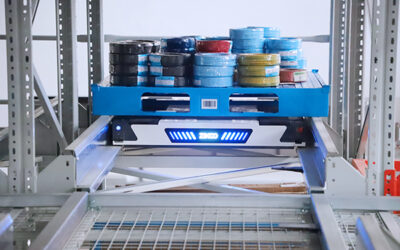
Warehouse automation in the Middle East is no longer a speculative investment. It has become part of the region’s broader push to turn logistics parks, free zones, ports, and manufacturing corridors into high-throughput supply chain assets. But purchasing automation here is different from buying a standard system for a temperate European distribution center. The buyer has to account for summer heat, dust, fast-changing customs and free-zone rules, varied pallet footprints, labor constraints, and a strong preference for phased commissioning that does not stop live operations.
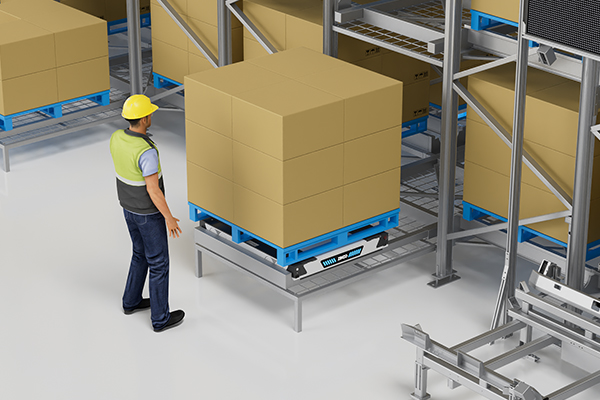
The right decision starts with local operating conditions before any hardware comparison. A dense pallet shuttle system that works in a controlled 22°C facility may need a different battery, sensor protection, and maintenance plan when the same building reaches 45°C outside and the dock area becomes a heat trap.
What Makes Middle East Warehouse Projects Different
Middle East warehouse projects are typically shaped by five forces: national logistics programs, climate, free-zone incentives, pallet variety, and a limited pool of experienced local maintenance labor.
Saudi Arabia’s Vision 2030 has positioned logistics as a strategic pillar, while the UAE, Qatar, and Oman continue investing in port-adjacent storage, e-commerce fulfillment, and food security infrastructure [4]. These programs create demand for density and speed, but they also create scrutiny. Buyers are expected to show not only that a system can operate, but that it can be maintained, expanded, and accepted within a defined project window.
Climate is the second major difference. Gulf ambient temperatures frequently exceed 40°C during summer, and warehouses without fully conditioned rack areas can reach 45°C or higher. Electronic systems, lithium batteries, sensors, and cabling all behave differently under those conditions. Dust enters through docks, open yards, and construction zones, which increases the strain on laser navigation windows, charging contacts, and camera lenses.
The third issue is pallet and load variability. A Middle East buyer may handle Euro pallets, GMA-style pallets, CP pallets, industrial skids, and unusual food or building-material loads in the same facility. A fixed shuttle built for one pallet dimension becomes a bottleneck quickly. The more useful approach is to confirm early which pallet sizes and maximum weights the system must handle, including future SKU additions.
Fourth, free-zone operation creates a different type of buyer. Many Middle East warehouses operate under customs-bonded regimes, multi-client 3PL contracts, or re-export models. The warehouse software must be able to hold inventory by owner, by duty status, and by permit, not only by SKU. That requirement affects WMS and WCS selection more than rack geometry.
Finally, after-sales capability is often the weakest link. A supplier can install a system in one month and lose six months of productivity if local spares, controls engineers, or battery replacements are not available. Middle East buyers should therefore audit the local service chain before finalizing the automation architecture.
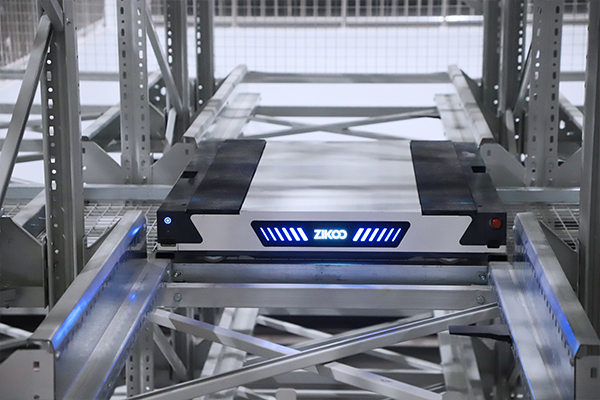
A strong supplier should also explain how a standardized shuttle platform handles country-specific pallet sizes and site constraints. <Standardization Empowers Global Delivery: Zikoo Robotics Six-Way Shuttle Expands Overseas> covers how modular standardization speeds up overseas project delivery without forcing a custom design at every site.
Match the Operating Problem Before Choosing Hardware
The largest buyer mistake is starting with a technology preference. The better sequence is to define the warehouse problem first: how many SKUs, how many pallet movements per hour, what order profile, what peak pattern, and whether the building is new or existing.
For example, an e-commerce 3PL performing split-case picking faces a different automation problem from a food producer storing full pallets for three months. The 3PL may need a U-bot plus AMR picking layout that supports up to 10,000 SKUs and combines pallet-out and piece-out flows. A building-materials distributor with low SKU count and slow movement may be better served by deep-lane shuttle storage with fewer picking stations.
A simple comparison can be summarized as follows:
| System type | Best use | Density | Throughput | Retrofit fit |
|---|---|---|---|---|
| Unit-load stacker crane ASRS | Tall, high-throughput full-pallet storage | High | High | Strong for greenfield |
| Four-way shuttle dense storage | Deep-lane pallet storage with varied SKU speed | Very high | Medium to high | Good for phased retrofit |
| Pallet shuttle + transfer car | Deep-lane first-in-first-out movement | High | Medium | Good for existing rack |
| U-bot narrow-aisle robotics | Narrow-aisle pallet access and picking | Medium | Medium | Strong for existing buildings |
| AGV/AMR transport | Flexible movement outside fixed rack aisles | Medium | Medium | Strong for mixed layouts |
Four-way shuttle systems are especially useful when the buyer wants to add automation to an existing rack block or use vertical lifts to connect floors. The shuttle can move in four directions within the rack, while a vertical lift handles floor-to-floor transfer. This is one reason the architecture is becoming common in Middle East cold stores, food distribution centers, and manufacturing raw-material stores.
Technology Choices That Matter in Gulf Operations
For many Gulf buildings, three technologies deserve special attention: four-way shuttle dense storage, vertical bidirectional lifts, and narrow-aisle robotics.
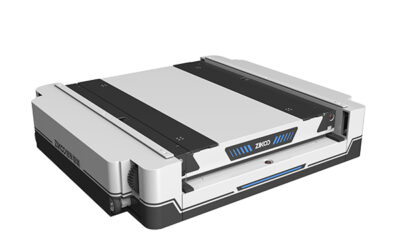
A four-way shuttle handles dense storage by moving horizontally in both rack directions and between aisles. The R-bot Four-way Shuttle platform in product documentation supports a body thickness of 125 mm and rated loads up to 1,500 kg, with a heavy-duty variant rated for 2,000 kg. For cold chain operations, the dedicated battery solution is built for -25°C environments and provides 6 to 8 hours of continuous operation before charging.
The H-bot Vertical Bidirectional Shuttle performs the vertical transport role. It occupies a single storage position and can connect multiple rack levels. Product documentation lists positioning accuracy of ±1 mm and cold-environment capability down to -25°C. That matters in multi-level cold stores where lift doors must seal tightly and the shuttle must align with rack rails without manual correction.
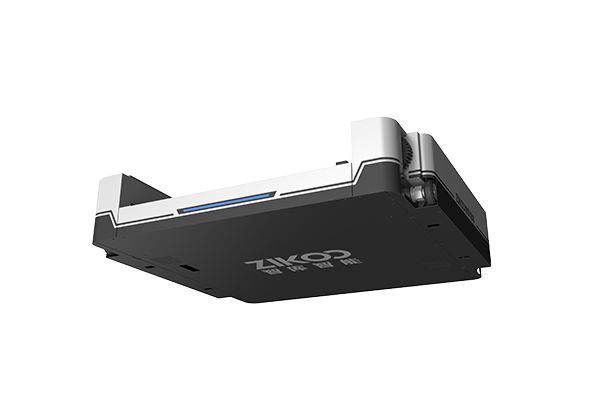
For narrow-aisle pallet access, the U-bot Omnidirectional Stacking Robot is designed for aisle widths as low as 2,100 mm and lifting heights up to 8,000 mm. In existing Gulf warehouses with low clear height or irregular grids, that capability can often avoid major civil work.
The key engineering rule is to match the technology to the load path, not to the brochure. A high-rise crane ASRS may have excellent peak throughput, but if the warehouse has multiple temperature zones and frequent dock transfers, a shuttle-plus-lift network is often more modular. The selection should also include an asset management view: the system should remain maintainable, expandable, and auditable over its operating life, consistent with the principles of ISO 55000 [1].
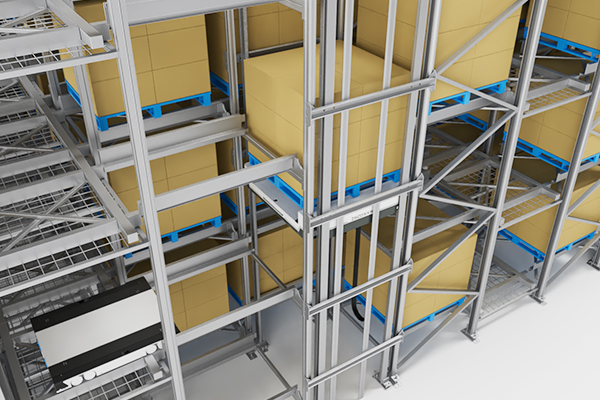
For many Gulf buildings, the strongest alternative is a shuttle-based ASRS plus vertical lifts rather than a large crane aisle. The shuttle handles density inside the rack, while the lift handles floor-to-floor transfer. That combination keeps the top-level controls simpler and leaves room for phased expansion. <Smart Storage Revolution: Comprehensive Overview of Four-Way Shuttle Systems for Automatic 3D Warehouses> covers the architecture logic and the main planning factors behind automatic 3D warehouses.
Supplier Audit: Local Delivery Capability Is the Real Filter
International automation suppliers often look similar on paper. The filtering question for the Middle East is not whether a supplier can build a shuttle, but whether it can deliver, maintain, and support a live system under Gulf conditions.
Buyers should request the following evidence during supplier evaluation:
- Completed installations in climates with sustained heat and dust exposure
- Site acceptance test records, not only factory acceptance test reports
- Spare-part lead times for batteries, sensor arrays, drives, and charging contacts
- WMS, WES, WCS, and RCS integration references with third-party software
- A named local service partner or direct regional field team
- Training curriculum for maintenance technicians and warehouse supervisors
- Clear escalation procedure for software faults and PLC-level failures
- Previous experience with customs-bonded or free-zone operations
Robotics adoption data from IFR consistently shows that operational success depends more on after-sales capability, software integration, and workforce training than on the robot specification alone [2]. In the Gulf, that pattern is amplified because outside temperatures punish systems that are not designed for easy field service.
One practical filter is whether the manufacturer can show multiple installations in climates similar to the Middle East and whether it has a repeatable factory inspection process rather than only sales-promise documentation. <Looking for Reliable Four-Way Shuttle Manufacturers? Choose Zikoo Robotics> covers a practical shortlist process for evaluating shuttle manufacturers outside their home market.
If you are compiling a shortlist and need an engineering view before site visits, send Zikoo Smart Technology’s team a warehouse plan and approximate pallet profile at [email protected]. A short technical review can help identify which automation class is genuinely compatible with the building before commercial negotiations begin.
Total Cost, Energy, and ROI in Gulf Conditions
Middle East buyers should avoid judging automation purely by equipment price. Total cost includes rack modifications, floor flatness, fire suppression, software licenses, cooling or ventilation upgrades, power supply, training, spare parts, and maintenance labor.
Energy is particularly important. Cold storage facilities pay a premium for every degree of over-cooling and every inefficient battery cycle. Battery runtime, charging location, and thermal management therefore become part of the ROI calculation. For the R-bot platform, product documentation states continuous operation of about 8 hours on a full charge for most models, with a cold-chain configuration designed for 6 to 8 hours at low temperature. That operating window should be aligned with shift patterns and charging stations, not treated as a static number.
Warehouse automation in the Middle East usually shows the strongest payback when it reduces building expansion, increases pallet density, cuts damage, and stabilizes labor availability. Logistics performance depends heavily on infrastructure reliability, customs speed, and shipping connectivity, as World Bank LPI data indicates [3], but inside the warehouse the direct levers are density, accuracy, and operating hours.
A careful ROI model should also include downtime risk. A system that saves ten labor positions but cannot be repaired for three weeks during peak summer is not a true cost reduction. Buyers should ask the supplier to define response time, not only uptime percentage.
Before locking in a budget, request a site-specific concept layout and an indicative total cost range rather than a narrow equipment quote. Zikoo Smart Technology can be reached at [email protected] or (+86)-19941778955 to discuss whether a shuttle-based dense storage layout or a narrow-aisle robotics approach is more appropriate for the project.
Procurement and Project Delivery Plan
Most Middle East automation projects succeed when the buyer treats delivery as a phased engineering program, not a single equipment purchase.
The recommended sequence is:
- Data collection: SKU mix, pallet sizes, inventory depth, peak movement patterns
- Concept layout: block layout, aisle width, clear height, expansion path
- Simulation or throughput modeling: inbound, storage, replenishment, picking, dispatch
- Supplier audit: factory visit or documented audit, climate-compatible references, planned spares
- Contract scope: software scope, acceptance criteria, training, warranty, local support
- Installation and commissioning: phased switchover for brownfield sites
- Post-go-live review: throughput measurement, issue closure, spare-part consumption
For existing facilities, brownfield automation is often possible without a full warehouse shutdown. A shuttle system can be introduced into a rack block in stages while manual or semi-automatic operations continue in adjacent areas. The integration should include WMS and WCS dry runs before cutover, especially in free-zone or customs-bonded warehouses where inventory records must remain exact.
Acceptance testing should include a sustained run, not only a short demonstration. The buyer should test high-temperature operation, fault recovery, battery swap, emergency stop, and software failover. The supplier should prove that the system returns to a known state after a power interruption without losing pallet location data.
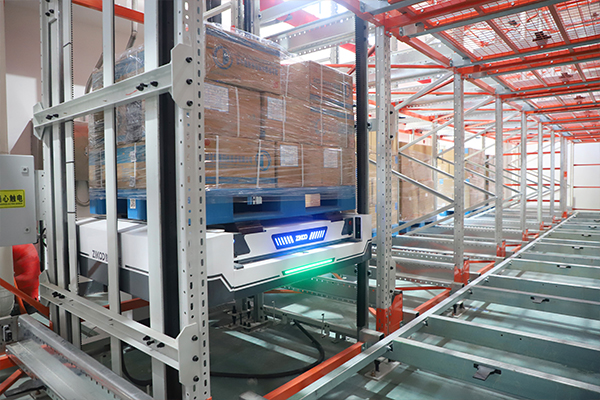
For cold chain and food distribution projects, the same acceptance discipline applies but with stricter focus on defrost cycles, door sealing, temperature sensor placement, and battery performance in low-temperature zones. A system that works in a dry, ambient warehouse cannot be assumed to work in a -25°C freezer without additional engineering.
Get a Practical Supplier Shortlist
Before you sign a contract, shorten the supplier list with a structured request. Zikoo Smart Technology Co., Ltd supports pallet-to-person robotics projects across dense storage, cold storage, narrow-aisle access, and multi-floor shuttle networks.
Contact the engineering team at [email protected] or (+86)-19941778955 with the following:
- Warehouse footprint, clear height, and fire-zone constraints
- Pallet sizes, maximum pallet weight, and required storage locations
- SKU count, inbound and outbound pallet volumes, and peak shift
- Temperature zones and any cold-chain temperature range
- Target go-live window and whether the building is new or brownfield
- A rough CAD or PDF of the current or planned building
A practical vendor response should include a concept block layout, a mainstream technology recommendation, an indicative throughput range, and clear assumptions about power, software, and maintenance. If a supplier refuses to provide assumptions or hides behind a single-price quotation, that is a procurement risk signal.
Frequently Asked Questions
Are four-way shuttle systems suitable for Middle East heat and cold storage?
They can be, but the system configuration must match the temperature. Ambient warehouses need cooling and dust-control measures for electronics and batteries. Cold stores require low-temperature batteries, sealed lift doors, condensation management, and careful sensor selection. The R-bot and H-bot platforms include cold-chain configurations for low-temperature operation, but buyers should confirm the exact operating temperature range, battery duty cycle, and condensation protection before ordering.
Should I choose a Chinese ASRS manufacturer or a local integrator?
The answer is not either-or. Many successful Middle East projects use an international automation manufacturer for the robotics and WCS core, with a local integrator or service partner for installation, electrical work, and first-line maintenance. The important factor is who owns the performance guarantee and how spares and software support are provided after go-live.
How long is a realistic delivery period for warehouse automation in the Middle East?
It depends on project scope, building readiness, and customs clearance. A standardized shuttle block within an existing warehouse can often be delivered in a few months, while a full greenfield multi-floor ASRS may take significantly longer. Buyers should request a project schedule with milestones for design freeze, factory testing, shipment, site installation, software integration, and acceptance.
What should I prepare before requesting a quote?
Prepare the pallet sizes, maximum load, number of storage locations, SKU count, expected inbound and outbound pallets per hour, building drawing, temperature range, and a date when operations must start. The more specific the input, the less likely the supplier will hide assumptions inside a low-price quote.
References
[1] ISO 55000:2014, Asset management — Overview, principles and terminology, International Organization for Standardization, Geneva, 2014.
[2] International Federation of Robotics, World Robotics 2024, IFR Statistical Department, Frankfurt, 2024.
[3] World Bank, Logistics Performance Index (LPI), World Bank Group, Washington, DC, 2023.
[4] Kingdom of Saudi Arabia, Saudi Vision 2030, Riyadh, 2016.
If you’re interested, check out these related articles:
PTP Intelligent Warehousing Platform: Building a Flexible and Smart Logistics Ecosystem
Multi-Scenario Smart Adaptation: Zikoo’s Six-Way Shuttle Powers the Digital Transformation of Warehousing
Six-Way Shuttle: Pioneering the Future of Smart Warehousing
Six-Way Shuttle: The Smart Warehousing Tool for Cost Reduction and Efficiency
Software-Driven Hardware: Six-Way Shuttle Maximizes Warehouse Efficiency