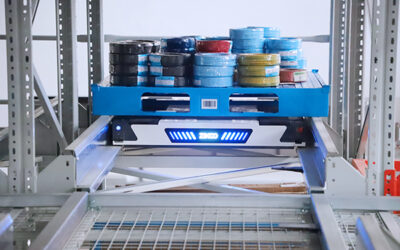
European distribution centers are being pushed in three directions at once: higher throughput, narrower delivery windows, and rising cost per square metre. A pallet shuttle system addresses these by storing pallets in deep, high-density lanes and using autonomous shuttle vehicles to move goods to a lift or workstation. The result is a storage architecture that can pack more pallet positions into the same cube while reducing dependence on large numbers of forklift moves inside the rack.
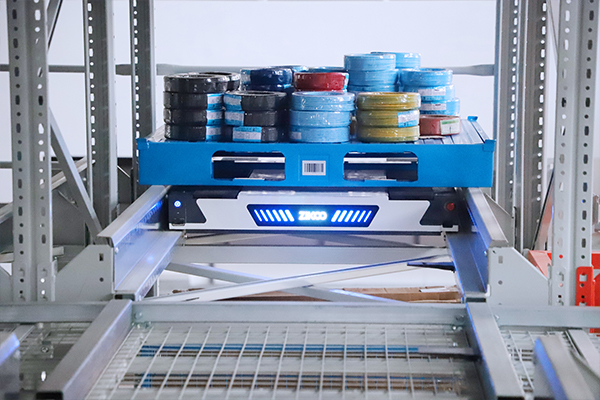
What a Pallet Shuttle System Changes in a European DC
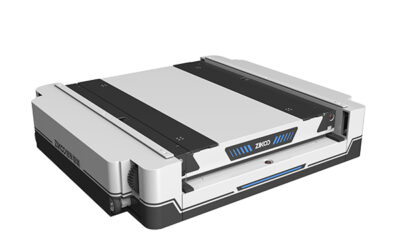
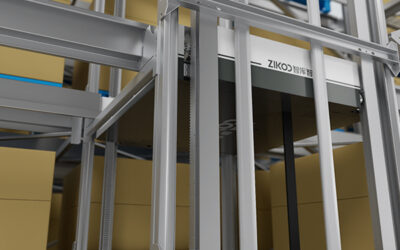
A pallet shuttle system is not a single machine. It is a coordinated set of mechatronic modules: racking, rail-guided shuttles, vertical lifts, conveyors or interfaces, and control software. The shuttle travels in four directions within a rack level, so it can change aisles and service multiple deep lanes without a crane. A vertical bidirectional shuttle, such as the H-bot in Zikoo’s six-way shuttle architecture, moves pallets between rack levels and works as the vertical transport hub. The R-bot four-way shuttle operates inside the rack, while the PTP software platform provides WMS, WES, WCS, and RCS functions for mission orchestration, inventory allocation, and traffic management.
This architecture changes the operating model of a distribution centre. In a conventional wide-aisle warehouse, many pallet moves depend on a driver travelling to the location. In a shuttle system, software selects the pallet, dispatches the shuttle, and brings the pallet to a drop-off point. That makes replenishment, picking, and marshalling more predictable. For European DCs with expensive land and high labour costs, the shift from driver-dependent travel to software-directed retrieval is often the main source of benefit.
The R-bot platform shows the range of pallet interfaces that a European DC should expect. It is available in multiple models to suit different regional pallet footprints and load weights:
| Model | Pallet interface | Rated load | Empty / loaded speed |
|---|---|---|---|
| R1200B standard type | 1,200 × 800–1,000 mm | 1,200 kg | 1.6 m/s / 1.2 m/s |
| R1500J Japanese type | 1,100 × 1,100 mm | 1,500 kg | 1.6 m/s / 1.2 m/s |
| R2000B heavy-duty large pallet type | up to 1,400 mm | 2,000 kg | 1.35 m/s / 1.0 m/s |
| H1800B vertical shuttle | 1,200 × 800–1,200 mm | 1,800 kg | 1.0 m/s / 0.5 m/s |
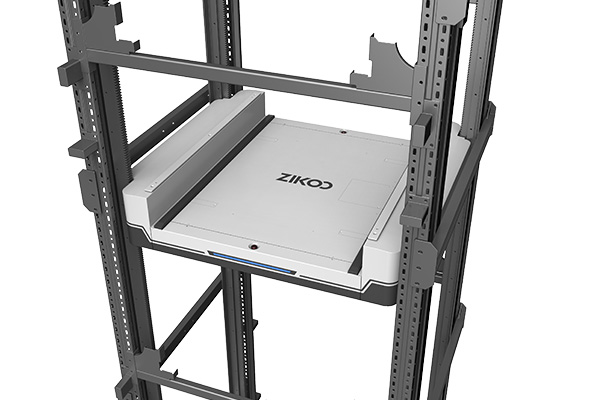
The H-bot vertical shuttle adds positioning accuracy of ±1 mm, which matters when transferring pallets between levels at height. In a multi-level system, that repeatability reduces the risk of pallet skew, rack contact, and downstream scan failures.
European Operating Conditions and System Configuration
Pallet mix and load interfaces
One of the first decisions in a European DC is not the robot; it is the pallet population. The EPAL Euro pallet footprint is 1,200 mm × 800 mm with a nominal safe working load of 1,500 kg [1]. Many logistics sites also run 1,200 × 1,000 mm industrial pallets, UK pallets, or overseas pallets on 1,219 × 1,016 mm footprints. If the shuttle is too tightly matched to one pallet size, the DC loses flexibility. If it is too generic, the lane guidance and load handling can become less precise. The practical response is a vehicle family with defined pallet-interface variants, as in the R-bot standard, American, Japanese, and heavy-duty models. The buyer should not assume that a system handles every pallet type without confirming which pallet sizes and load weights actually enter the DC.
Temperature, energy, and building constraints
European food and pharmaceutical distribution often combines ambient, chilled, and frozen storage in one building. In cold stores, shuttle batteries, sensors, and control boards need to operate at low temperature. The R-bot cold chain solution uses a −25 °C lithium battery with a low-temperature charging port design and PCBA coating for high-humidity environments. This is not a generic cold-room setting; the electrical system has to be specified for condensation and deep-freeze cycling. Standard R-bot models already operate down to −15 °C, while the cold-chain configuration extends that envelope.
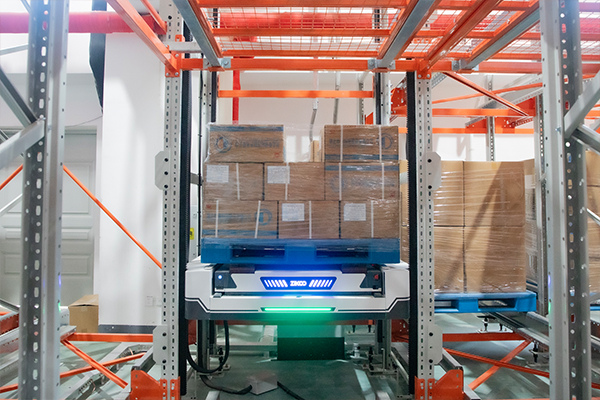
European cold-chain projects also put pressure on energy consumption, defrost cycles, and door management. <Revolutionizing Cold Chain Logistics: Zikoo Robotics Six-Way Shuttle Powers High-Density, High-Efficiency Warehousing> covers how dense shuttle storage reduces the refrigerated volume that must be maintained per pallet position.
Configuration choices
A four-way shuttle system fits a DC that needs dense storage and flexible horizontal travel. A six-way configuration, combining R-bot horizontal shuttles with H-bot vertical lifts, fits a multi-level building where pallets must move between levels quickly. A narrow-aisle U-bot stacker robot may be more appropriate when the project is a retrofit into an existing building with aisles of about 2,100 mm and lower ceiling heights. The choice is not a single best shuttle, but the minimum architecture that meets the required storage depth, throughput, and building constraint.
Configuration checkpoint: If you are deciding between a four-way layout and a six-way lift-assisted layout, email [email protected] with the building cross-section and peak pallet flow. A short configuration options note usually prevents over- or under-sizing at this stage.
Throughput, Space, and Compliance Planning
Throughput and space
The capacity of a shuttle system is determined by several variables: the number of shuttles per level, lift capacity, the distance from storage lanes to drop-off points, and the order profile. The R-bot four-way shuttle travels at up to 1.6 m/s empty and 1.2 m/s loaded in standard models, while the H-bot vertical shuttle runs at up to 1.0 m/s empty. These vehicle speeds are only one input. A well-designed system can still deliver poor throughput if every pallet has to pass through one lift or one workstation. The layout should provide enough lifts and input/output positions for peak hour, not average day.
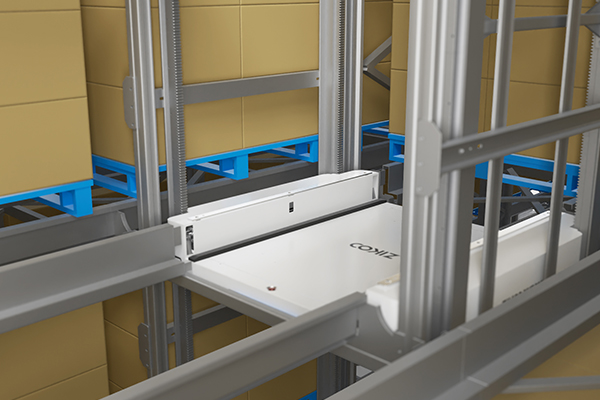
Deep-lane storage reduces aisle count and increases pallet positions per square metre, but lane depth must be matched to SKU velocity. A very deep lane suits slow-moving, single-SKU reserve storage. A shallower lane with more shuttle travel paths suits fast movers and high-SKU operations. For European distribution centres that handle both retail replenishment and e-commerce peaks, mixed lane depths and shuttle zones are generally more effective than one uniform lane length.
CE marking, safety, and rack tolerance
A pallet shuttle system placed in the EU market must be CE marked under the Machinery Directive 2006/42/EC [2]. Rail-dependent storage and retrieval machines fall under the safety requirements of EN 528 [3]. Continuous handling elements at the interface with conveyors and lifts need to be assessed under EN 619 [4]. The rack structure itself must be designed, installed, and inspected to the tolerances of EN 15620, because shuttle guidance depends on plumb, level, and straight rack alignment [5]. Buyers should require a documented risk assessment, a complete technical file, and alignment measurements as part of site acceptance testing, not just a declaration that the equipment is CE marked.
Mid-project checkpoint: If your specification includes mixed pallet footprints, chilled zones below −18 °C, or retrofit tolerances, send the draft layout and temperature profile to [email protected] for a preliminary compatibility review. We normally identify the three or four interfaces that cause the most implementation risk before quotation.
Cost, ROI, and Implementation Planning
Cost drivers
Cost in a pallet shuttle project is driven by racking steel, shuttle fleet size, vertical lift count, software licences, integration work, civil modifications, fire protection, and operational change management. A configuration with too many shuttles increases capital expenditure without adding throughput. A configuration with too few shuttles creates bottlenecks at peak. The most useful early exercise is to simulate the peak-hour order profile and compare a small shuttle fleet with a larger lift investment. In European DCs, space cost and labour availability often change the ROI calculation more than robot count.
European buyers frequently want a like-for-like comparison between manual reach truck storage, narrow-aisle machines, stacker cranes, and shuttle systems. <Smart Warehousing Starts Here: Cost-Effective Four-Way Shuttle Systems> covers how to evaluate a four-way shuttle configuration without oversizing the automation.
Implementation and after-sales
A realistic implementation plan for a European DC includes data validation, rack installation, robot commissioning, software integration, factory acceptance testing, site acceptance testing, and a ramp-up period. For brownfield sites, the sequence must maintain inbound and outbound operations during construction. One approach is to automate one storage zone first, prove the WCS interfaces, then extend the shuttle zone in later phases. This reduces the risk of a big-bang cutover.
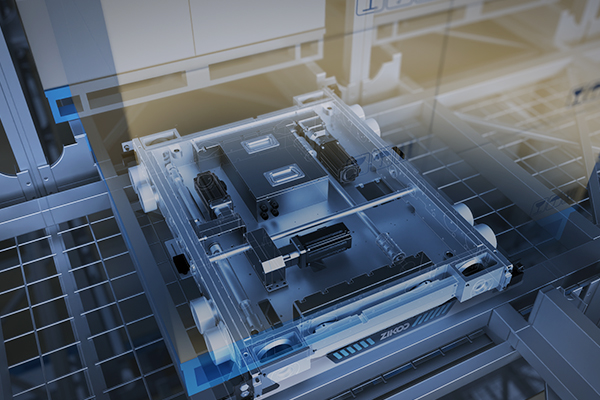
After go-live, performance depends on the maintenance contract, spare parts positioning, and remote diagnostics. In European projects, local language documentation, spare part lead time, and service response time should be written into the purchase agreement.
Standardised modules and clear acceptance criteria are especially important for cross-border European rollouts. <Standardization Empowers Global Delivery: Zikoo Robotics Six-Way Shuttle Expands Overseas> covers how a modular shuttle platform shortens delivery and simplifies local commissioning.
Start Your Pallet Shuttle Evaluation
Before requesting a detailed quotation, prepare four data points:
- Pallet footprint and maximum load weight, including any mixed pallet population.
- Storage temperature and humidity envelope, including freezer or cold-room areas.
- Target inbound and outbound pallets per hour at peak, plus SKU count and lane-depth preference.
- Existing building constraints: ceiling height, floor flatness, column grid, aisle width, and any expansion plans.
Send those four points to [email protected] or call (+86)-19941778955. Our engineering team will return a configuration review, a compliance checklist, and a phased implementation outline rather than a generic price list first.
Frequently Asked Questions
Do pallet shuttle systems support EUR and ISO pallets in one DC?
Yes, when the shuttle model and rack lane are specified for it. A single vehicle cannot safely handle every pallet dimension without adjustment, so the buyer should identify all pallet footprints and load weights in the data profile. Vehicle variants, such as the R-bot standard, American, Japanese, and heavy-duty models, cover different regional pallet interfaces.
Are pallet shuttles suitable for cold and frozen European DCs?
They are suitable when the battery, power system, sensors, and coatings are designed for low temperature and high humidity. Standard shuttle models often operate down to −15 °C, while cold-chain configurations extend operation to −25 °C with low-temperature lithium batteries and protected charging points.
What EU compliance requirements apply to a pallet shuttle system?
The system must be CE marked under the Machinery Directive 2006/42/EC. Rail-dependent retrieval equipment is addressed by EN 528, interface handling equipment by EN 619, and rack tolerances by EN 15620. A buyer should request the risk assessment, technical file, and acceptance measurements.
Can a pallet shuttle system be installed in an existing European DC?
Yes, but the project should be phased. Rack alignment, floor flatness, and building column positions must be surveyed before the shuttle specification is locked. Retrofit projects often start with one storage zone and expand after the system proves its interface with the existing WMS.
How long does implementation take?
The timeline depends on building condition, system size, interface complexity, and phased cutover strategy. A credible schedule includes data validation, rack installation, shuttle and lift commissioning, software integration, factory acceptance testing, site acceptance testing, and ramp-up. Brownfield projects generally require more time for civil and fire-protection modifications than greenfield installations.
What information should I prepare before requesting a quotation?
Prepare pallet types, load weights, temperature envelope, building dimensions, peak pallet movements per hour, SKU count, inbound/outbound patterns, and current WMS or ERP constraints. This data allows the supplier to model lane depth, shuttle count, lift capacity, and software interfaces instead of offering a generic price.
References
[1] European Pallet Association e.V. EPAL Euro Pallet — technical data. https://www.epal-pallets.org/
[2] European Commission. Directive 2006/42/EC of the European Parliament and of the Council on machinery. Official Journal of the European Union, L157, 9 June 2006. https://eur-lex.europa.eu/legal-content/EN/TXT/?uri=CELEX%3A32006L0042
[3] European Committee for Standardization. EN 528:2008, Rail dependent storage and retrieval equipment — Safety requirements.
[4] European Committee for Standardization. EN 619:2002+A1:2010, Continuous handling equipment and systems — Safety and EMC requirements for equipment for mechanical handling of unit loads.
[5] European Committee for Standardization. EN 15620:2021, Steel static storage systems — Adjustable pallet racking — Tolerances, deformations and clearances.
If you’re interested, check out these related articles:
Six-Way Shuttle Powers Dense Storage: Breaking Space Limitations
Six-Way Shuttle: Empowering Industries to Embrace Smart Warehousing
Smart Storage Revolution: Comprehensive Overview of Four-Way Shuttle Systems for Automatic 3D Warehouses
Six-Way Shuttle System Leads the Shift from Machines to Robots in Dense Storage Automation
Stacker Crane vs Four-Way Shuttle: Which Fits Your ASRS Warehouse Best