Running a warehouse means constantly balancing speed against accuracy, and neither one forgives shortcuts. I have watched operations stall because a single receiving dock backed up, and I have seen throughput double after a well-placed automation upgrade. The difference usually comes down to knowing where your real constraints live and whether your systems can adapt when volume spikes. What follows covers the metrics that actually matter, the robotics that move pallets faster than any forklift crew, and the software layer that ties everything together. If your warehouse feels like it is working harder than it should for the output you are getting, the answers are probably somewhere in here.
What Warehouse Throughput Actually Measures
Warehouse throughput captures the total volume of goods moving through a facility during a set period. That includes receiving, putaway, picking, packing, and shipping. Getting this right affects whether you meet customer expectations, control costs, and stay ahead of competitors who are probably asking the same questions.
Measuring warehouse throughput requires tracking several performance indicators. Order fulfillment rate tells you what percentage of orders ship complete and on time. High rates signal that processes are running smoothly. Inventory turnover shows how fast stock sells and gets replaced. Faster turnover usually means less capital sitting on shelves and lower holding costs. Shipping accuracy tracks orders that go out correct the first time. Mistakes here create returns, customer complaints, and extra handling costs that eat into margins.
Cost per order adds up everything spent to process a single shipment. Cycle time measures how long specific tasks take, whether that is picking a single order or moving a pallet from dock to rack. Shorter cycle times feed directly into faster warehouse throughput. Tracking these numbers consistently lets you spot bottlenecks before they become crises. Data tells you where to focus instead of guessing.
| Metric | Definition | Impact on Throughput |
|---|---|---|
| Order Fulfillment Rate | Percentage of orders completed on time. | Directly indicates efficiency; higher rate means faster processing. |
| Inventory Turnover | Rate at which inventory is sold and replaced. | Higher turnover implies efficient stock movement and less stagnation. |
| Shipping Accuracy | Percentage of orders shipped correctly. | Reduces re-dos and improves outbound flow. |
| Cost Per Order | Total cost associated with processing one order. | Lower cost per order means more efficient resource utilization. |
| Cycle Time | Time taken to complete a specific task or process. | Shorter cycle times accelerate overall operations. |
Robotics That Actually Move the Needle
Pallet-to-person robotics have changed what is possible in warehouse operations. Systems like Zikoo’s U-bot, R-bot, and H-bot handle material movement, picking, and storage with speed and precision that manual operations cannot match. These warehouse automation solutions cut labor requirements while improving accuracy.
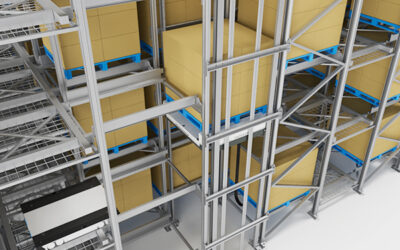
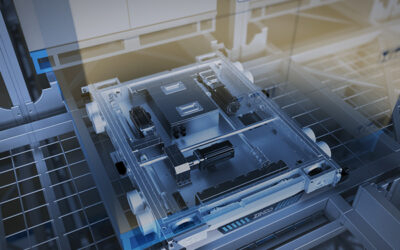
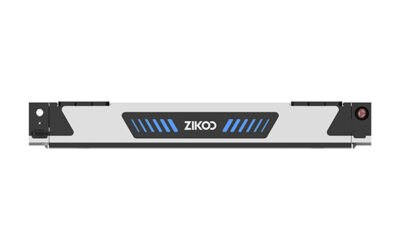
The R-bot Four-way Shuttle works in dense storage environments. It moves in four directions and handles autonomous retrieval without human intervention. The body measures only 125 mm thick, which allows tighter rack spacing and more storage density. Load capacity reaches 1.5 tons. When paired with the H-bot Vertical Bidirectional Shuttle, the combination creates a six-way shuttle system that operates as a three-dimensional network. This integration multiplies throughput across the entire storage footprint. For cold chain applications, the R-bot operates in temperatures down to -25℃.
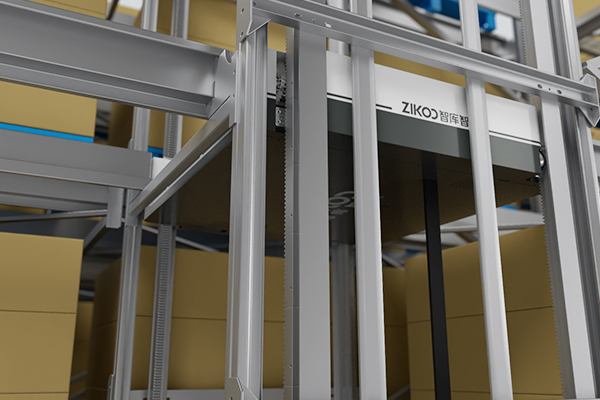
The H-bot handles vertical movement between rack levels. It occupies just one storage position, which preserves usable space. The precision lifting mechanism places and retrieves pallets accurately, which matters when you are running high-rack systems or retrofitting existing facilities.
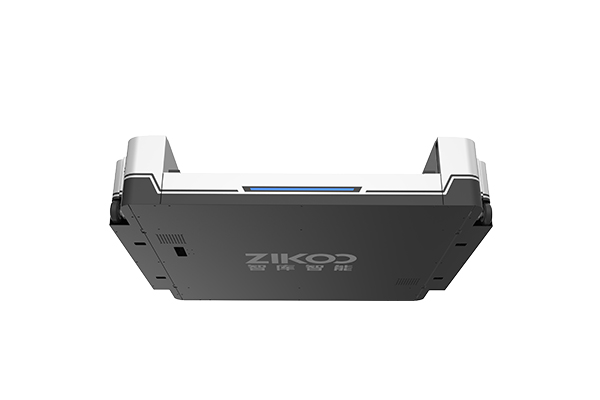
The U-bot Omnidirectional Stacker Robot fits narrow aisle configurations. Minimum aisle width drops to 2100 mm. The U-shaped design and 1370 mm turning radius let it maneuver where traditional forklifts cannot operate efficiently. Lift height reaches 8 meters with 1000 kg capacity. Integration with AMRs and robotic arms enables collaborative workflows. In e-commerce warehouses handling multiple SKUs, this system achieves picking efficiency of 300 pieces per hour or better.
How can robotics improve warehouse throughput?
Robotics boost warehouse throughput by accelerating operations and eliminating the errors that come with fatigue and distraction. Robot-assisted picking systems like the U-bot paired with AMRs hit picking rates of 300 pieces per hour or more. Automated storage and retrieval systems running R-bot and H-bot combinations operate around the clock without breaks. This frees human workers for tasks that require judgment and problem-solving. Cycle times drop across receiving, putaway, and shipping because robots do not slow down during a long shift.
Software That Coordinates Everything
Intelligent software makes the difference between robots that work and robots that work together. Zikoo’s PTP Smart Warehouse Software integrates Warehouse Management Software, Warehouse Execution System, Warehouse Control System, and Robot Control System into a single platform. Each layer handles a specific function while sharing data with the others.
The WMS tracks inventory levels and optimizes how space gets used. The WES assigns tasks to robots and workers based on current conditions rather than static schedules. The WCS manages conveyors, sortation equipment, and other automated infrastructure. The RCS provides real-time control over U-bot, R-bot, and H-bot units.
Real-time inventory tracking and analytics let operators adjust strategies as conditions change. Dynamic path planning for AMRs prevents congestion and keeps traffic flowing. The software orchestrates complex warehouse processes so that automation components work as a unified system rather than isolated machines.
If you are looking to enhance your warehouse’s operational capabilities, consider exploring 《PTP Intelligent Warehouse Software Empowers Enterprises for Smart Upgrades》.
Where Bottlenecks Actually Hide
Most warehouse throughput problems trace back to a handful of recurring issues. Receiving and putaway processes stall when dock scheduling falls apart or data entry errors cascade through the system. Picking routes that evolved organically over years often include unnecessary travel. Manual packing and shipping create delays at the worst possible moment, right before orders leave the building.
Receiving bottlenecks respond well to automated systems and better dock scheduling software. Putaway problems often stem from poor space utilization and storage layouts that made sense five years ago but no longer fit current product mix. Zikoo’s pallet-to-person robotics address both issues. The R-bot and U-bot enable high-density storage while ensuring precise, fast putaway.
Picking route optimization matters because travel time dominates manual picking operations. Software-driven systems generate routes that minimize distance and time. The U-bot paired with AMRs uses dual laser SLAM hybrid navigation to operate safely in narrow aisles where traditional equipment struggles. Automated packing and cross-docking strategies accelerate the final stages before shipment.
What are common bottlenecks in warehouse throughput and how can they be resolved?
Receiving dock congestion, inefficient picking, and manual data entry errors account for most throughput problems. Better dock scheduling and automated unloading clear receiving bottlenecks. Robot-assisted picking with optimized routing algorithms fixes picking inefficiency. Automated data capture and solid warehouse management software eliminate the errors that come from manual entry. Each solution reduces human intervention at points where mistakes are most likely and most costly.
Making the Investment Case and Planning for Growth
Automation investments need clear ROI calculations. The math involves reduced labor costs, increased warehouse throughput, and improved accuracy. These benefits compound over time. Zikoo’s R-bot, H-bot, and U-bot systems deliver efficiency gains that translate into rapid payback.
Future-proofing means building systems that scale with demand and adapt to new requirements. Modular robotic systems and flexible software architecture allow expansion without starting over. Predictive maintenance keeps robots running and prevents the surprise failures that disrupt operations at the worst times.
For a deeper understanding of how Zikoo’s solutions can transform your operations, read 《Six-Way Shuttle Drives Warehouse Upgrades: Building an Intelligent Automatic 3D Warehouse》.
Why Warehouse Throughput Drives Business Growth
Warehouse throughput connects directly to customer satisfaction, operating costs, and competitive position. Faster order fulfillment keeps customers coming back. Lower operating costs through automation and efficiency improvements expand margins. Those margins fund growth initiatives.
Speed and reliability differentiate businesses in markets where customers expect quick delivery. E-commerce especially rewards operations that can promise and deliver fast turnaround. Efficient warehouse throughput supports scalable growth because higher order volumes do not require proportional increases in labor or space. That leverage matters when demand spikes and competitors struggle to keep up.
Ready for Peak Efficiency?
Ready to transform your warehouse operations and achieve unparalleled throughput efficiency? Zikoo Smart Technology Co., Ltd. offers cutting-edge pallet-to-person robotics and intelligent PTP Smart Warehouse Software designed to meet your unique challenges. Contact our experts today for a personalized consultation or to schedule a demo of our U-bot, R-bot, and H-bot solutions. Discover how Zikoo can empower your business with smart, scalable, and sustainable automation. Reach us at [email protected] or (+86)-19941778955.
Frequently Asked Questions About Warehouse Throughput Optimization
What is the average warehouse throughput rate?
Warehouse throughput rates vary too much across industries, product types, automation levels, and facility sizes to cite a single average. Benchmarks typically measure units per hour per picker, lines per hour, or orders per hour. Highly automated warehouses using pallet-to-person robotics like Zikoo’s systems often achieve throughput rates several times higher than manual operations. The gap between automated and manual facilities continues to widen as technology improves.
How do you calculate warehouse throughput effectively?
Divide total units, orders, or lines processed by operational hours or labor hours. Common metrics include units processed per hour, orders shipped per day, or lines picked per shift. Accurate calculation requires tracking all stages from receiving through shipping. Zikoo’s PTP Smart Warehouse Software provides analytics that track these numbers in real time, which makes it possible to spot problems quickly and measure the impact of changes.
What are the long-term benefits of warehouse throughput optimization?
Sustained warehouse throughput optimization reduces operating costs, improves customer satisfaction through faster and more accurate fulfillment, increases inventory accuracy, makes better use of available space, and builds capacity to handle demand fluctuations. Automation also reduces manual labor and repetitive tasks, which improves workplace safety. Investing in robotics and smart software creates a supply chain that adapts to changing conditions rather than breaking under pressure.