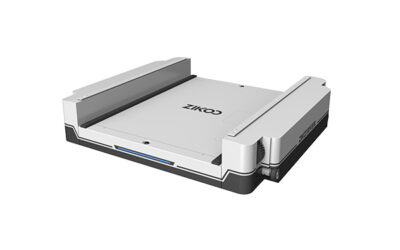
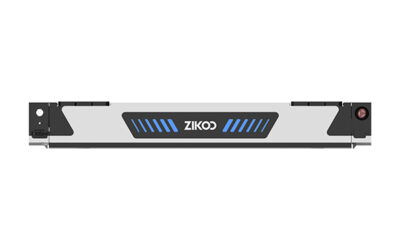
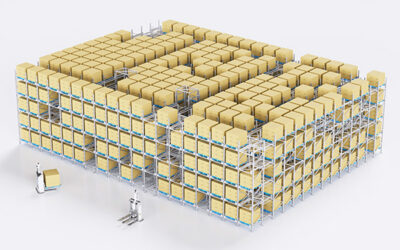
An automated pallet shuttle system changes the economics of deep-lane storage by moving pallets inside a rack lane without requiring a forklift to enter the lane. In a semi-automatic configuration, the shuttle moves within one lane and is relocated between lanes by an operator-controlled forklift. In a fully automatic configuration, pallet shuttles move across lanes on rails or lifts and receive tasks from warehouse control software. The right choice is not simply a question of budget. It depends on the number of pallet moves per shift, the required response speed, building height and temperature, and how much the operation can depend on software-driven coordination.
What Actually Changes Between Semi-Auto and Fully Automatic
The core difference is the system boundary. A semi-automatic pallet shuttle handles one storage lane at a time. The operator loads a pallet at the lane face, activates the shuttle with a radio remote or fixed control, and the shuttle carries the pallet to the next free position in depth. When the lane changes, a reach truck or forklift lifts the shuttle from the lane and places it in another lane.
A fully automatic pallet shuttle system extends that boundary to the rack structure and the software layer. A four-way shuttle can move along the storage lane and along cross-lane rails, so it does not need a forklift to change positions. When the building uses multiple levels, a vertical shuttle or lift connects the layers. The WCS creates missions, the RCS manages shuttle traffic, and the WMS decides which pallet should move, when it should move, and where it should be delivered.
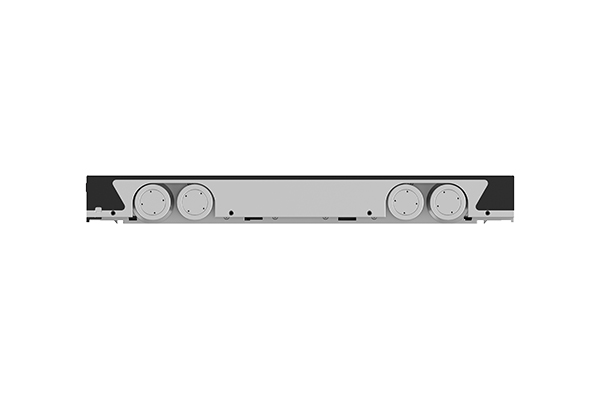
The shift from lane-level control to system-level control changes what can fail and what must be maintained. A semi-automatic lane failure stops one lane and can usually be recovered by removing the shuttle. A fully automatic system requires reliable shuttle positioning, lift synchronization, network communication, and software handshakes between every layer.
Where Semi-Automatic Pallet Shuttle Systems Earn Their Keep
A semi-automatic system remains a practical choice when the storage task is predictable. Warehouses with fewer SKUs, long product life, steady inbound and outbound volumes, and a single shift often do not need the coordination load of a fully automatic system. The operator already moves pallets with a forklift, so the shuttle only removes the need for the forklift to travel deep into a lane.
This configuration is also useful for a brownfield building with narrow aisles or limited floor flatness tolerances for cross-lane travel. Because the shuttle is moved by a lift truck, the racking can stay closer to a conventional deep-lane layout. The project can start with a smaller software footprint and add cross-lane automation later, as long as the lanes, rack dimensions, and shuttle model are selected with that future path in mind.
The limitation is not quality. It is control speed and system visibility. When an order profile becomes more varied, the operator must decide which lane to service next, and that decision can create waiting time that the shuttle itself cannot recover.
| Decision factor | Semi-automatic pallet shuttle | Fully automatic pallet shuttle system |
|---|---|---|
| Movement scope | One lane; a forklift relocates the shuttle between lanes | Cross-lane shuttle travel, often with lifts or rail networks |
| Control input | Radio remote or fixed lane control | WMS, WCS, and RCS task dispatch with robot traffic management |
| Operator dependency | High; the forklift driver paces each move | Lower; operators manage exceptions and replenishment |
| Throughput profile | Strong for steady, lower-frequency retrieval | Better for multi-shift, high-SKU, or peak-intensive operations |
| Typical fit | Fewer SKUs, narrow existing aisles, limited budget | Large buildings, cold chain, multi-level high-density storage |
When a Fully Automatic Configuration Is the Better Architecture
A fully automatic pallet shuttle system becomes the stronger architecture when the bottleneck is no longer physical travel but decision and coordination time. High-SKU operations, split-case or mixed pallet outbound, multi-shift production, and e-commerce peaks require the WMS and WCS to sequence pallets without waiting for a driver to interpret the next task.
In these environments, a four-way shuttle system can move directly to the required lane, retrieve the required pallet, and present it at a workstation or transfer point. The operator does not need to know where the pallet is stored. The RCS handles shuttle routing, lift allocation, and conflict avoidance. This is a different operating model from lane-level automation, because throughput is no longer limited by the speed of one shuttle in one lane; it is limited by the number of active shuttles, the lift capacity, and the software’s ability to avoid congestion.
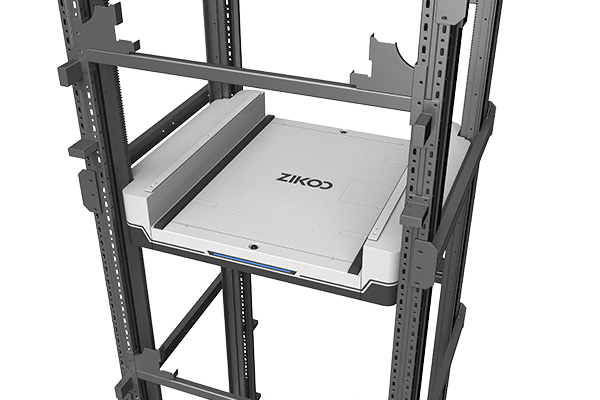
A realistic comparison should separate hardware capability from system capacity. A supplier can state a shuttle travel speed of 1.2 m/s loaded and 1.6 m/s empty, but those values only describe the vehicle. The actual pallet moves per hour depend on lane length, lift cycle time, workstation arrangement, and whether the software batches moves to reduce empty travel. Buyers should ask for a simulation or a measured reference under a comparable order profile rather than accepting a top speed as throughput.
Throughput, Labor, and Software Requirements
The labor decision follows the control model. A semi-automatic system keeps a skilled forklift operator in the process, which is useful when the warehouse also needs flexible pallet handling outside the rack. A fully automatic system changes the role of labor from driving to supervising, replenishing, and handling exceptions. It does not always reduce total labor in proportion to the removal of fork travel; the operation still needs staff at inbound, outbound, and workstation points.
The software stack is the larger long-term commitment. A fully automatic system should be evaluated as a WMS, WCS, and RCS integration project. The WMS owns inventory and order logic. The WCS converts that plan into missions. The RCS assigns each shuttle and lift a safe path. When these layers are treated as separate products from different suppliers, interface risk increases. When they are supplied as one platform, the buyer should still verify how updates, alarms, and system recovery are handled.
A four-way shuttle such as the R-bot can operate in temperatures down to -15°C with a lithium battery designed for 8 hours of continuous work, and a cold chain configuration extends the design for -25°C operation. The rack, lift, and shuttle all need to be specified for that environment. A fully automatic freezer installation must also account for condensation, battery charging location, sensor reliability, and maintenance access, which are less visible in a room-temperature pilot.
Dense Storage, Temperature, and Facility Shape
Building shape matters more than automation level. A fully automatic cross-lane shuttle system works well in a rectangular building where the rack can be divided into zones and connected by aisles or lifts. A semi-automatic lane-based system can fit more easily into an irregular building or an existing racking area with limited space for cross-lane rails.
Vertical space offers a second decision point. A four-way shuttle system pairs naturally with a vertical bidirectional shuttle or lift, forming a six-way shuttle network that covers four horizontal directions plus up and down. The H-bot vertical shuttle, for example, occupies a single storage position while carrying pallets between levels and achieves positioning accuracy of ±1 mm. That combination allows dense storage without reserving a full crane aisle on every level.
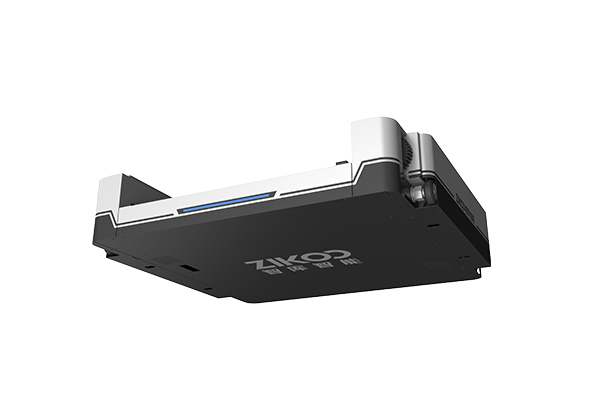
For low room heights, the value of a lift decreases and the semi-automatic option may be more appropriate. For a high-bay warehouse, the building investment itself argues for a system that uses vertical space continuously, because leaving that height underused is a larger economic penalty than the added control-system cost.
Cost and Implementation Reality
A semi-automatic project usually has a lower initial capital cost and a shorter installation period because it has fewer cross-lane rails, lifts, and less software configuration. That does not make it automatically cheaper over ten years. If the operation later needs more throughput, adding operators, lift shifts, or a second area can become more expensive than selecting a scalable architecture at the start.
A fully automatic system shifts more of the cost into control software, safety systems, network infrastructure, and testing. The hardware may be comparable to a semi-automatic system at the vehicle level, but the integration workload is higher. The buyer should evaluate not only the shuttle price but also the cost of interfaces to the existing WMS, the commissioning timeline, spare parts for lifts and drives, and the service response commitment.
A comparison between control models should not become a hardware-only decision. <Smart Warehousing Starts Here: Cost-Effective Four-Way Shuttle Systems> covers how four-way shuttle systems deliver dense storage without requiring a full stacker-crane AS/RS footprint.
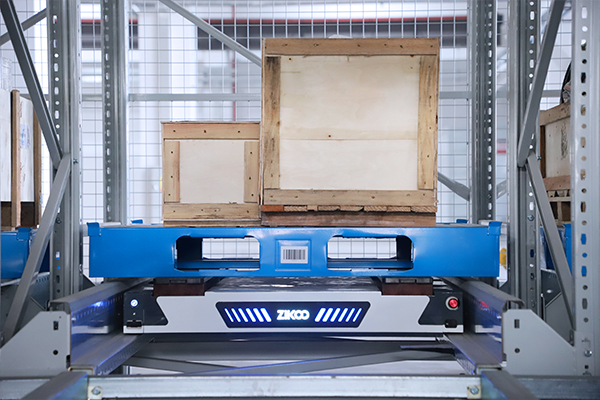
The most important implementation checkpoint is whether the supplier can prove system behavior before installation. Ask for a digital twin or emulation run using the planned rack layout and a representative day of orders. That exercise reveals whether the expected pallet moves per hour can be reached with the selected number of shuttles and lifts, and it gives both parties a common baseline for acceptance testing.
How to Shortlist a Supplier Without Overbuying
Start with the operational boundary, not the automation label. Define the number of pallet moves per hour by shift, the peak window, the pallet sizes and weights, the storage depth per lane, the building height and temperature, and whether the operation can accept a software-driven handoff. That information is enough to separate suppliers who configure a system from suppliers who simply quote hardware.
Then check each supplier against three layers: vehicle, structure, and software. For the vehicle, verify rated load, battery capacity, operating temperature, and positioning tolerance under a real load. For the structure, verify rack interface, floor flatness, lift placement, and maintenance access. For the software, ask how the WCS sequences moves, how the RCS handles traffic conflicts, and how the system recovers after a network interruption.
A supplier should be able to explain what a technical parameter means for your specific layout. For example, a shuttle rated for a 1200 kg load is not automatically the right choice for a 1400 mm pallet or a 2000 kg load. The pallet dimension, load distribution, and lane tolerance all affect whether the system will operate reliably over years of use.
A six-direction shuttle network adds vertical movement to the same dense storage objective. <Six-Way Shuttle: The Ultimate Warehousing Solution for Cost Reduction and Efficiency> covers how coordinated pallet movement reduces empty travel and improves cost efficiency in high-density storage.
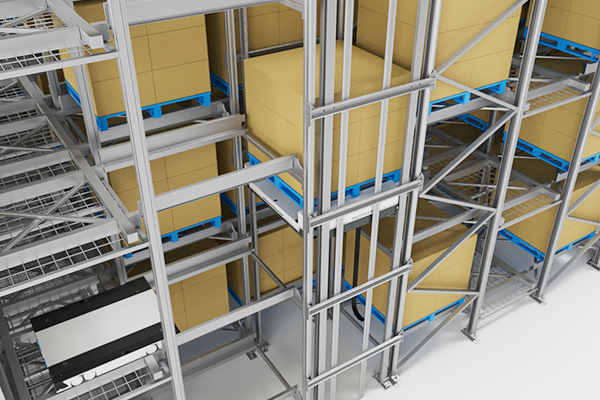
Define the Control Boundary Before You Compare Quotes
The fastest way to make a sound semi-auto vs fully automatic decision is to send suppliers the same operational profile: lane depth, pallet size and weight, target pallet moves per hour, peak shift pattern, building height, ambient or cold storage temperature, and your current WMS. Ask each supplier to return a configured system, a measured or simulated throughput curve, a lift and shuttle count, and a staged implementation plan, not a single equipment price.
Zikoo Smart Technology can evaluate both semi-automatic and fully automatic pallet shuttle options against that profile and explain where additional automation changes the risk, labor model, and software workload.
Email: info@zikoo-int.com
Phone: (+86)-19941778955
FAQ
Is a semi-automatic pallet shuttle system still worth buying if we can add a lift later?
Yes, when the rack and shuttle are selected with cross-lane or vertical expansion in mind. The buyer should confirm the shuttle model, lane interface, and rack dimensions can support a future lift or rail network. Without that preparation, a later upgrade may require replacing shuttle frames or reworking racking, and the savings from starting small can disappear.
Can a four-way shuttle work in a freezer at -25°C?
A four-way shuttle can work in a freezer when the vehicle, battery, sensors, and charging arrangement are specified for low temperature. A standard shuttle may be limited to higher temperatures, so the buyer should verify the continuous runtime and charging behavior at -25°C. Condensation control, battery preheating or insulated charging areas, and maintenance access should be part of the design review.
Does fully automatic mean no forklifts at all?
Not necessarily. A fully automatic pallet shuttle system removes forklift travel inside the storage lanes and can greatly reduce routine rack handling, but forklifts may still be used for inbound unloading, outbound loading, returns, and non-conforming pallets. The labor role changes more than it disappears.
What information should we collect before asking suppliers for a budget?
Collect the pallet size and weight range, number of active SKUs, pallet moves per hour by shift, peak period duration, building length, width and clear height, ambient or cold storage temperature, existing WMS software, and any planned expansion. This profile lets a supplier compare semi-automatic and fully automatic configurations against the same operating boundary instead of quoting equipment in isolation.
If you’re interested, check out these related articles:
Six-Way Shuttle Unlocks the Era of True 3D Intelligent Warehousing
Smart Storage Revolution: Comprehensive Overview of Four-Way Shuttle Systems for Automatic 3D Warehouses
PTP Intelligent Warehouse Software Empowers Enterprises for Smart Upgrades