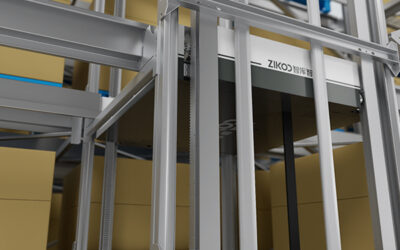
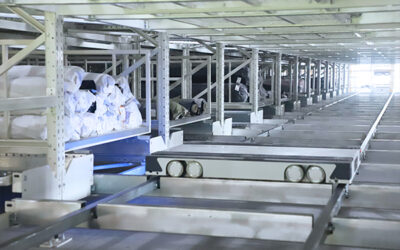
For any logistics manager weighing pallet storage options, the four-way shuttle system presents a compelling alternative to the familiar forklift fleet. I’ve been on both sides of this decision—designing and commissioning automated storage and retrieval systems, and also troubleshooting facilities that still run on reach trucks and counterbalance forklifts. The cost difference is not just a line-item comparison of equipment price tags. A four-way shuttle system can reduce total pallet-handling costs by roughly one-third in medium- to high-throughput environments because it compresses aisles, eliminates travel waste, and runs without a driver on every move. The real question is what you’re paying per pallet moved over a five-year window—and that’s where a forklift-based warehouse often looks cheaper only on day one.
What Are the Real Costs of a Forklift-Based Warehouse?
A standard forklift warehouse looks inexpensive because the equipment cost per truck is modest compared to an automated shuttle. But the fully loaded picture includes multiple forklifts, battery chargers, spare batteries, racking, a dedicated operator for each truck (often across two or three shifts), plus maintenance contracts. In a 5,000-pallet facility with medium throughput, you might need five reach trucks, five operators per shift, and an aisle width of 3.2 meters to allow safe turning. Labor alone can exceed $180,000 per year per shift in developed markets, and that expense recurs every year. Add energy, pallet damage from manual handling, and productivity loss during shift changes, and the annual operating cost of a forklift fleet can easily surpass the initial equipment investment within two years.
| Cost Driver | Typical Forklift Fleet (5 reach trucks) |
|---|---|
| Equipment (amortized 5 years) | $60,000–$80,000/year |
| Labor (1 shift, 5 operators) | $180,000–$250,000/year |
| Energy & Battery Maintenance | $15,000–$25,000/year |
| Racking & Floor space (wider aisles) | $35,000–$50,000/year |
| Pallet & Rack Damage | $8,000–$15,000/year |
| Total Annual Operating Cost | $298,000–$420,000/year |
These numbers don’t include the hidden cost of limited vertical space usage. Because forklifts can only reach up to about 12 meters safely and require wider aisles, a 10,000-square-meter warehouse may leave 30–40% of its cubic volume unused.
Where Does a Four-Way Shuttle System Save Money?
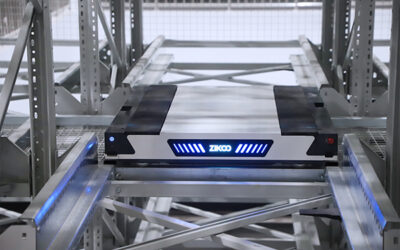
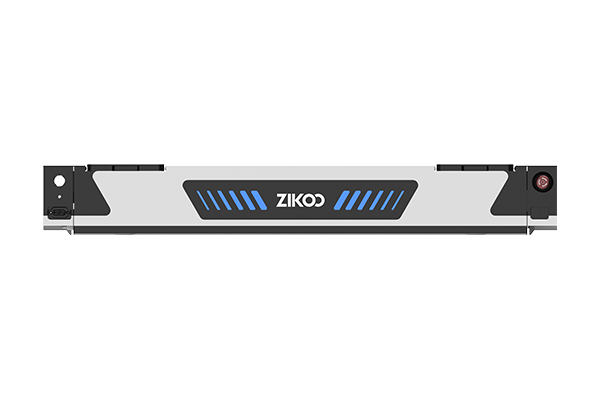
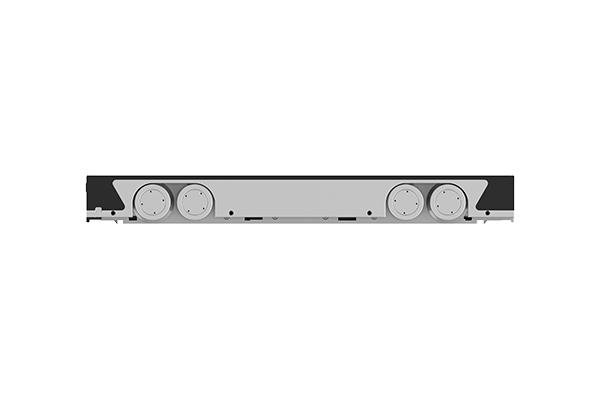
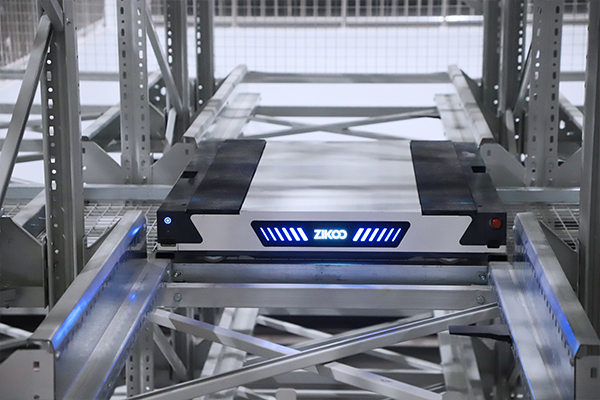
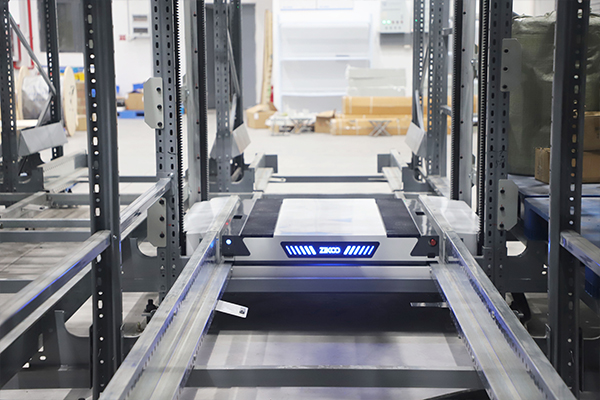
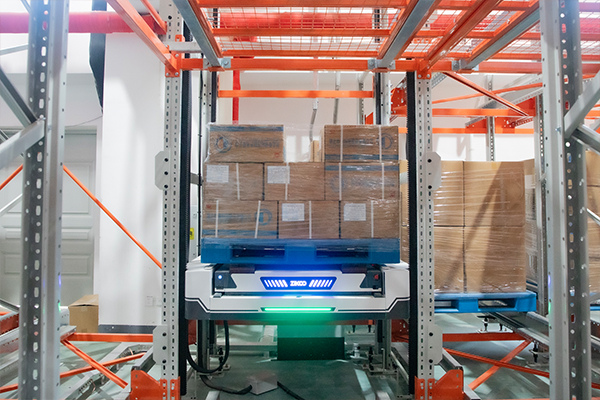
The four-way shuttle shrinks aisle width to roughly 1.5 meters and eliminates travel by operating within the rack lanes. In the same 5,000-pallet facility, a shuttle-based dense storage system can fit the same inventory into 40%–50% less floor space, often allowing a company to avoid or delay building expansion. The R-bot Four-way Shuttle, for example, has a body thickness of only 125 mm and can handle pallets up to 1,500 kg, moving at 1.6 m/s empty and 1.2 m/s loaded. With multiple shuttles working in coordinated groups, the system achieves throughput that would otherwise require many more forklifts.
Labor cost drops sharply: one operator managing a bank of shuttles via the warehouse control system can oversee what used to need a team of forklift drivers. From our project data in dense storage facilities, the direct labor reduction is typically 50%–70%, depending on shift patterns. And because shuttles use lithium batteries with up to eight hours of continuous operation, energy cost per pallet moved is roughly one-third that of a forklift fleet—the shuttle weighs only 270 kg compared to a reach truck’s several tons, so moving its own mass consumes far less energy.
Capital Investment: Shuttle Systems vs Forklift Fleets
There’s no getting around it: the upfront capital for a four-way shuttle installation is higher. A fork-based system includes the trucks, racking, and perhaps a warehouse management module. A shuttle system adds the shuttles themselves, the vertical lifts (or H-bot elevators), a more sophisticated software stack (WMS/WCS/RCS), and often a raised floor or guide rail installation. For a 5,000-pallet greenfield project, the total capital outlay for a shuttle system can be 2–3 times the equipment cost of a forklift fleet. But this comparison ignores the fact that the shuttle system often allows you to use a smaller building, or to fit 50% more storage into the same footprint, offsetting construction or lease costs substantially.
I’ve seen several projects where the savings in land and building costs alone covered 40% of the automation investment. Once you factor in the reduced headcount and the longer lifespan of an industrial shuttle (12–15 years versus 7–10 years for a forklift), the capital gap narrows significantly over time.
If your project involves mixed pallet sizes, the specific shuttle model can swing the cost. The R-bot comes in variants for 1200×1000 mm, 1100×1100 mm, and even 1400 mm pallets, and choosing the right one avoids expensive rack modifications. Share your pallet dimensions with us, and we’ll validate the most cost-effective configuration before you commit to a design—reach out at [email protected].
Day-to-Day Operating Expenses: Maintenance, Labor, and Energy
Labor Costs: Automation vs Manual Operation
Forklift warehouses require a driver for every vehicle, and skilled operators are increasingly scarce and expensive in many regions. A shuttle system replaces the majority of travel and placement motions with automated moves. One technician can monitor and manage a fleet of 10–15 shuttles, and the control software handles task allocation. In a two-shift operation, this alone saves hundreds of thousands of dollars annually.
Energy and Maintenance: What to Expect
Shuttles run on compact lithium batteries and consume far less peak power than forklifts accelerating with a heavy counterweight. A typical R-bot battery (51.2V/40Ah) provides a full shift of operation, and the shuttle’s light weight reduces wear on racking and floors. Preventive maintenance on shuttles is often simpler: no masts, no hydraulics, fewer moving parts. That said, the software layer requires regular updates and occasional tuning, especially if WMS integration is complex. But overall, from our service data, a shuttle system’s annual maintenance cost runs about 1.5%–2.5% of the initial hardware investment, compared to 5%–8% for a multi-shift forklift fleet.
How Different Warehouse Conditions Shift the Cost Balance
Cold Storage: How Temperature Affects Cost
Cold and freezer warehouses amplify the cost advantage of shuttle systems. Forklift batteries lose capacity in sub-zero environments, and operators need heated cabs, frequent breaks, and premium pay—all driving up labor costs. The R-bot cold chain solution uses a dedicated -25°C lithium battery that still gives 6–8 hours of operation, and the shuttle’s enclosed design protects electronics from frost and condensation. We’ve helped several cold storage operators switch from manual forklifts to automated shuttles, cutting energy for material handling by half and eliminating cold-related downtime.
High-Throughput vs Low-Throughput Environments
In facilities moving fewer than 30 pallets per hour, a forklift-based approach can still be the more cost-effective choice—the automation overhead isn’t justified by the limited throughput. But once you exceed roughly 80 pallet moves per hour, a four-way shuttle system’s ability to run continuously and handle multiple tasks in parallel becomes decisive. For manufacturers with just-in-time production, the shuttle system’s reliability and tracking accuracy also reduce line-side stockouts, which carries a cost that rarely appears in a simple payback calculation.
Total Cost of Ownership: Which Is the Smarter Investment?
A true cost comparison must span at least five years and include capital depreciation, labor, energy, maintenance, space, and the value of increased accuracy and throughput. Based on our experience designing systems across industries, the break-even point for a four-way shuttle system over a forklift fleet typically falls between 2.5 and 4 years, after which the automated system delivers a sustainably lower cost per pallet. In a facility with 5,000 pallets, 80 moves per hour, and two shifts, the cumulative savings over five years often exceed $1.5 million.
The decision is not about automation versus people—it’s about matching the tool to the scale. If you’re running a small low-turnover warehouse, a forklift fleet may serve you well for another decade. But if your goals include tighter inventory control, faster throughput, and long-term resilience against rising labor costs, a four-way shuttle system offers a cost advantage that grows with your operation.
If your next warehouse project calls for a detailed total cost comparison, we can help. Our team will model your specific pallet profiles, throughput demands, and building constraints to produce an apples-to-apples five-year cost projection—no obligation. Contact us at [email protected] or call (+86)-19941778955.
What Buyers Often Ask Before Choosing an Automated Storage System
What is the typical payback period for a four-way shuttle system?
In most medium- to high-throughput warehouse environments, you can expect a return on the incremental investment over a forklift fleet within 2.5 to 4 years. The exact timeline depends on labor rates, energy costs, and how fully you utilize the added storage density. For example, a cold storage facility with high labor premiums often hits payback closer to 2 years because the shuttle eliminates the extra staffing and heated cab requirements.
Can I install a four-way shuttle system in an existing warehouse?
It’s possible but requires careful assessment of floor flatness, ceiling height, and column spacing. We’ve retrofitted shuttles into buildings with clear heights as low as 8 meters, using a slim-body shuttle design that keeps the rack entry tight. The main cost risk is floor leveling—shuttles need a very flat surface for reliable positioning. If a retrofit isn’t practical, a standalone automated storage structure is the next option.
How does a four-way shuttle handle different pallet sizes?
The R-bot platform offers models that accommodate pallets from 1016×1219 mm (American standard) up to 1400 mm large-format pallets. In mixed-size operations, you can configure zones with different shuttle models, or use adjustable lanes. The key is selecting shuttle variants early, because retrofitting lanes later adds cost. Our engineering team maps pallet profiles during the design phase to avoid that.
Is a four-way shuttle system safe for cold storage?
Yes, and it often outperforms forklifts in frozen environments. The dedicated low-temperature lithium battery package on the R-bot maintains full shift run time at -25°C, and the absence of an onboard driver eliminates the need for heated operator cabins and mandatory warm-up breaks. Electronics get a protective conformal coating that guards against condensation and frost.
What kind of ongoing maintenance does a four-way shuttle require?
Preventive maintenance is lighter than for forklifts because shuttles have fewer hydraulic and mechanical wear points. The main items are battery health checks, wheel replacement, and software updates. We recommend a quarterly inspection and a major service every two years. If your in-house team isn’t familiar with shuttle diagnostics, a remote support plan can catch most faults before they interrupt operations. If you’d like to see a sample maintenance schedule for your projected configuration, send us your preliminary specifications and we’ll provide a detailed support plan.
If you’re interested, check out these related articles:
Standardization Empowers Global Delivery: Zikoo Robotics Six-Way Shuttle Expands Overseas
PTP Intelligent Warehousing Platform: Building a Flexible and Smart Logistics Ecosystem